I’ll preface this piece by noting the limitations of the data which prompted it: The Irish Times/MRBI “snapshot” poll does not purport to be an exhaustive list of everything that the public cares about at a given time. Properly read, it should be considered more of a ranking of issues: What’s most important to you right now, as opposed to what is most important to you in general. The other limitation is that you can only pick one issue, as opposed to several. Properly read, it’s not really a poll of what ultimately matters to people, so much as it’s a poll that shows us what people are thinking about – and annoyed about – at the moment. Taking it as a definitive ranking of issues ahead of the next General Election would be a mistake.
One major benefit of this methodology, though, is that there’s no prompting: In other words voters aren’t read a list of issues and asked which ones from a set list that they care about. The results you’re seeing below are what people mentioned of their own accord, without any prompting at all.
As such, the data is very useful, as a measurement of where the public are as opposed to politicians. The February data, released yesterday, is very clear:
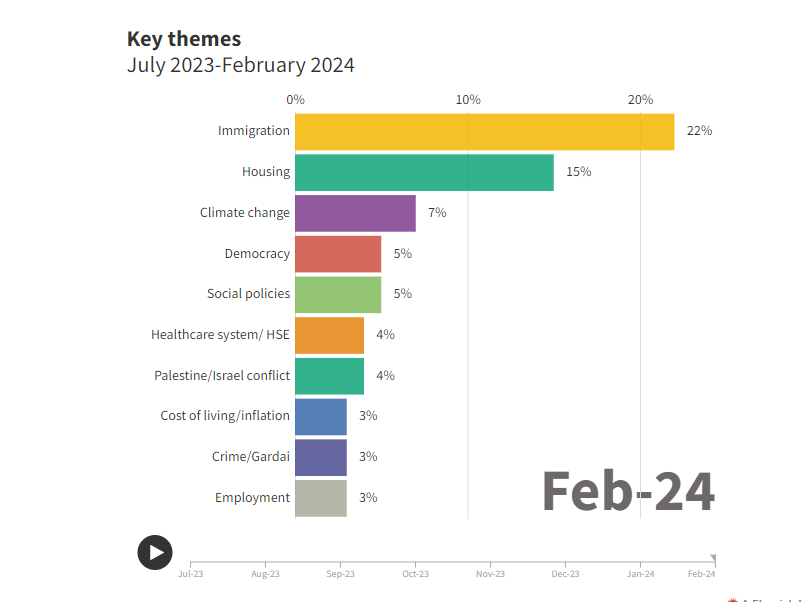
By some distance, more voters care about immigration, and express a deeply negative sentiment towards Government policy, than they do on any other topic. This is followed by housing, and then, in a mild surprise, climate change. Democracy, social policies, and health follow, with the Israeli-Palestinian conflict trailing in in seventh place in the rankings, expressed as the top concern by a mere four per cent of voters.
The disconnect I mention in the headline is evident from the Irish Times own coverage: Using their search tool, which is an imperfect metric, the word “Gaza” appears in over a dozen headlines in the past week alone. The word “immigration” in just two, one of which is the very poll that shows it as the top issue. Over the past several weeks, a cursory observation of media, politics, and culture shows vastly more political and media energy expended on talking about Gaza as opposed to immigration. And yet the voters, when asked, respond that immigration is bothering them at a rate of more than five times more than they mention the conflict in the middle east.
This, I’d argue, is not necessarily surprising: It is the nature of both politicians and journalists to talk about those issues where they believe the public is on their side, and to play down those issues where they believe the public might not be in quite the same level of agreement. There’s another factor, too: When it comes to immigration and housing, politicians are sort of obligated to at least try and address voter concerns; but when it comes to Gaza only the most deluded placard carrier believes that there’s anything that the Irish Government can do. Gaza represents that most cherished of political opportunities: A chance to grandstand without obligation.
What’s more surprising, I’d argue, is the sustained relevance of immigration as an issue. It’s worth contrasting this poll with a line from a very experienced political correspondent whose blushes I shall spare, writing in a Sunday Newspaper over the weekend about a small increase in Sinn Fein support:
It’s impossible to be certain of the reasons for the improvement in Sinn Féin’s fortunes over the past month. But, aside from events in Drogheda, there has been less focus on immigration in recent weeks than in January.
We know from poll data that potential Sinn Féin voters are most exercised about this issue, so a shifting of the spotlight from immigration may have helped.
This is a good example of what I’d call the “bubble effect”. Immigration has not been in the news as much, is the thinking, and as such voters may have begun to care about it less than they cared in January. In reality, the bubble may work in reverse: Politicians and journalists know they are on the back foot on the topic on which the public cares most about, so they’re compensating by trying to talk about literally anything else: We might not be on your side when it comes to immigration, but we sure don’t like the Israelis, is the message.
The other interesting thing about the poll – and bear in mind that respondents are asked to mention what bothers them, rather than being given a list – is that the RTE scandal really doesn’t feature at all. Voters, at best, view it as a distraction. That’s two of the media’s top two topics – Gaza and RTE – barely registering with the electorate at all, while the voters care about things that have been shunted significantly down the news agenda.
That is the most telling thing about the Snapshot poll series, and why it’s so useful: It’s a lesson not to let yourself believe that media coverage in Ireland is always representative of what the public are thinking, or caring about. That goes for social media, as well.