If the Sinn Féin ‘core group’ wants to discover why the seemingly inexorably upward electoral fortunes of the party have stalled, they could do worse than read the book written by their former Leinster House deputy press secretary, Siobhán Fenton: ‘Ourselves Alone. Sinn Féin Behind Closed Doors’.
The overwhelming sense is of a party that is devoid of any core vision other than desperate reliance on the superficialities of opinion polls and focus groups in an attempt to appeal to enough voters to get elected.
That, you might say, is the job of those at the top of any political party. Which is true, but by handing over the party to people like Fenton -who is unapologetic regarding her own lack of republican roots or even sympathies – you end up alienating those who genuinely do believe in what Sinn Féin once represented.
She purports to be a feminist, and even a socialist feminist, but unless you think socialism is about outbidding the government by a few cents on social welfare rates and cheerleading the human resources requirements of American corporations for migrant labour, then socialism it is not. All they are left with now is a vacuous liberalism that is simply ‘not fit for purpose’ in a world where politics has grown rather more serious and as we have seen in other European countries even well-established parties can be swept away in a torrent when the tide changes.
In Fenton’s ephemeral book we find encapsulated all the evidence of how a once dangerous revolutionary movement has been reduced to the political equivalent of a publicity campaign for flavourless toothpaste.
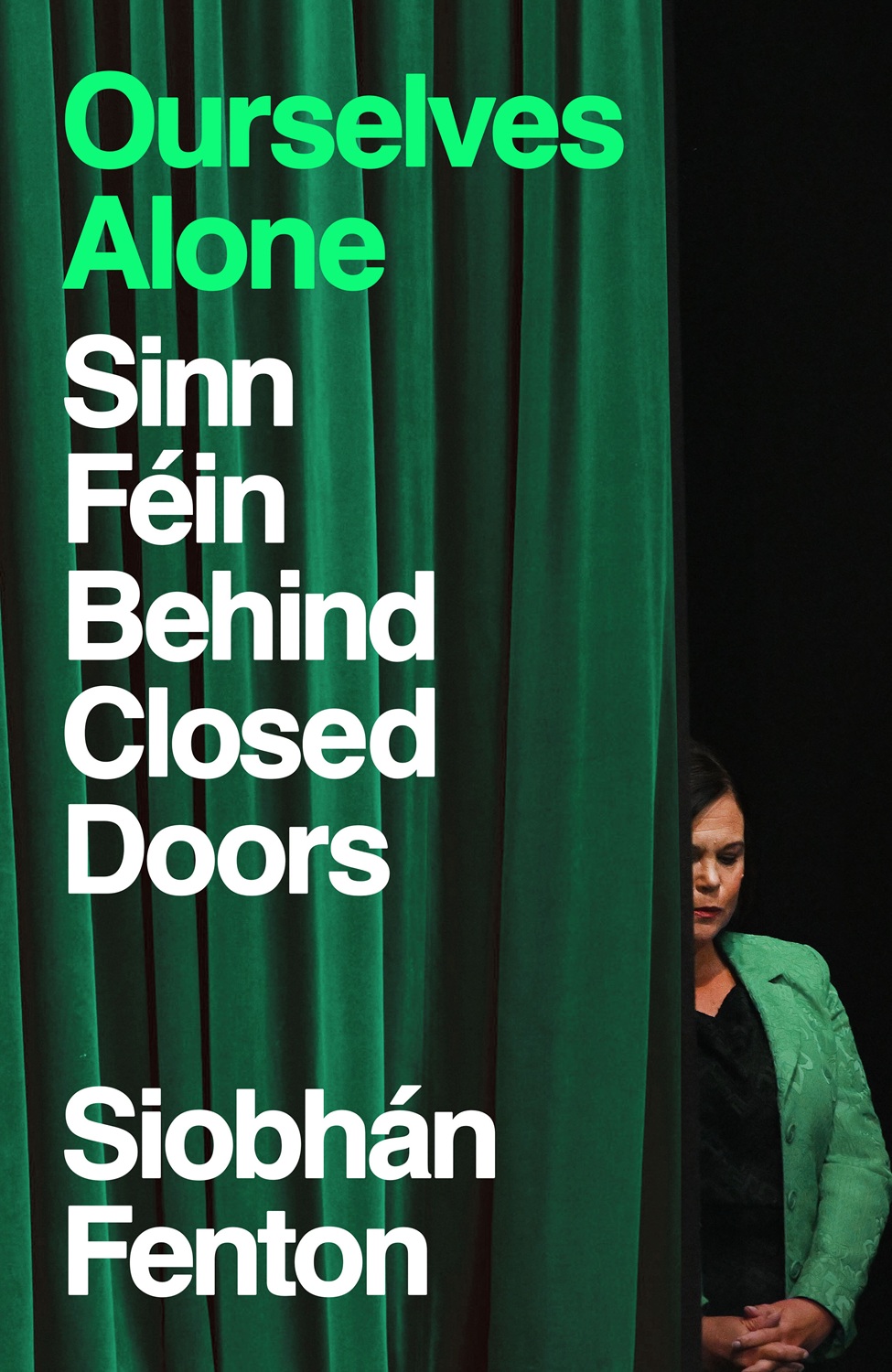
And it is not as though the ‘core group’ is cunningly using this as a means for covert revolutionary ends. The references to how candidates with no record of republican activism were head-hunted above the heads of the local members is testament to that.
It would be easy to blame Fenton herself as central to the photoshopping but they headhunted her, she didn’t force herself on them. They, as they have done for 20 years, clearly saw Fenton as another part in the systematic removal of ‘old timers’ from the party apparat.
The only ones who have survived are utter cynics, a band of elected representatives who they have only kept for electoral reasons and a declining number of true believers who cannot accept that the army was defeated and the Republic abandoned.
Almost no republican staffers
Fenton and the other staffers – who she herself notes include almost no republicans (her own description) – were pitching for a party which appears to be dominated by a mixture of Johnny and Janie Come Latelys who a few aging potbellied oul fellas, of my own vintage and portliness, in the ‘core group’ think they can use as the catwalk to political power.
They might ask the shades of Seán Garland and Cathal Goulding how that worked out for the other half of the IRA split that led to the Stickies and the Provisionals. The Provies, in common with those ‘left liberals’ who pushed Garland and Goulding aside and ended up in the Labour Party, are now reduced to another banal social democratic liberal party that is as bereft of radical instincts as your average car insurance salesperson.
Several times in the narrative, Fenton averts to the murky origins of what claims to be Sinn Féin now. Not quite with distaste but with the relief that all of that has been left behind and that brighter young things – and not so bright or young things who appeared not to have heard Ireland’s Call back in the day – have set the ‘movement’ on a better road.
People died and killed other people and went to prison so that people who had nothing whatsoever to do with all that can become ministers or hope to become ministers. Not so they can achieve Irish unity – something barely mentioned in Fenton’s book – but so that they can ‘help.’ As one former H-Block prisoner told another author years back, the type who ought to have joined OXFAM.
Nor is there any other radical motivation. Keeping people comfortably numb and passive, in all senses of the word, through social welfare is not radical. Bismarck and the English Liberals were implementing social welfare programmes for decades before any socialist party was elected.
Not that there is anything wrong with social welfare or other public provisions which are a necessary and civilised means of protecting people from material poverty, ensuring that the young and elderly are cared for and that education and health are not privileges dependent on money.
It is also a substitute for radical change. The lack of any such vision on the part of ‘new’ Sinn Féin is illustrated by Fenton’s references to the €2 billion social protection package contained in the 2024 Fianna Fáil/Fine Gael budget. Fenton describes this as “throwing economic caution to the wind in shameless auction politics.”
What really annoyed Sinn Féin and the other liberal left parties was that they had been gazumped on the only issues that separated them from the government. They were pissed that they could not fight an election promising even greater increases. They are a busted flush – not even worthy of being described as ‘tax and spend liberals’ because they refuse to countenance any increase in the generous corporation tax rates for the overseas corporations who take 25% of GDP out of the state each year.
They don’t even pay lip service to the radical republican, and non-socialist, view that the Irish economy should be independent of global capital and concentrated on indigenous resources, small business and co-operatives.
As Ruairí Ó Bradaigh asked, back in 1986 when all of this was a mere twinkling in the eye of ‘strategists’ and spooks and when the Adams faction was in the process of casting aside all aspects of the radical republican vision: “Where are our revolutionary socialists now?”.
This book is only interesting as a shot in time of a process that has been in place for 40 years. Its superficial analysis of more recent years is a fitting template for a party that is almost defined by superficiality and lack of any purpose – other than that which motivates the other establishment parties: the winning of elections and taking their place among those who are bunging out the welfare allowance increases to buy votes.
Matt Treacy’s book A Walk on Part in a War has been just published by Brocaire Books and is available in paperback and other formats on Amazon https://shorturl.at/Evv5d