If you thought the back and forth arguments about various groups singing the Zombie song versus the Celtic Symphony song seems to have gone on forever you might be right. That’s because by modern media standards the story really has had legs.
Nowadays many, if not most, news stories seem to last barely a day or two. There is a headline – often based on something someone said or tweeted that goes against the official narrative, the outrage is stoked, the person apologizes and the outrage grows and then the world moves on leaving the person wounded – sometimes fatally.
But the Zombie/Celtic Symphony story is different.
The story took off in October 2022 when the Republic of Ireland women’s football team sang the Celtic Symphony song with its “Ooh Ah Up the RA” chorus. This is did not go down with many who felt that the team should not have been singing a song celebrating the IRA. The story rumbled on gaining some more energy in August of this year when RTE’s Joe Duffy got very upset after thousands of enthusiastic audience members enjoyed singing the song at the West Belfast festival.
Then the Irish rugby fans decided to adopt the Zombie song from the Cranberries as their song. The Zombie song is, in contrast, an anti-IRA song. Don’t believe those who say it isn’t. I remember it coming out when I was a reporter in Belfast and, depending on where you were coming from it was either a powerful attack on violence or simplistic Free State virtue signaling. Not that we would have used the term Virtue Signaling back then. We were a lot less polite in the 90s.
But there is no doubt that the row over what song should be sung at what sports venue is one of the longest running of recent years. Did you ever wonder why?
It’s probably because these are songs from a very different Ireland. It was a different time back in the oh so distant 1990s when diametrically opposed opinions were allowed to exist side-by-side on the island of Ireland.
Younger people might find it hard to believe but back then you could have two musicians/songwriters write songs that took sides on one of the biggest issues of the day. And it was a real issue. Celtic Symphony had a chorus supporting the IRA and Zombie was a full throated condemnation of the IRA inspired by the Warrington bomb that killed two children.
Back then it was expected that people would have different opinions and that artists and art would reflect that. There was no idea that some opinions were unacceptable or that people should lose their livelihood just for having a different opinion.
Of course the establishment would try and quash dissent but it didn’t really work. It just encouraged more art and more dissent.
Compare that to today. There are no songs, plays, movies or books criticizing mass immigration, identity politics, abortion, transgender ideology, the threat to safe women’s spaces and puberty blockers for kids. And there is almost no media coverage of these issues also. However there are plenty of outlets and art pushing these ideas as unquestionably good.
Thirty years ago there were TV shows and comedies thrashing out both sides of all issues. Certainly they swung leftist but regarding Northern Ireland for every piece of Ken Loach movie agit prop there was often a Harry’s Game TV series (the poor Brits are just stuck in the middle of the savages).
Now there is no back and forth. Every show celebrates progressive causes and the murderer in the cop show is always the white christian preacher/lawyer/financier.
In 2053 there will be no news stories about audiences or people celebrating two works of art from 2023 that push two diametrically opposed ideas. Today art is only allowed if it supports a certain narrow, progressive point of view.
Journalism has also narrowed since the Cranberries released Zombie in 1994. It used to be that journalists and newspapers took sides on the big issues of the day. Sometimes the biggest arguments were from journalists and columnists within the same newspaper or newspaper group. There were insults and barbs traded – and not just in in print. Many’s a journalism awards ceremony was enlivened by fisticuffs over a rival’s take on a story.
In 2023 journalism has become more narrow, more prescribed. Most media outlets seem to agree on the issues of the day and there is almost no dissent. Journalists would rather help cancel other journalists that argue with them.
And there are certain stories that the mainstream media just won’t touch. The arch feminist and Irish Times columnist, Fintan, O’Toole, seems to have no opinion on transgenderism and the increasing encroachment of biological men claiming to be women on all female spaces and sports teams. Does he believe children should be prescribed puberty blockers? Or violent males, like Barbie Khardashian who fantasise about attacking women, should be allowed in a women’s prison.
And the Irish Times has never covered, in its news pages, the international news story about the attempt to cancel Irish singer Róisín Murphy for questioning whether children should be given puberty blockers. It was covered by outlets in Canada, USA and even India but never made the Irish Times news section – even when she was supported by John Boyne and Graham Linehan perhaps two of Ireland’s most famous writers. An apparent cancellation by the BBC also never roused Irish Times reporters to investigate.
It’s the same with the immigration question. Outlets will very, very reluctantly cover the story and only when communities protest and those protests become too big to ignore. Then they rarely reflect the reason for the protests but spend an inordinate amount of time and energy smearing the protesters as “Far Right”.
This change is not just an Irish problem. I live in Los Angeles and I would have a lot more sympathy for the writers who recently went on strike and if they’re output didnt already sound like a mashup from an AI generated progressive bot. Think “Far Right Fergal” from Fair City but in every TV series and movie. They will sacrifice story, plot and character consistency to push a pro abortion, anti-republicamn/Trump story line. It is both boring and predictable and is losing them buckets of money.
It wasn’t always like this in Hollywood.
Back in 1975 when an anti-Vietnam War film won an Oscar, producer Bert Schneider read a message of support from a Viet Cong official which then prompted host Frank Sinatra to read a statement from the Academy distancing itself from those remarks. That in turn prompted Shirley MacLaine to announce her distancing herself from Sinatra, distancing the academy from Schneiders remarks. Then Warren Beatty called Sinatra “you old Republican.”
Regardless of who you thought was right or wrong – it was exciting television and there was no suggestion that anyone involved in the drama should be canceled for their views.
And Hollywood was a better place for it. The early 70s is now known as Hollywood’s second Golden Age. Compare that to nowadays where Superhero movies that boast about their wokeness tank at the Box Office. Then we have sequels that make heroic characters into broken toxic males who need to be rescued/schooled by a modern, spunky female. This “modernisation” has destroyed some of the most loved franchises on the planet (See Luke Skywalker and Indiana Jones and the Dial of Drivel).
The Zombie/Celtic Symphony row seems to be fading now. Irish journalists and media executives probably won’t notice that it has been one of the longest running stories of recent years. They are already slipping back into reminding us that we must all be outraged at organizations that progressives and the government disagree with renting a building in Dublin. And also that a country with housing and health service crisis should not be alarmed at mass immigration.
This failure to engage damages Irish people and Irish society. And newspapers wonder why they are losing readers and influence. Maybe I’m just an old man telling war stories portraying the 1990s as some golden age of journalism. Sometimes the fights got personal and so petty they were a disservice to the reader.
But there is no doubt that newspapers and the media landscape was more interesting, more powerful and more profitable back then.
Who knew that true intellectual diversity is exciting, interesting and makes money.
It’s going to be a long, boring winter.
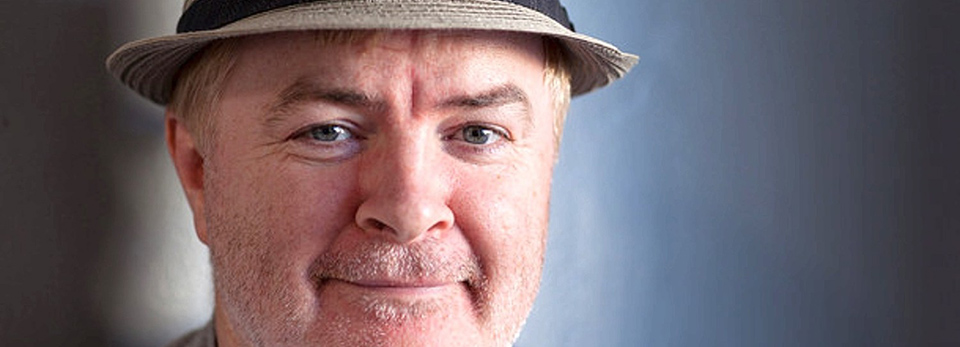
Phelim McAleer is a journalist, producer and playwright. You can see his work at www.UnreportedStorySociety.com