Over the past 12 months the issues of immigration and the apparent abuse of the asylum system have gone from being matters of moderate concern to Irish people to becoming the most significant political issue of the day.
The recent Irish figures on immigration are truly extraordinary. According to the census figures for 2022 the number of persons resident in Ireland who were born outside the country is now 20%, a figure which with Sweden is the highest in Europe, and well in excess of countries such as the UK and US, both countries which are in uproar on this issue. For historical comparison, even at the peak period of immigration in the United States between 1850 and 1920, at no stage did the United States foreign-born population approach this percentage, peaking at 14.7% in 1910. (US State Department).
What is happening therefore in Ireland now, in terms of level of inward migration and the speed with which it has happened, is probably without precedent in history.
The census figures indicate that in the Republic of Ireland, with a population of just over 5 million persons, fully 1 million (at least) have been born outside of the country. This dramatic population shift has a number of causes. For example, as EU members Ireland has an open border with around 450 million EU citizens. Other factors include Government commitment to open borders and continued tolerance of the ongoing abuse of the asylum system.
In regard to government policy on encouraging mass inward migration, this was clearly enunciated in government policy document Ireland 2040, introduced by Simon Coveney as minister for the Environment in 2017, though in preparation since 2014.
This document later morphed into Project Ireland 2040, incorporating elements of the National Development Plan, the National Planning Framework and the National Infrastructure Strategy. It set out detailed proposals for expanding Ireland’s all Island population to 8 million (at a time when the Green party advocates worldwide population reduction) by 2040, and baldly states that this population expansion can only be achieved by the mass importation of people from abroad.
The Irish Freedom Party, for whom I am a candidate, opposes any drive to expand Ireland’s population unless it is organically generated from within the existing Irish population.
It can be argued that expanding a population is desirable, but surely the first priority of a government which seeks to do so would be to address the reasons why the birth rate in Ireland is so low within the native population. In post-war Europe, taking into account increased female participation in the labour market, the most significant reason for low birth rates has been the prohibitive cost of housing which militates against family formation, and unless this basic issue is addressed it seems inevitable that family formation and the birth rate of the native Irish population will continue to decline and remain well below replacement level.
Immigrants who come to a country, particularly from the developing world, are prepared to accept much lower standards of housing and invariably will also have much higher birth rates than the native population, so the dramatic change in population structure, so evident on our streets, rapidly becomes self-reinforcing.
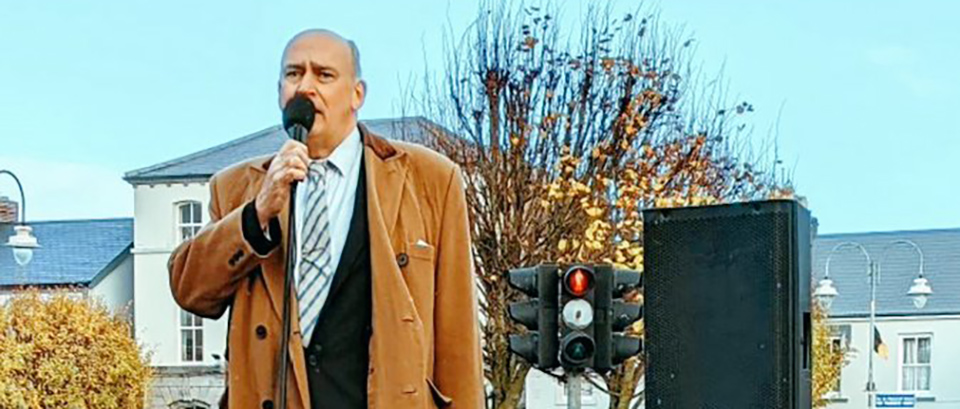
If any government is genuinely concerned about expanding the Irish population, I would suggest adopting some of the Irish Freedom party’s Pro natalist and Pro family policies. Similar policies have been adopted in Hungary and have proved successful. We are committed to ensuring Irish families can grow and prosper in the land of their birth.
In the case of international protection, the recent importation of over a hundred thousand Ukrainians represents a per-capita figure far in excess of that of any other European country with the exception of Poland, which withdraws all financial supports for Ukrainian refugees after three months. The great majority of these refugees, I believe, do not arrive in Ireland as a first country but arrive here because the social welfare supports are far higher in Ireland than anywhere else. The international protection regime dealing with Ukraine is an emergency measure and under the Lisbon treaty Ireland has an opt-out regarding immigration policy. We believe that Ireland needs to implement this opt-out as a matter of urgency.
From anecdotal evidence reported to me by voters, a substantial number of people coming to Ireland who claim to be Ukrainian are not so. There is no doubt whatsoever in my mind, or in that of many voters, that the Irish social welfare system is being “gamed” for profit, and that our government has no interest in protecting the Irish taxpayer from this exploitation.
Under the more general asylum system, Ireland is a signatory to the UN protocol on asylum, last updated in 1967, under which we are obliged to take in anybody who comes to the country claiming asylum, even if they arrive without documentation. The Irish Freedom Party suggests that it is long past time that Ireland conduct a review its participation in this protocol.
No country can operate a legitimate asylum protection regime unless it is prepared to provide humane temporary holding centres for asylum seekers, properly fund prompt asylum hearings and arrange for deportations when a claimant is found to be bogus. Ireland should not remain party to the 1967 protocol if it is not prepared to carry out these measures.
Our very lax borders and often non-existent assessment and enforcement regime has meant that Ireland has become a haven for people trafficking and indeed this was noted by Interpol as long ago as 2005. This is all the more urgent when many of the incoming populations come from cultures which are radically different from those of Ireland.
Indeed, we have seen in other European countries the deep failures of multiculturalism. In this scenario a nation very rapidly ceases to exist and becomes merely a patchwork of differing populations competing for rights, for legal systems, for domination of the culture and of course for economic advancement.
The Irish Freedom party will fight for a sane and humane immigration policy based in the first instance around Ireland’s employment needs. As a small country we must have regard to the preservation of our culture and give high priority to the protection and prioritisation of the indigenous population. We must also, if we intend to continue to offer asylum to genuine refugees seeking protection, be prepared to fund a system which will not be capable of being abused by the unscrupulous.
It is clear to me that the government has lost control on this critical issue and are more concerned with name-calling and with suppression of dissent then they are in dealing with what is now undoubtedly the most significant challenge that Ireland faces.
We urgently need an alternative to a tired government which no longer even pretends to represent the Irish people. The main opposition party, Sinn Féin, has even less interest in dealing with this issue, and seem more obsessed with wokeness than in defending Ireland.
We want to give a genuine alternative to the Irish people and every person in the country will have an opportunity to vote for a member of the Irish Freedom Party at the Next European Elections in June 2024.
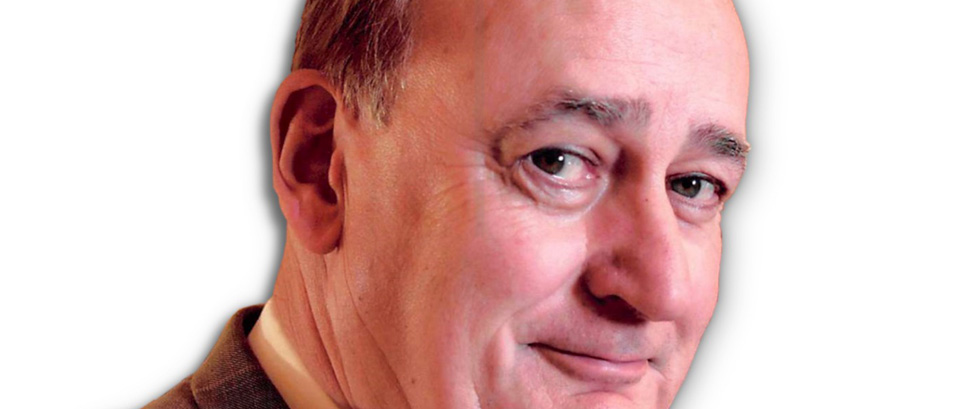
Michael Leahy is the chairman of the Irish Freedom Party and European election candidate for Ireland South. He is an Architect and Planner by profession. He is the former President of the Ennis Chamber of Commerce and was a board member for Bord Pleanála from 2012 to 2017. Michael is passionate about rural regeneration and making it affordable for people to access the housing market.