The evidence of the tremendous harm caused by the unnecessarily prolonged Covid lockdowns just keeps mounting – and the palpable reluctance of the Irish government to investigate its own actions in this regard also becomes more apparent by the day.
In contrast to other countries, Ireland has still begun an inquiry into the State’s actions and decisions in dealing with the Covid virus, and it increasingly looks as if the government would prefer if everyone forgot about almost two years of lockdowns and 5k restrictions and young people being baton-charged for failing to observe social distancing.
We are obliged, then, in order to have evidence of what we can see with our own eyes, to look at the research being carried out elsewhere which is producing some alarming results especially in relation to the harm caused to young people by the Covid restrictions.
Today, a new study published in England showed that the lockdown “harmed emotional development of almost half of children’ and that youngsters appeared more worried, lost confidence more easily, and were more prone to tantrums and low moods.
The study from the Institute for Fiscal Studies (IFS) and the UCL Institute of Education surveyed more than 6,000 parents in England whose children were aged between four and 16 in February 2021, at a time when England’s third lockdown was coming to an end, and when and children had experienced a second period of national school closures.
The results showed that the impact of the lockdowns was significantly harmful.
“Nearly half of parents (47%) reported that their child’s social and emotional skills had worsened during the first year of the COVID-19 pandemic,” the IFS said.
Furthermore, they reported that children from all backgrounds saw their social and emotional skills worsen – and that “most notably, children whose parents’ pre-COVID employment situation changed were far more likely to see their social and emotional skills worsen.”
Parents were asked 13 questions about their children’s behaviours, including how often their child appeared worried, lost confidence easily or had tantrums, both at the time of the survey and a year earlier.
47 per cent of parents believed their child’s social and emotional skills had worsened during the first year of the pandemic – with just one in six believing that their children’s social and emotional development improved.
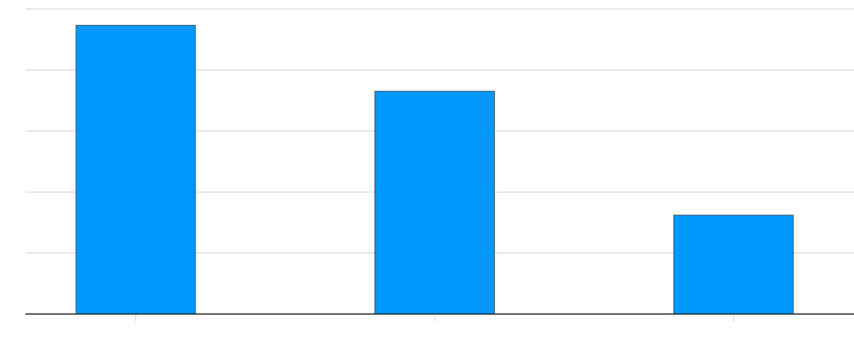
Between February 2020 and February 2021 SOURCE: IFS
The Telegraph reports that:
Just under half of parents said they believed their child’s social and emotional skills had worsened during the first year of the pandemic, revealing that the impact of lockdowns has extended beyond lost academic progress.
The paper also quoted Dame Rachel de Souza, the Children’s Commissioner for England, as saying:
“This study shows that the disruption the pandemic caused to children’s development has been long-lasting. It is vital that the right social and emotional support is made available to allow children the chance to recover and go on to achieve all that they want to.”
The study’s findings regarding the impact of changes to the employment situation of parents on children is especially interesting. Not everything is resolved, it seems, by Pandemic Payments or assurances that things will eventually go back to normal.
One of the authors of the report, Andrew McKendrick, who is Research Economist at IFS, said that “children from all backgrounds saw their social and emotional skills worsen considerably.”
“Children lived through many changes during these years: school closures, lack of contact with friends and family, and potentially devastating severe illness or death among loved ones. Our research shows that another important driver of children’s declining skills was the economic disruptions experienced by their parents, whether or not those disruptions led to a large income loss.”
“With the cost of living crisis currently hitting many families’ budgets, our findings are a reminder that economic uncertainty can have multi-generational impacts.’
Other research around the issues of the impact of the lockdown on children have looked at the loss of future income and difficulties for students in taking significant State exams given that junior level examinations were cancelled. A rise in reported mental health problems, eating disorders, and absenteeism from school have also been examined.
One previous study from the Institute for Social and Economic Research observed that the effects of school closures on children’s wellbeing are large, and may take some time to mend.
“Going back to school in itself does not appear to be sufficient for children to ‘bounce back’” researchers found.
Similarly, Andrew McKendrick of the IFS said that “there’s been some discourse suggesting that children will bounce back and this has not been long-lasting. Wider evidence outside our study has shown that this kind of disruption to children can have long-lasting consequences. We are seeing these impacts at present in children and mental health referrals are higher than before the pandemic.”
The Telegraph also noted Anne Longfield, who served as children’s commissioner during the Covid crisis, said: “The impact of the pandemic on the well-being and development of many of our children is extremely alarming.”
“I am not convinced though that the Government fully grasps the scale of the problem or the long-term consequences for our society and economy.”
But at least the British government seems to be open to funding the research that is required to review the serious, damaging, and long-lasting consequences of shutting down the country for a virus that might have been better dealt with by use of targeted protection strategies.
Here at home the government seems largely disinterested in examining the impact of the restrictions they insisted were necessary of a wide range of outcomes, from cancer screenings, to education, child development, mental health, and many other things – and they continue to drag their heels on any meaningful Covid inquiry which might help us avoid the mistakes of past decisions.
What research like that released in England today also shows, however, is that we must understand the harm caused to children by the restrictions in order to tackle those effects and work to reverse them. Sticking our heads in the sand is a dereliction of duty to our children.
The government likely imagines that if they can keep ignoring the elephant in the room, the harm caused by the stringent lockdowns they imposed will eventually fade from voters’ memories. That should not be allowed to happen.