At the end of June, 6,494 new applications had been accepted for international protection in Ireland in 2022, all but 300 of them from countries other than Ukraine. Those numbers for the first six months of 2022 compare to 2,649 for the whole of 2021.
The information was provided on July 27 in a reply from Minister for Justice Helen McEntee to a written Dáil question from Rural Independent TD for Tipperary Mattie McGrath.
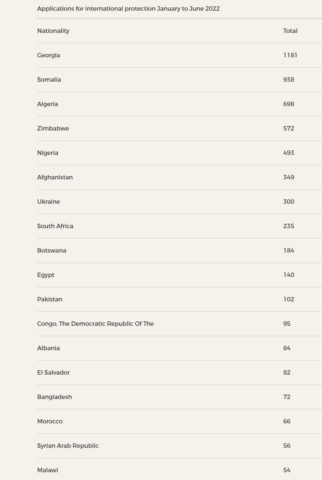
The breakdown of country of origin for people who have applied for and been granted protection confirms the trend we have previously referred to; namely, that the bulk of applicants are coming to Ireland from countries in which there are no wars or other human rights emergencies that would normally justify the granting of asylum.
Of the top ten countries of origin to the end of June, just under 70% claimed to have travelled to Ireland – which is in any event impossible in most cases without transiting another country where protection might be applied for – from countries, such as Georgia, Zimbabwe, South Africa, Algeria and Nigeria, where there are no crises that would justify this level of asylum seeking. This is confirmed by international statistics on asylum and international protection orders.
Deputy McGrath also requested information regarding the procedures for dealing with people travelling here from Georgia, South Africa and other places which are officially recognised here as “safe countries.”
In part of her response, Minister McEntee referred to Section 72 of the International Protection Act 2015 which defines safe countries of origin as those in which there is “generally and consistently no persecution; no torture or inhuman or degrading treatment or punishment, and no threat by reason of indiscriminate violence in situations of international or internal armed conflict.”
Not only do none of these factors apply to the vast majority of those who come here claiming asylum, but it is surely somewhat of an insult to states such as Georgia and South Africa to suggest that they are “failed entities” incapable of protecting their own citizens?
Gript contacted the Georgian embassy in Dublin requesting their view on the poor image that is projected here of their country on foot of the large number of applications by people claiming to be “fleeing” Georgia, but we received no response.
It is also highly ironic that parties such as Sinn Féin, who venerate all things to do with the African National Congress and its vastly wealthy leadership and hangers-on, should be happy for the purposes of their open borders immigration policy to support the claims made by people “fleeing” South Africa because they are being persecuted. Not exactly a good advertisement for crony socialism, is it?
Minister McEntee assured Deputy McGrath that her Department is attempting to accelerate the decision making process. An indication of what this actually might mean was provided in a reply to another Deputy in which she stated that this would be achieved “…through the recruitment of an external panel of barristers, solicitors and legal graduates.”
Well, call me a cynic, but asking the liberal Irish legal profession to help speed up an asylum business that is worth millions to them is a bit like asking John Kiely to advise the other hurling counties how they might beat Limerick.
There are of course others wetting their beaks. Just look at what our friends in the NGO migrant business are getting for “helping”.
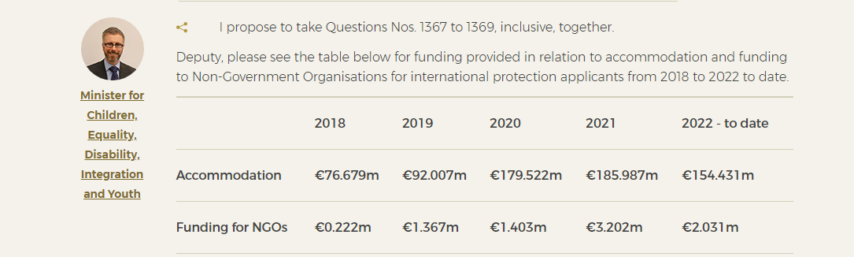
Do the sums. All of that comes to over €696 million in four and a half years. There have been 19,163 persons granted protection here over that same period. On average each of those people have so far directly cost the Irish people over €36,000 just for accommodation, and no doubt “advice” on accommodation. When one adds on the costs of social welfare, education, health, policing and so on, the costs are much higher.
Direct Provision alone cost €200 million in 2020. There were 14,364 persons in Direct Provision here on July 17 according to information given to Cork North Central TD Padraig O’Sullivan. But, of course, the state with the support of all the parties in Leinster House is planning to provide all of them with a free house by 2024. While simultaneously solving the housing problem despite only building, at an optimistic guess, around 30,000 new housing units a year.
Anyway, if you are in the NGO caper, or are the owner of one of the 173 hotels getting paid by the rest of us to house Ukrainian refugees now that Irish Times readers in Dalkey have mostly not followed up on their promises to let them crash in theirs; or of one of the 26 hotels used to accommodate non-Ukrainian asylum seekers who have made their way here from Gatwick and Heathrow or crossed the border at the Half Door, then you are quids in.