It is fair to say that recent weeks have not been kind to TUSLA, the Child and Family Agency.
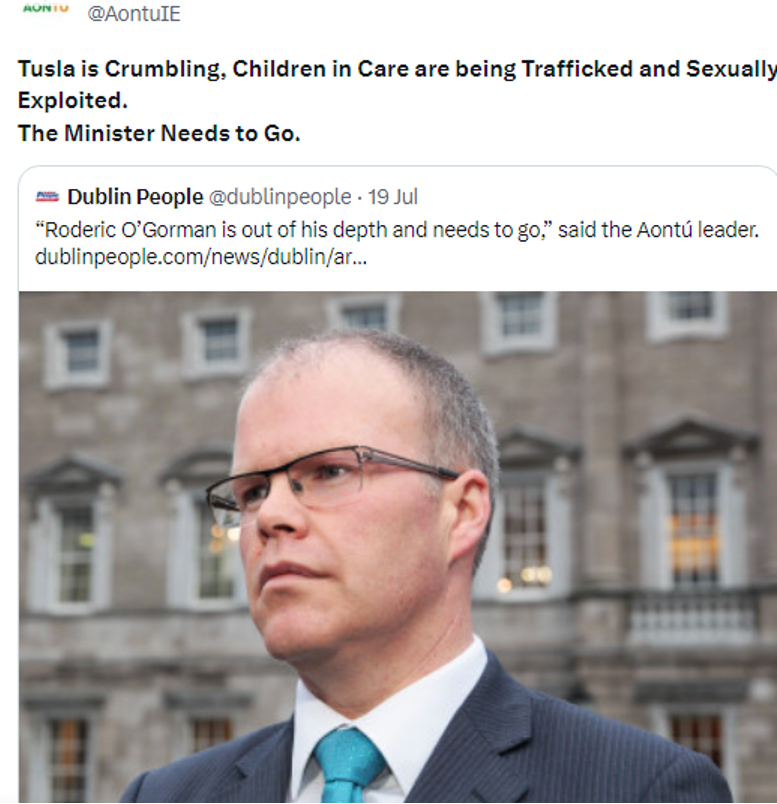
Gript and others have reported on the horror stories that have emerged with regard to what is happening to some of the children under the protection of the agency.
Among these are reports that children under the age of consent have fallen under the control of criminal gangs who are taking children from TUSLA care facilities in effect to be raped by adults.
So serious is this outrage taken, that the report Protecting Against Predators, has recommended that the Irish authorities undertake a similar inquiry as that which took place following the revelations regarding grooming gangs in several English cities.
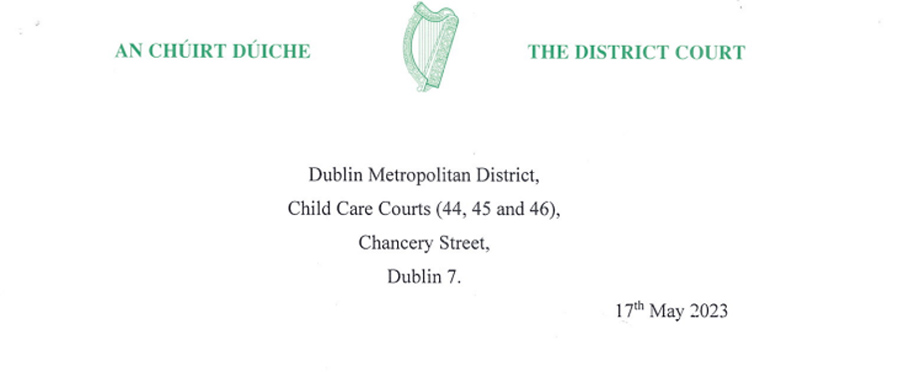
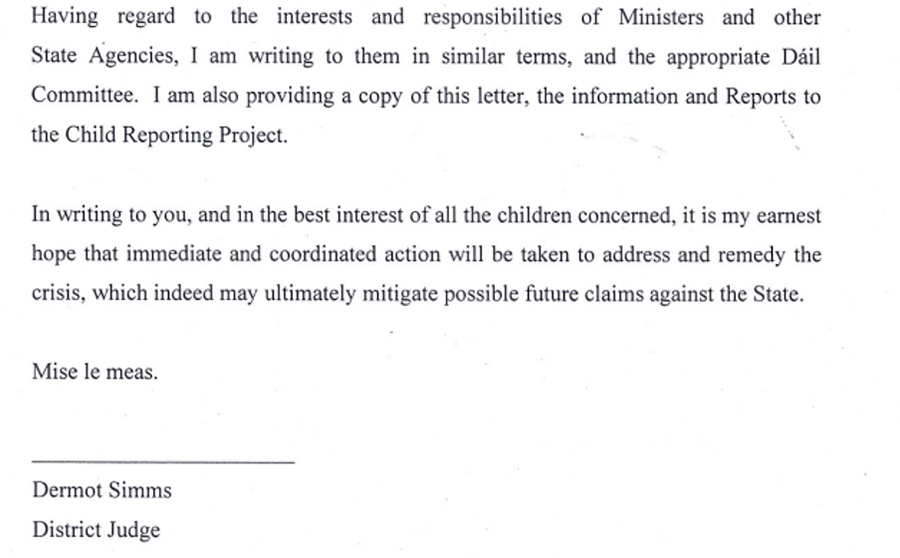
Even the current acting CEO of TUSLA, Kate Duggan, has admitted that the organisation is at “crisis point.” She was responding to a letter written by Justice Dermot Simms, published by the Child Law Project, which detailed his concerns gained from his own observations of court proceedings regarding the lack of suitable care provision, and even the shortage of properly qualified staff.
As Gript’s Niamh Uí Bhriain commented, “Whatever the hell Tusla is doing, it is not acting in loco parentis.” It was perhaps convenient then that the TUSLA annual report for 2022 was only published this week – convenient for the reason that the Dáil is now in recess for the Summer and that therefore the report could not have become the focus for continued interrogation by TDs of what indeed the hell they are at.
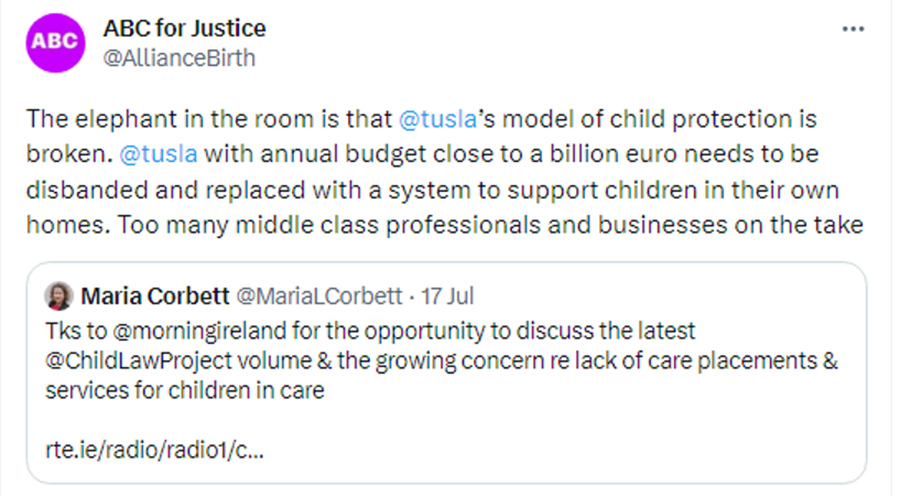
The report does provide much detail of the scale of the TUSLA operation, and without retailing the details of its day to day operations, the report makes it apparent that whatever else is amiss, that TUSLA is certainly not in need of “appropriate resourcing” in the sense of requiring more money as seems to be one of the main conclusions of a recent HIQA report into the agency.
In 2022, TUSLA had an income of one billion Euro. What it did with that money may be of interest, as some of the expenditure might suggest that it is perhaps not being properly targeted, and that perhaps some of the ways in which TUSLA basically contracts out a large part of its responsibility to others may be a contributory factor in the sort of horrors that have been referred to.
TUSLA spent over €348 million, or around a third of its total income, on renumerating for its staff of 4,676 employees. Of that number 73 were on salaries of €100,000 or more including former CEO Bernard Gloster, who resigned in March this year, who was on a salary of €192,000.
Members of TUSLA’s Board, which met ten times in 2022 and is chaired by former Labour Party leader and Minister Pat Rabbitte, were paid a total of €128,250.
Former CEO of Barnardos, and former comrade of Pat Rabbitte, Fergus Finlay, has never been shy about mounting the high moral ground when it comes to advocating for abortion, attacking the “far right,” and generally fighting what the late Des Fennell once described as the long won battles dear to the hearts of the Irish left liberal bourgeoisie.
Finlay has occasionally voiced a mildly critical note regarding TUSLA but in 2017 assured readers of the Irish Examiner that people could trust the agency to “protect our children.”
No one is arguing that highly skilled professionals ought not be paid commensurate to those skills but the public, who at the end of the day pay those salaries, are entitled to ask whether the people administering TUSLA at the higher levels are in fact fulfilling the tasks assigned to them.
Of more concern is the huge extent to which TUSLA contracts out to NGOs and other organisations. In 2022 a total of €206.3 million was granted to “community, voluntary and charitable organisations.” Among the leading beneficiaries were Barnardos, which received over €10 million; Extern Ireland – €7.4 million; the McVerry Trust – €6.4 million; and the Daughters of Charity – €6.2 million.
The question might be posed then as to whether that dependence on the part of the NGOs on state money perhaps softens some of their coughs when it comes to taking a more critical stance with regard to TUSLA and issues such as the exploitation of children under its care?
Also of note, and perhaps relevant to where exactly those children are being cared for, and by whom, is the fact that TUSLA paid €161.3 million to private facilities for “residential provision.” That compares to just €28.9 million spent on providing foster care to children who are placed in what are hopefully the more stable and safe environment of functioning families.
Surely a billion Euro funded, vastly staffed state agency can do better than spend such a substantial part of its budget on contracting private agencies to do the work that it is supposed to be doing? Especially given what we now know about the horrors that have been visited on children who are for the greater part being accommodated by private agencies to whom TUSLA has passed the buck.
The care and safety of children – whether Irish born or from overseas – is too important to be left in the hands of the sort of cosy state and NGO nexus that increasingly dominates key areas of Irish life.
