Tháinig na sluaite: organisers say 25,000 people marched through Dublin today calling for CEARTA: highlighting the urgency of protecting the Irish language, ensuring proper funding, defending the right to housing for those living in the Gaeltacht, and implementing language rights in practice.
Bhí an slua ag lorg CEARTA inniu ar an gcéad agóid náisiúnta dá leithéid ar son na Gaeilge agus na Gaeltachta le breis agus deich mbliana anuas.
I measc na n-éileamh atá acu, tá siad ag lorg maoiniú cothrom, an ceart chun cónaí sa Ghaeltacht, athchóiriú ar an gcóras oideachais, agus comhlíonadh cearta teanga a gealladh le fada, a dúirt Conradh na Gaeilge inniu.
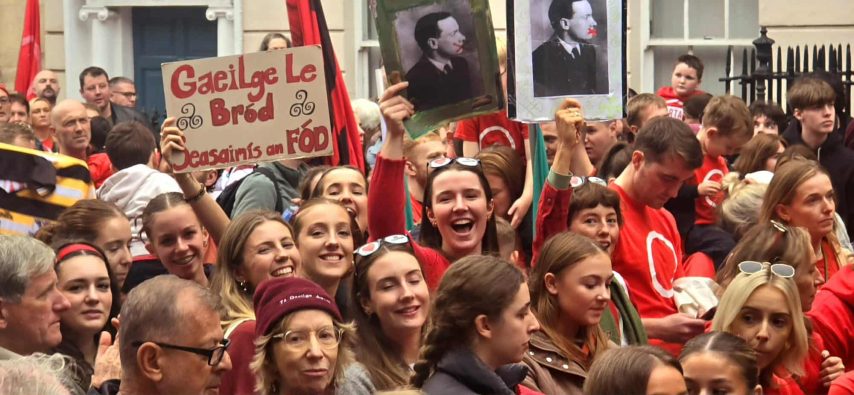
Thousands gathered in Parnell Square, with very large crowds of young people and families present, before marching through the city to Leinster House, chanting ‘Tír gan teanga, tír gan anam’ and
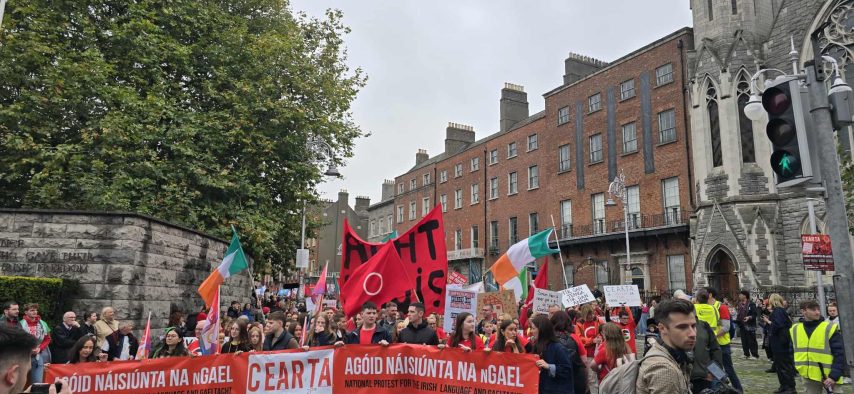
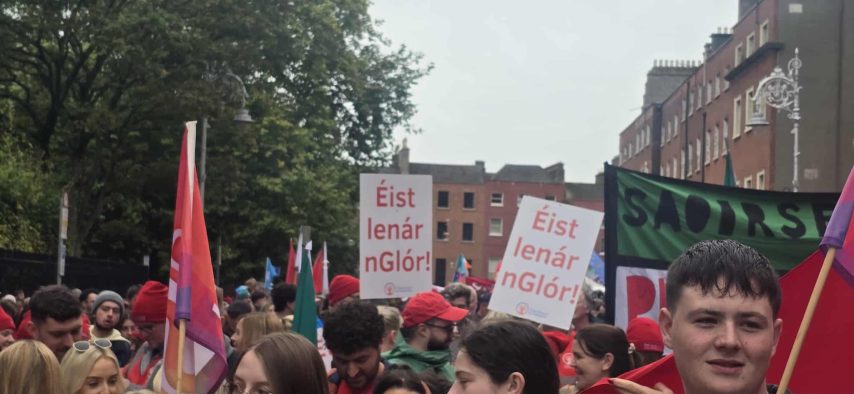
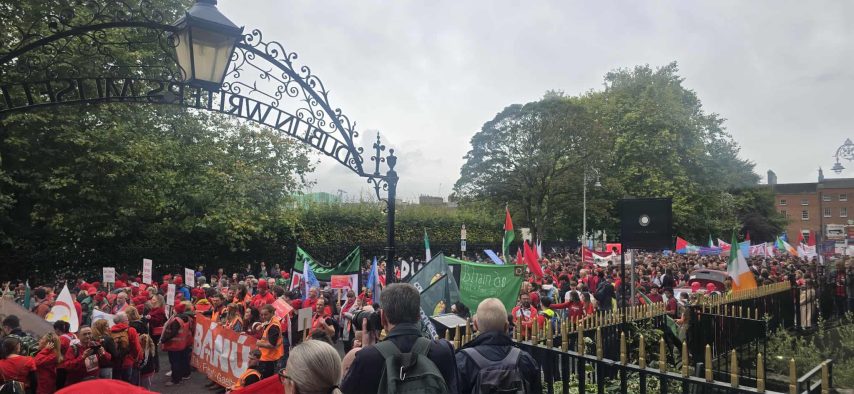
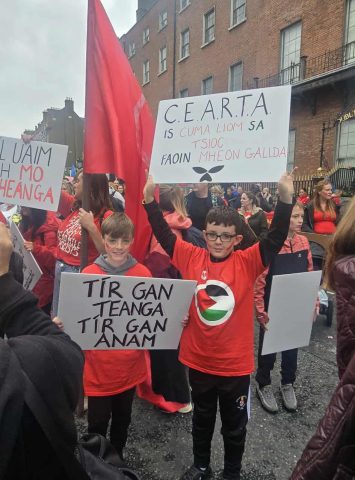
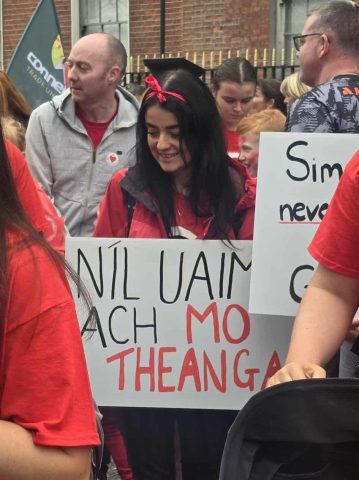
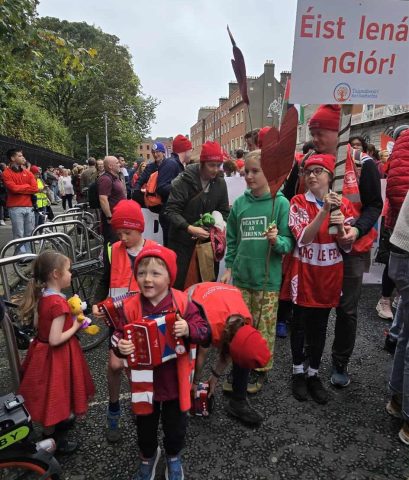
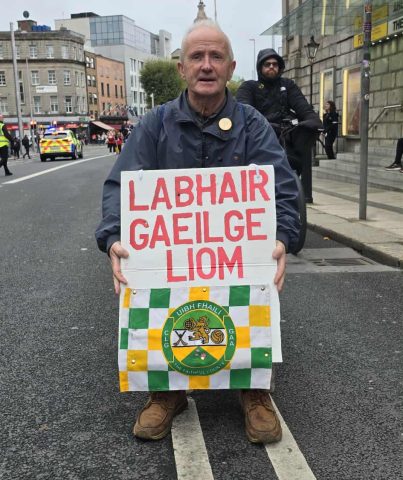
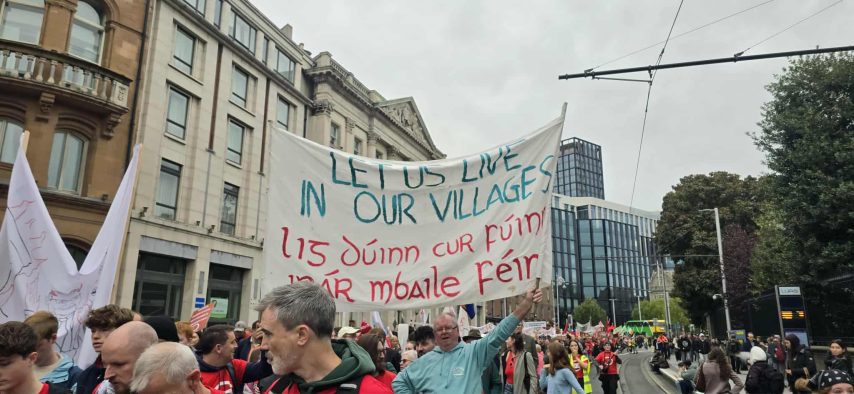
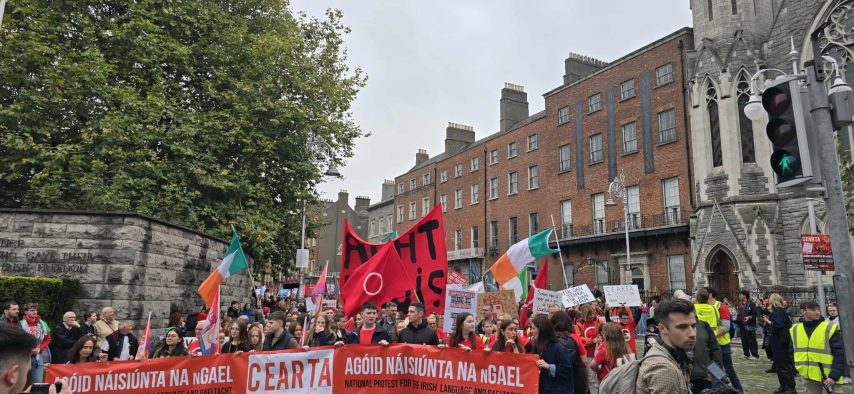
The size of the crowd was captured in drone footage from Conradh na Gaeilge as it packed out O’Connell Street. Slua ollmhór a bhí ann,
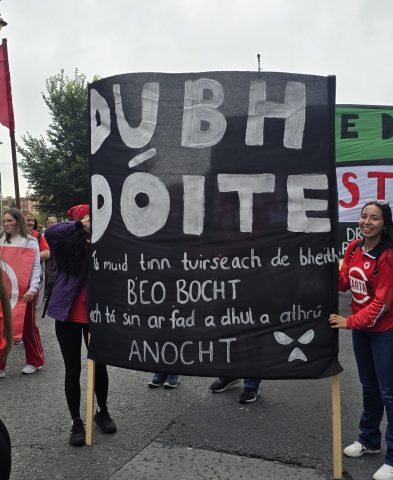
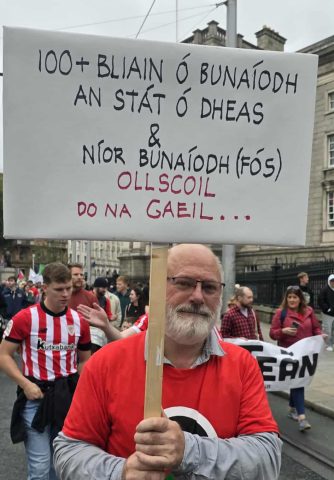
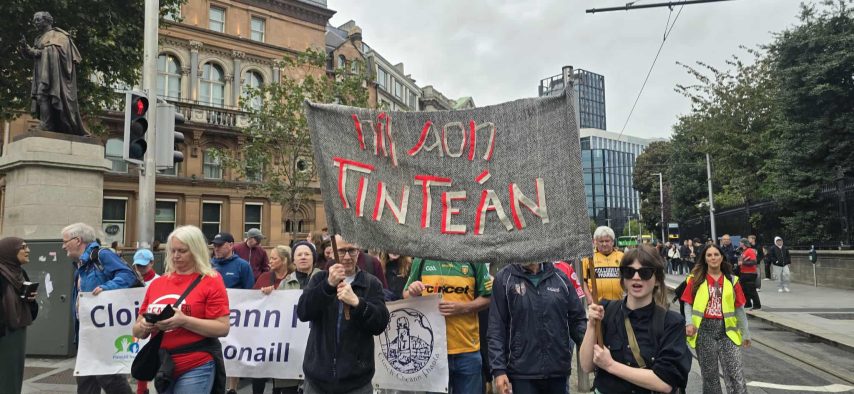
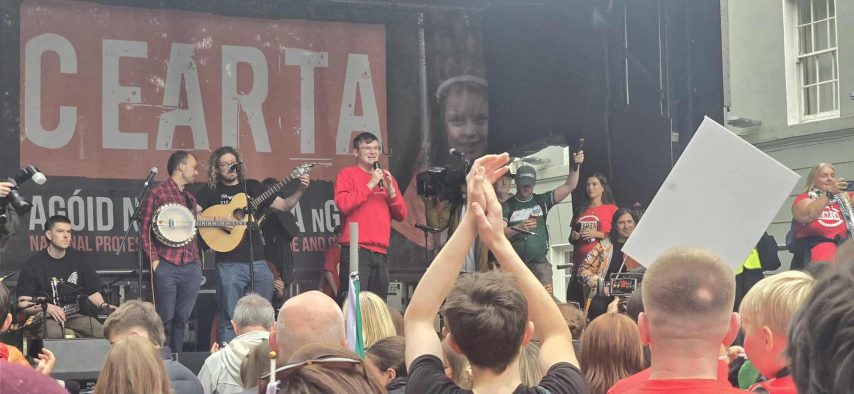
Bhí óráidí agus ceol thuas in aice le Teach Laighean: Speeches and music were heard at Leinster House including a stirring contribution from famed ceoltóir agus amhránaí Breanndán Ó Bheaglaíoch.
Dúirt Adhna Ní Bhraonáin, a bhunaigh an feachtas BÁNÚ go raibh gearghá cabhair a thabhairt do na Gaeltachtaí agus go rabhadar croí an teanga iontu.
“I was raised in the heart of the Conamara Gaeltacht, where Irish was the only language we spoke – at home, in school, in sport, in music, in every part of life.
“That richness is now under threat. Young people are being driven out because they cannot find homes in their own communities.
“Without homes, there can be no communities – and without Gaeltacht communities, the language cannot survive,” Ms Ní Bhraonáin told RTÉ.
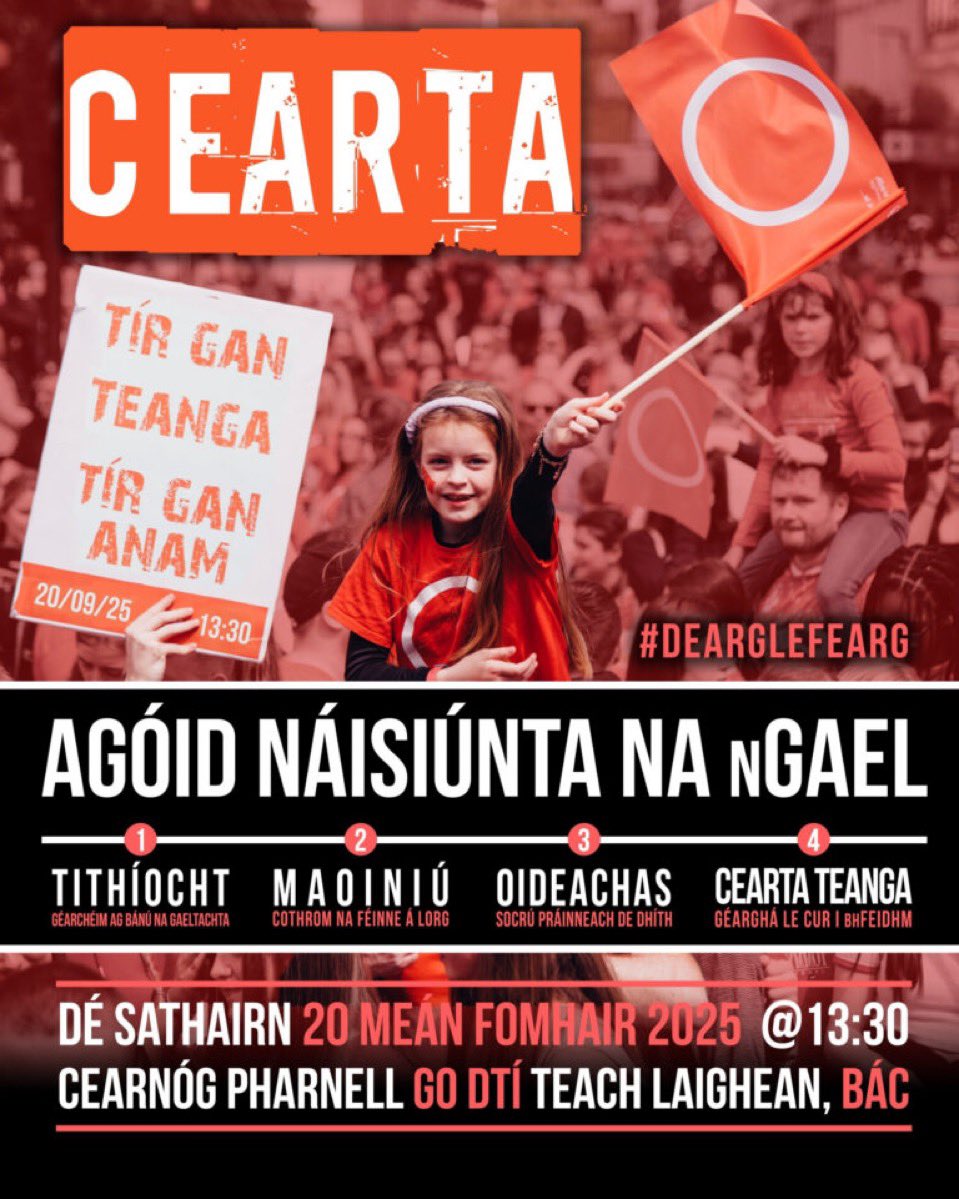
Níos luaithe ss seachtain, bhí an t-eolas seo ó Pól Ó Meardha faoin agóid agus an na haidhmeanna a bhí ag an ngluaiseacht.
Tá an mórshiúl seo eagraithe faoi scáth CEARTA: agóid náisiúnta a chuireann béim ar an ngá práinneach atá le hathrú suntasach ar pholasaithe teanga an stáit agus ar chur i bhfeidhm na ngealltanas atá déanta cheana féin.
Le fada an lá tá gearáin le cloisteáil ó phobail na Gaeilge agus na Gaeltachta go gcaitear go dona leo ó thaobh maoinithe. Níl na hacmhainní bunúsacha á gcur ar fáil, fiú nuair a gealladh iad i ndoiciméid stáit, arb é an Stráitéis Fiche Bliain Don Ghaeilge an sampla is follasaí de. Tá sé seo ag cur brú ollmhór ar eagraíochtaí pobail agus ar scoileanna ar fud fad na tíre atá ag iarraidh cur chun cinn na teanga a chur i bhfeidhm.
Ní hamháin sin, ach tá polasaithe na tithíochta i gceantair Ghaeltachta ag cur isteach go mór ar chumas daoine maireachtáil ann agus clann a thógáil ina gceantar féin. Chomh maith le praghsanna na dtithe ag ardú go leanúnach, tá an oiread sin maorlathais ag baint leis an bpróiséas gur minic nach gcuirtear tithíocht a chur ar fáil do mhuintir an cheantair, rud a chuireann isteach go tubaisteach ar úsáid laethúil na Gaeilge. Gan polasaithe soiléire agus éifeachtacha a chosnaíonn pobail dhúchais na gceantar seo, d’fhéadfaí buille marfach a bheith ann don teanga.
Tá an t-oideachas ar cheann de na réimsí is mó a bhfuil lucht na hagóide ag tarraing airde air. Cé go bhfuil scoileanna lán-Ghaeilge ag déanamh dul chun cinn, tá constaicí móra ann fós. Tá tuismitheoirí i ngach cearn den tír ag iarraidh go mbeadh rogha níos leithne ann chun oideachas trí mheán na Gaeilge a fháil. Cé gur léir ó shuirbhéanna rialta gur mian le 25% do thuismitheoirí na tíre oideachas trí Ghaeilge a bheith ar fail dá bpáistí, níl ach 6 % de bhunscoileanna na tíre ag feidhmiú mar Ghaelscoileanna. Tá an líon níos lú arís ar leibheál an mheánoideachais.
Tá eagraíochtaí éagsúla páirteach sa mhórshiúl seo, lena n-áirítear Conradh na Gaeilge, a bhfuil ról ceannasach acu i gcónaí maidir le cearta teanga. Beidh gníomhaithe Gaeilge, mic léinn tríú leibhéal, tuismitheoirí, múinteoirí agus ionadaithe ó phobail Ghaeltachta ag freastal, in éineacht le daoine ó gach cearn den tír a bhfuil suim acu sa teanga agus sa chultúr. Léiríonn sé seo go bhfuil i bhfad níos mó ná ceist áitiúil amháin; is ceist í a bhaineann le hÉirinn ar fad.
Is géarchéim eiseach dúinn uilig má ligtear an teanga le sruth. Mar a mheabhraíonn focail an Phiarsaigh dúinn, ‘Tír gan teanga, tír gan anam’. Ar an Satharn beag seo, tiocfaidh na mílte le chéile ar shráideanna Bhaile Atha Cliath le cinntiú nach amhlaidh a bheidh.
National Protest for the Irish Language and Gaeltacht
The march will begin at 1:30 pm from Parnell Square and make its way through the city centre before concluding with a rally at Leinster House. The event, organised under the banner of CEARTA, is expected to draw participants from every corner of the country, with a particularly strong representation from the north. Its central aim is to highlight the urgency of protecting the Irish language, ensuring proper funding, defending the Gaeltacht, and implementing language rights in practice, not just in theory.
For decades, Irish-language advocates have argued that state funding has been inadequate and inconsistent. Community groups, schools, and cultural initiatives have often struggled to survive despite promises from successive governments. This underfunding has created an uneven playing field and, in many cases, slowed the growth of Irish as a living, community-based language.Alongside this, the housing crisis in Gaeltacht areas has become increasingly severe. Rising prices, bureaucracy and limited availability are pushing young families out of their native communities, which threatens the survival of Irish as a community language in those regions. Protesters argue that without specific housing policies designed to support native speakers, the Gaeltacht itself faces existential decline.
Education is another area where campaigners are demanding urgent reform. While Irish-medium schools have been a success story in many places, parents across the country continue to face barriers in accessing Irish-language education. Teachers report shortages of resources, and complain that Irish is often treated as a subject rather than a living language. This is particularly evident in the nature of the curriculum, with an obvious lack of focus on creating fluent speakers. Campaigners believe that access to high-quality Irish-medium education should be available to all, and that this requires proper investment and planning.
There is also frustration with the slow pace of implementing language rights legislation. Both in the south and north of the country, campaigners feel that both states have failed to deliver on commitments. This is expressed in a hypocritical fashion in the southern state, with often outright hostility in the northern state. Campaigners argue that legislation without implementation is meaningless, and that people who wish to live their lives through Irish continue to face barriers in public services, education, and community life. This gap between promises and reality is one of the main reasons behind Saturday’s demonstration.
The march has been organised by Conradh na Gaeilge, the principal advocacy organisation for the language, but it has attracted support from a wide range of groups: Irish-language activists, third-level students, teachers, parents, and community representatives from both Gaeltacht and non-Gaeltacht areas. This coalition reflects the fact that the Irish language is not just a local or minority issue, but a national concern. The scale of participation shows that people want action, not just words.
At the heart of the protest lies the famous phrase of Pádraig Pearse: “Tír gan teanga, tír gan anam” — a country without a language is a country without a soul. This statement captures the spirit of the movement: the belief that Irish is not simply an optional subject in school or a cultural relic, but something essential to the nation’s identity. Without Irish, campaigners argue, Ireland risks losing something of her very essence, something fundamental, its sense of itself, indeed its unique national psyche.
This Saturday’s march seeks to put pressure on governments, north and south, to honour their promises, protect Gaeltacht communities, and properly fund education and community initiatives. For many, it represents a turning point, a chance to show that the Irish language still matters deeply and that the public will not accept neglect or empty rhetoric any longer.
The march is expected to be one of the largest demonstrations for the language in recent memory. People will travel from all over Ireland to take part, bringing banners, songs, and cultural expression with them. The hope is that this visible show of support will compel political leaders to act decisively. It is, in the words of many campaigners, a test of whether Ireland truly believes in the principle it so often proclaims — that the Irish language is central to who we are.
As Pearse’s words, ‘Tír gan teanga, tír gan anam’ remind us, a country that neglects its language risks losing its soul. On 20 September 2025, thousands will take to the streets to insist that Ireland’s soul be protected, nurtured, and allowed to thrive through once again.