On Thursday, the EU published the 2023 figures for the granting of first residence permits to persons coming to stay from outside of the EU. They show an overall increase of 4.7% on 2022, with the total number of first permits reaching 3,741,015.
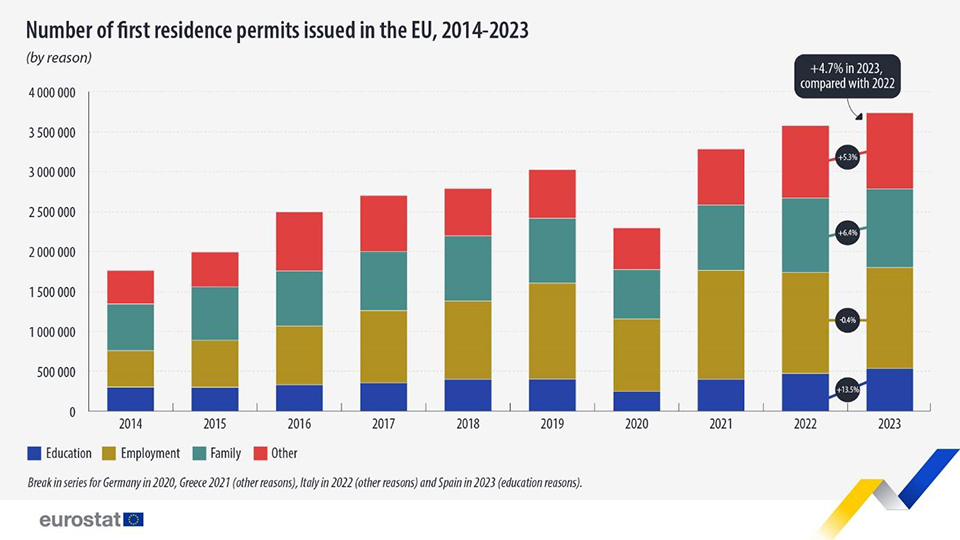
That has more than doubled in the past ten years: in 2014 it was 1.76 million. The main reason why a person was granted a permit in 2023 was employment which accounted for 33.8% of the total.
Family, which includes the issuing of permits for the dependents of both persons with work and asylum permissions, accounted for 26.4%.
There was a significant rise in the number of permits issued for ‘other’ reasons which is mostly made up of successful asylum applicants who have been granted permission to remain. This rose to 956,646 or 25.6% of the total, an increase of more than 48,000 from 2022.
The reasons why people have been given first permissions have changed. ‘Family’ accounted for one third of the permissions in 2014, when ‘employment’ was the second most common reason at 26%. Work is now the main reason and reflects the fact that the “free movement of labour” is the main driver of migration within the EU.
That is connected to the increase in the other categories as many of those from outside of the EU who come to study stay to take up employment and, in many cases, work while studying. Many workers who remain also bring over family dependents. In relation to asylum seeking, it is generally accepted that a substantial proportion of that is also economic migrancy.
In relation to the Irish state, the EU figures show an increase of just under 3,000 from 2022 to 88,595 first permits issued to non-EU citizens in 2023. This does not account for the overall level of immigration as it does not include citizens of other EU states who can come to Ireland without being required to have a work permit.
The level of inward migration is closer to the 205,468 new PPS numbers that were issued to persons of other than Irish nationality in 2023. The Central Statistics Office estimates that 60% of those who are issued with a PPS number stay for more than one year, so the baseline estimate for 2023 is over 123,000.
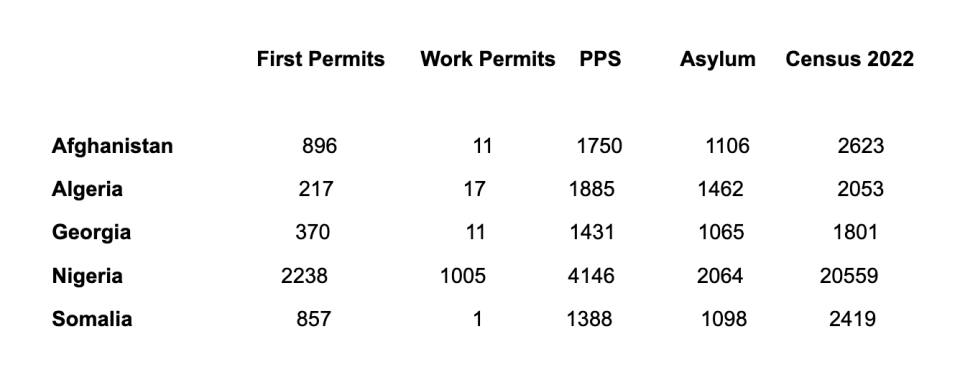
A comparison of the latest statistics covering first permits. PPS issues, applications for International Protection and the numbers born in the top five countries of origin for asylum applications in 2023 would tend to support the accuracy of PPS issues as an estimate of immigration.
First Permits Work Permits PPS Asylum Census 2022
Afghanistan 896 11 1750 1106 2623
Algeria 217 17 1885 1462 2053
Georgia 370 11 1431 1065 1801
Nigeria 2238 1005 4146 2064 20559
Somalia 857 1 1388 1098 2419
The most striking statistic is that the total number of new PPS numbers issued correlates closely to the combined total of first permissions and asylum applications. A gap of just 156 in the case of Nigeria; of 252 for Afghans; 4 for Georgians; and 206 for Algerians.
There was a much bigger difference in the case of Somalians who were issued with 1,388 new PPS numbers but of whom 1,955 applied for asylum and 857 were given a first permit. That is perhaps explained by the high 86.4% first acceptance rate here in 2023 for Somalian asylum applicants in comparison to 19% for Nigerians, 7% for Algerians and 6.3% for Georgia. The total of 763 first permits for Somalians for ‘other’ reasons is close to the 720 first applications for asylum that were accepted here.
The profile of those granted first permits in Ireland differs greatly from the EU average. While just 14.3% of those issued with a permit in the EU were in ‘education,’ this category accounted for 45% of the total permits issued here. Employment was the second main category, accounting for 27% in comparison to 33.8% for the EU. The granting of permissions to persons including applicants for asylum fell slightly to 23% of the overall figure.
A comparison of the EU statistics for permissions connected to work and to the numbers of work permits issued shows that there were 30,981 issued for the whole of 2023. The number of renewals is not included but the average for other years has been under 20%. That would suggest a total of new permits issued of around 25,000, which is close enough to the EU calculation of 23,918.
What both the overall figures for the EU and those for Ireland indicate is that immigration from countries outside of the EU continued to increase last year. The number of first time permits issued by the Irish state increased by 3.6% compared to 4.7% for all EU member states.
(It ought to be noted that all of the figures for the Irish state come with a ‘u’ which indicates that the figures are considered to be “unreliable.”)