The statistics on new asylum applications within the EU were published yesterday.. They show a huge increase in the numbers of persons applying within the 27 member states, an upward curve that shows no sign of slowing, as has been evidenced in the sharp and steadily increasing numbers in the Irish state since the beginning of 2024.
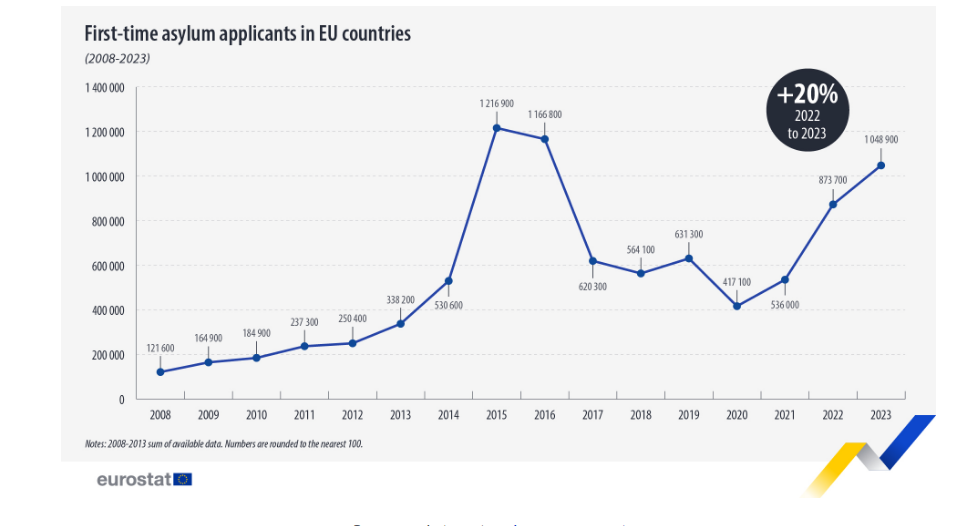
A total of 1,048,900 persons made an application for International Protection in the 27 EU states last year. This represents the third highest number ever recorded, and the highest since 2015 and 2016 when Europe was facing large influxes of people due to the war in Syria.
The figure for last year was up 20% over 2022 and a 250% increase on 2020 when travel restrictions due to the Covid lockdown brought about a temporary downward blip.
The official statistics do not of course include the numbers who enter EU states illegally. This looks certain to be a huge issue in the elections for the European Parliament to be held in June.
A poll published by Euro News this morning shows that 88% of voters polled in 17 member states – Ireland was not included – believe that the “fight against irregular migration” is important and that 59% believe that it is a priority.
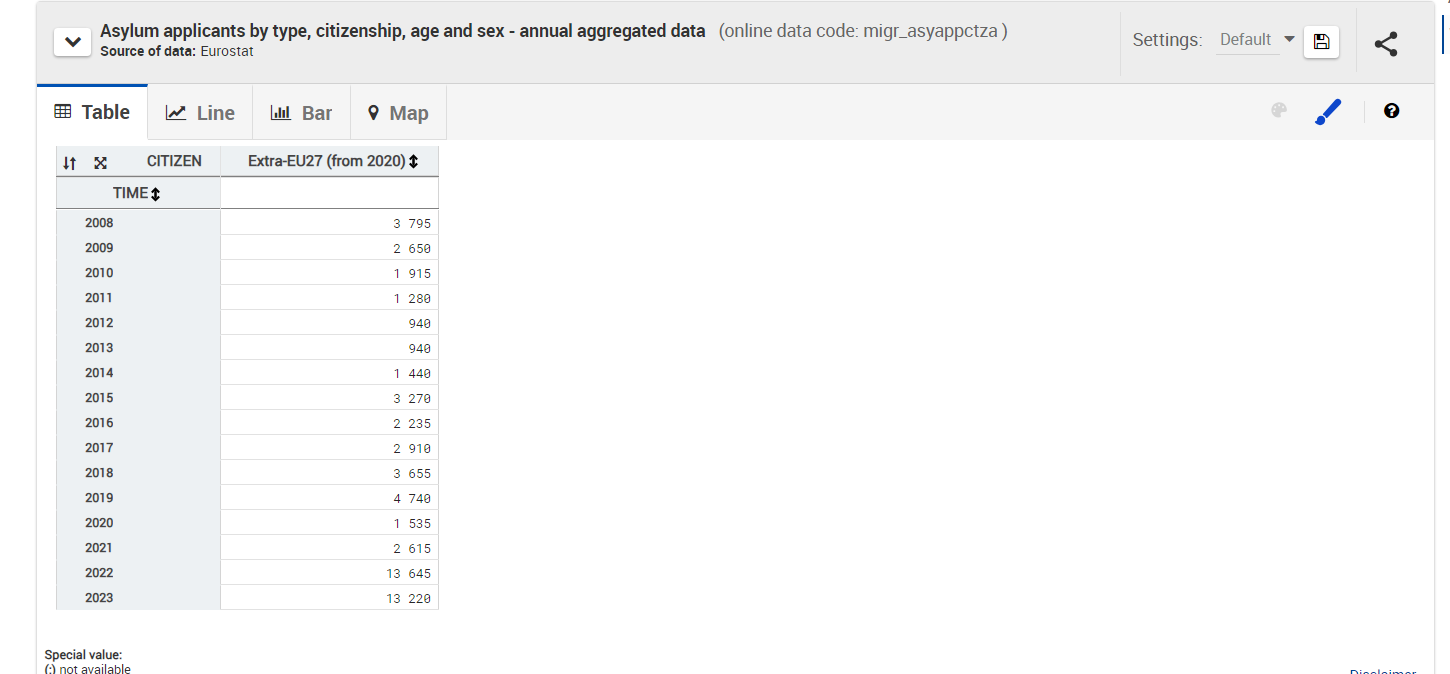
The overall trend in applications for asylum within the EU can be seen here – as illustrated by the table below which contains the annual number of new applications to the International Protection Office in Dublin since 2008 – which shows a similar pattern although official figures here indicated that there had been a slight drop in the numbers of new applicants, of 425 between 2022 and 2023.
While government and other figures here were pointing to that as a counter argument to the growing protests that continued to the end of 2023, the statistics for 2024 to date indicate that any slight reverse last year will be more than compensated by numbers which are on course to exceed any previous record.
There have been 4,354 new applications for International Protection in the first eleven weeks of 2024 to the week ending in St. Patrick’s Day. That compares to 3,387 for the same period in 2023. That is an increase of 28.5% which if replicated over the year will mean an intake of just under 17,000. If the current weekly level of new arrivals continues, and there are no indications that it will do otherwise, then that figure will be over 20,000.
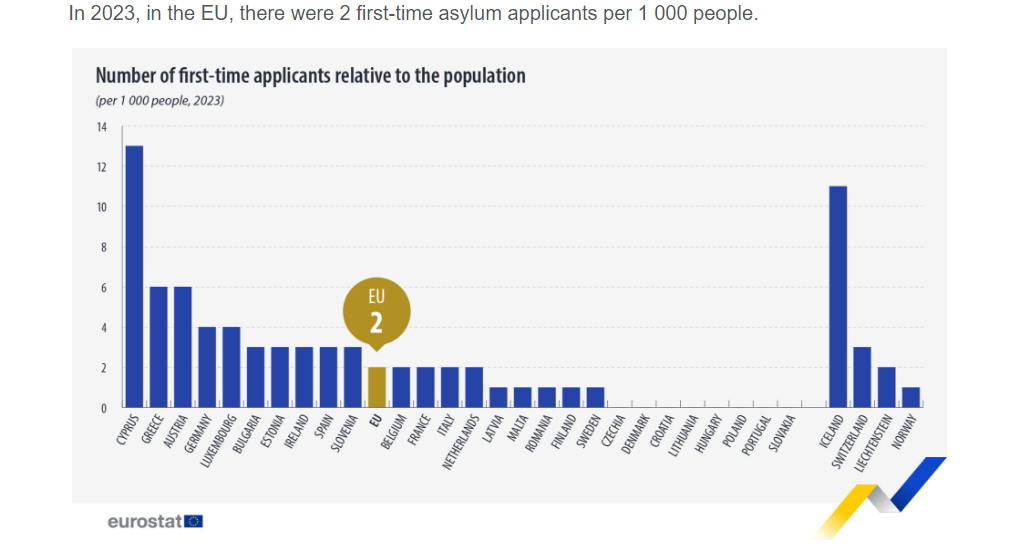
The latest statistics on the per capita intake of new applicants for International Protection show that the Irish state is above the EU average, and among the top 8 of the 27 member states.
Given that Cyprus and Greece are the leading two on this metric – and have been in the frontline of the wave of African migrants from across the Mediterranean – Ireland’s position as the most geographically distant and difficult to reach of all EU states illustrates that the concept of “first safe country” is a meaningless one for those who arrive here.
PER CAPITA INTAKE
The per capita intake of applicants for International Protection – and this does not include the Ukrainians who were granted Temporary Protection between February 2023 and February 2024 – has been rounded to 3 per 1,000 for last year.
That is one third higher than the EU average and the figure for countries such as France and Italy and three times that of the Scandinavian member states.
Denmark managed to buck the overall trend and almost halved the number of applicants who were allowed to enter the country from 4,475 in 2022 to 2,355 in 2023. That the apparent inevitability of all this is not inevitable at all is further underlined by the fact that Denmark in 2015 accepted 20,825 new applicants for International Protection.
If the number of persons who have been accepted into the Irish state as both applicants for International Protection and the 104,870 Ukrainians who the Central Statistics Office has recorded as having been issued with a Personal Public Service Number (PPS) over the past two years to the end of February are combined then we have taken in 131,735 persons seeking asylum and protection.
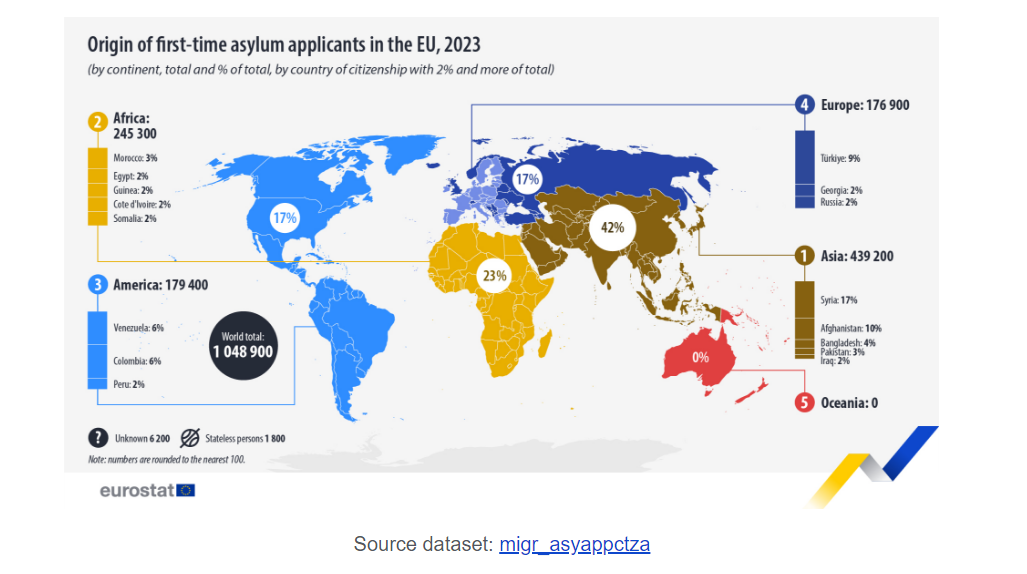
The table below shows where applicants for asylum originate. The greatest number across the EU as a whole – 43% – come from Asian countries. Africa at 23% accounts for the next highest proportion. The Irish state, as in other metrics, differs quite markedly from the EU average in this regard. At the end of 2023, more than half of those in IPAS accommodation who were claiming International Protection were from African countries.