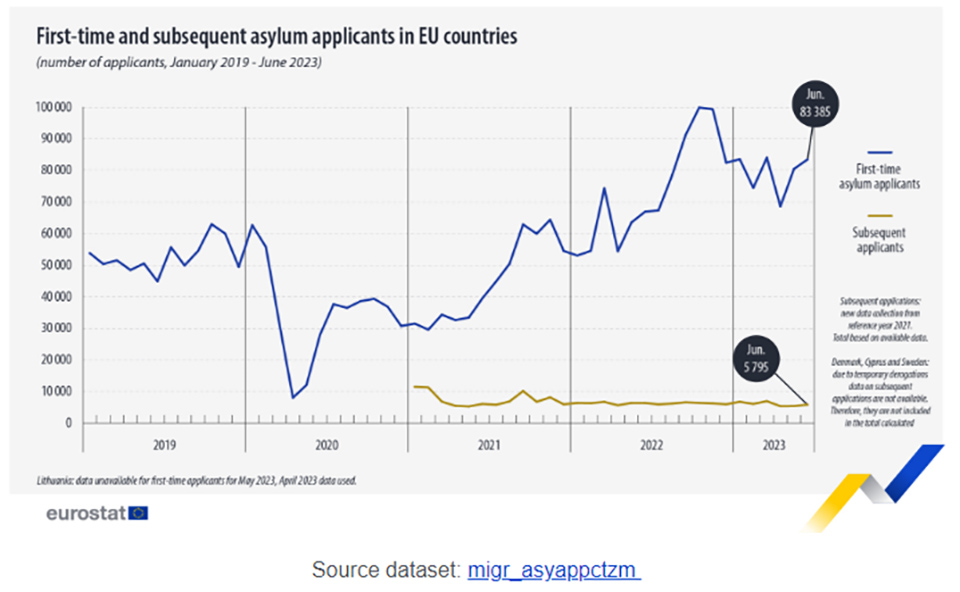
The most recent statistics on asylum seeking in the EU show that there was an increase of almost 25% in the number of first-time applications made in June this year compared to June 2022. The total number was 83,385.
As the graph illustrates, the level of asylum seeking continues to steadily increase despite several monthly falls in the first part of the year. The figures from the International Protection Office in Dublin show that there was a significant increase in the number of applications made here in August, with a total of 1,158 compared to 901 in June when the EU statistics were compiled.
The Eurostat figures show that there were 900 applications in Ireland in June, down from 945 in May. These confirm the official figures here when rounded up. Where the Irish state differs from the overall EU picture is in the countries of origin. Syrians accounted for the largest number of applications across the EU, but for a very small number of applicants here.
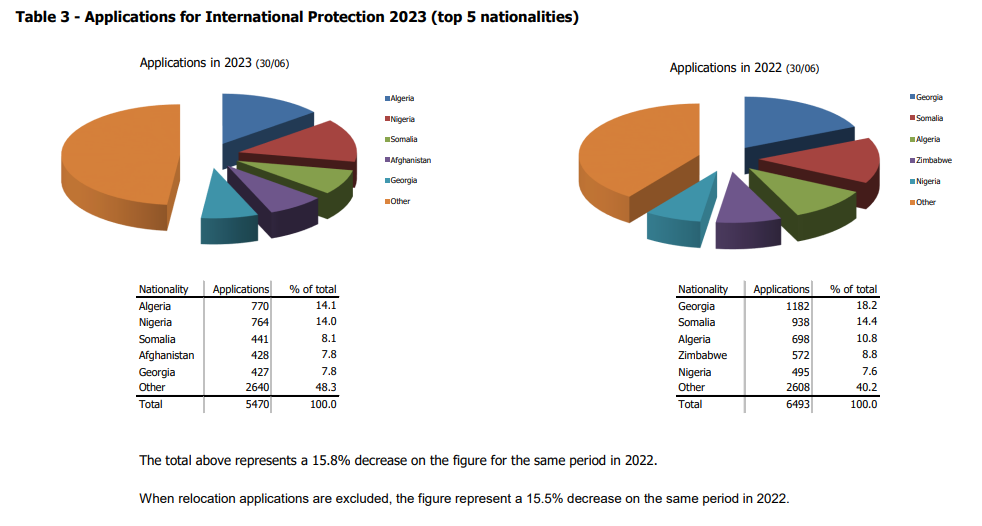
The statistics on asylum applications of course only represent a part of the overall picture. They do not take into account the number of people who illegally enter EU states, other than the small proportion of overall applications that are partly comprised of people who make later applications, perhaps having been detected to be illegally resident.
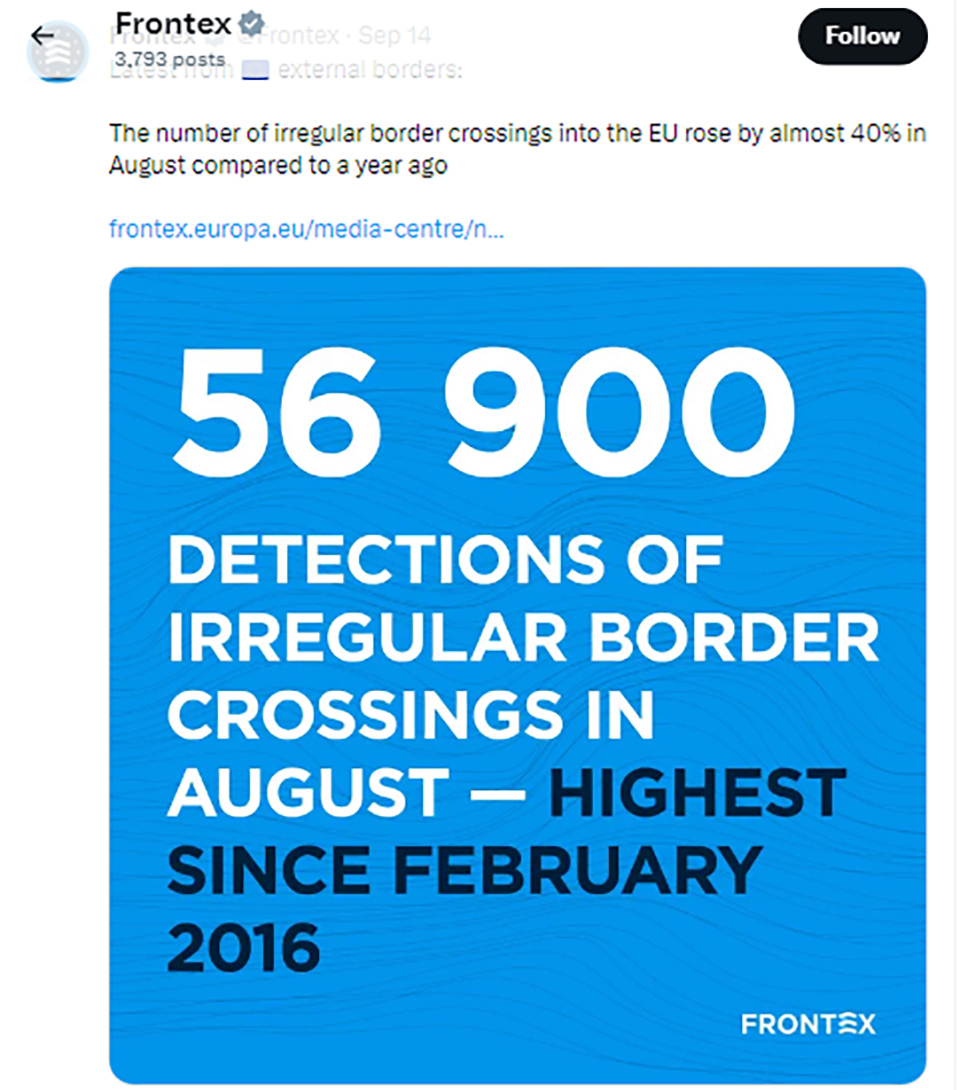
The latest information from Frontex, the EU border guard, and valid to the end of August, show a similarly large increase in the number of people stopped in the process of entering an EU state illegally. There were 56,900 such detections in the month of August alone.
If that monthly figure were to average out over the entire year, and that is entirely possible if the current level of Mediterranean crossings are not curtailed, it would amount to twice the 330,000 illegal crossings that were detected in 2022.
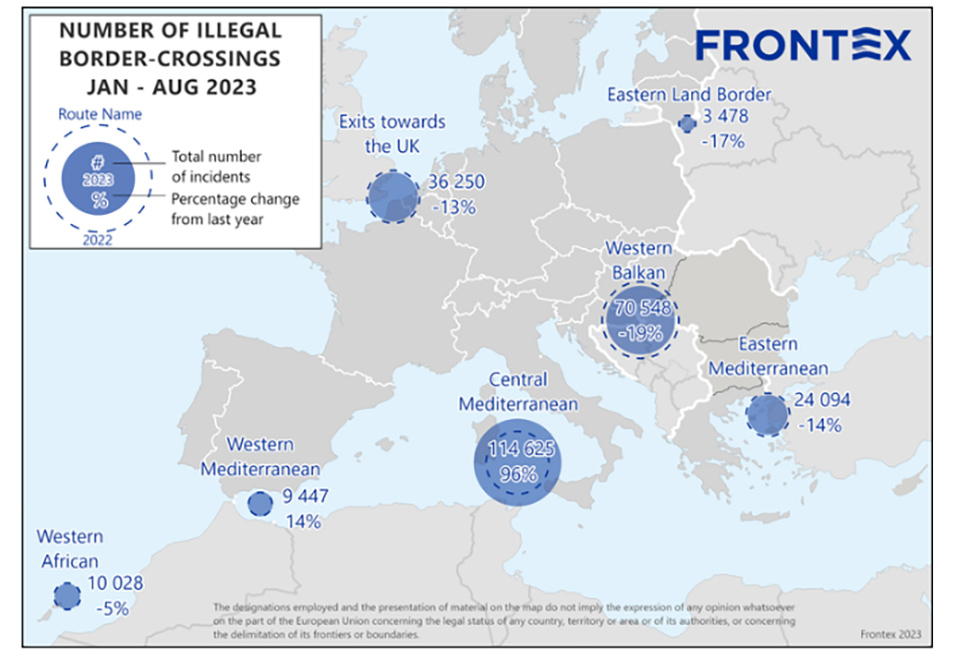
Already, for the first eight months of 2023, there have been 232,350 detections which was an increase of close to 20% on the same period in 2022.
Crossings of the Mediterranean make up the vast bulk of the increase in illegal entries. They have almost doubled over the first eight months of the year. As the map illustrates, there appears to have been greater success in curbing illegal entries in other parts of Europe. Frontex attributes this, in the case of the western Balkans for example, where border crossings have fallen by almost 20%, to “tighter visa policies.”
Of course, that is in large part due to the much stricter attitude taken by states in the region. As is the case in the northeastern sector, where a Polish MEP recently pointed out to the Parliament that Poland has “zero illegal immigrants.” That despite the huge generosity and openness that the Poles have demonstrated towards the hundreds of thousands of Ukrainians who have been given temporary protection there.
If the Poles and others with long land borders facing regions from where huge numbers of people would enter Europe illegally if permitted can exercise such strict controls, then there is little excuse for a state like Ireland which is an island to which illegal immigrants have to come here by plane or boat, in some cases via the internal border with the north.
As the crisis in the Mediterranean continues, and as Italy and other EU states await to see what impact the van der Leyen plan might have on the numbers crossing from north Africa, Frontex itself pulls no punches with regard to what it regards as the main factor in it all.
The report attributes the rising numbers crossing the sea to “smugglers offering lower prices for migrants departing Libya and Tunisia amid fierce competition among the criminal groups.” If that is the case, and if there are seemingly unlimited numbers of people who would come to live in Europe given the opportunity, then we are truly facing the “epochal challenge” described by Giorgia Meloni.