Bones previously identified as belonging to domestic cattle and thought to mark the beginning of farming in Ireland were “never cattle at all”, according to new research from the UCD School of Archaeology.
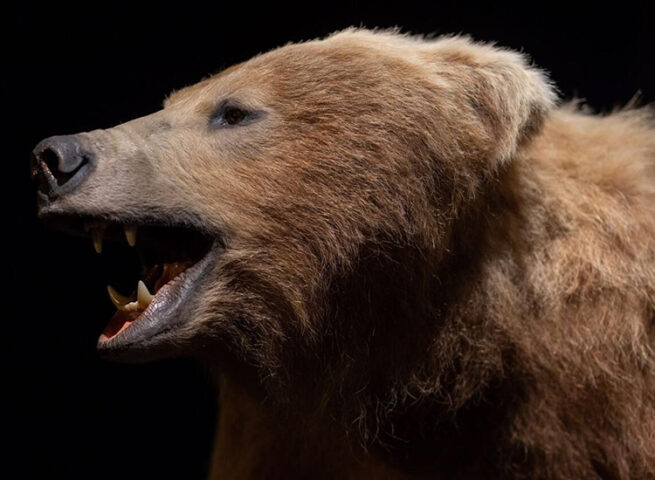
It is now believed that the “Kerry Cow” bones found more than 30 years ago during excavations at Ferriter’s Cove on the Dingle Peninsula belonged to a bear and wild boar.
The finding is described as rewriting a “key chapter” in Irish prehistory.
The animal remains discovered during the initial Co. Kerry excavations dated to the end of the Mesolithic period (8000-4000 BC).
They were frequently cited as proof that before agriculture became established in Ireland there was contact between its Mesolithic hunter-gatherers and Europe’s Neolithic farming communities.
The bone fragments, believed at the time to be those of cattle, were considered to be the earliest evidence for the presence of domesticated farm animals on the islands of Ireland and Britain.
The latest research removes “one of the most significant pieces of evidence” for when agriculture began in Ireland or Britain. According to UCD, it will require a “rethink” of when and how the islands’ populations moved from Mesolithic hunter-gatherer lifestyles to Neolithic farming societies.
The new findings come as part of a Research Ireland-funded postdoctoral project at the UCD School of Archaeology, which is led by Dr Martin Moucheron under the guidance of Professor Graeme Warren.
The project is re-examining important Mesolithic archaeological sites using modern scientific techniques.
The researchers implemented Zooarchaeology by Mass Spectrometry (ZooMS) analysis, which identifies species through proteins preserved in ancient bone collagen.
Eight samples were sent to the CNRS lab in Lille, France. Of these, six resulted in positive species identification.
One was identified as belonging to a wild pig; two long bone fragments were identified as human, and confirmed as Homo Sapiens by ZooMS; two indicated belong to a bear; and another sample indicated a wild boar.
The findings are detailed in the latest edition of PAST, the newsletter of the prehistoric society, which says that “there is now no evidence of contact between Ireland and its Neolithic neighbours before 4000 BC”.
However, the newsletter added that the results offer “exciting possibilities” for future research.
“Isotope and ancient DNA (aDNA) analyses of the human remains, which are rare in the Mesolithic period, will contribute significantly to the current corpus,” it said.
Additional analyses are also underway to determine whether the bear remains belonged to brown bears or polar bears, which researchers hope will provide new insights into prehistoric Ireland’s bear populations prior to their extinction during the Bronze Age.
“For at least four millennia hunting and gathering people lived on the island, and there is a common conception that they left little trace and that we know very little about them – unlike the megaliths of Neolithic farmers, who are portrayed in ways that feel very familiar in Ireland,” Dr Moucheron said.
“But there is much we can understand about Mesolithic people just by going back to the sites and material we have, and by looking at them with new eyes and new techniques – and an open mind,” he added.