It would appear of late that the Irish Government and Sinn Féin mostly – and one must allow for differences in Cabinet with the Greens and divisions within Sinn Féin – are attempting to hang tougher on immigration.
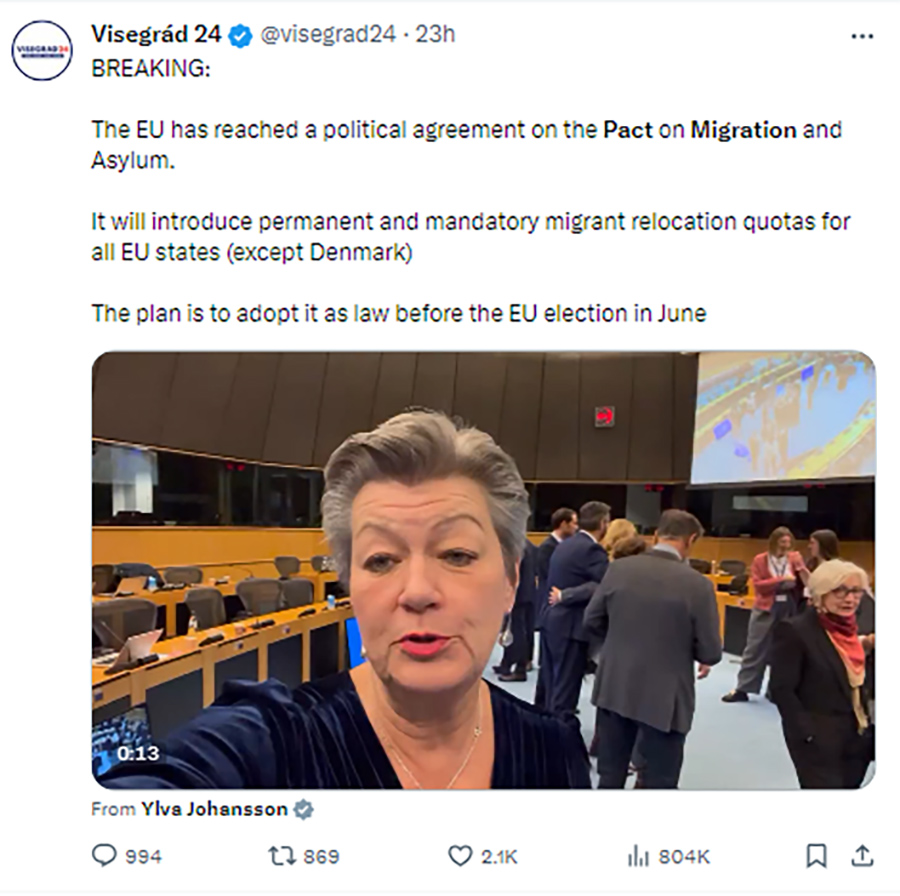
Their biggest motivator is likely that they know that they have lost the room on the issue. It is interesting then that the official spin on the Migration Pact agreed yesterday between the European Parliament and the European Council of Ministers is that this will allow greater national controls. Minister for Justice, Helen McEntee, welcomed it as striking “an important balance between effective asylum and return procedures and protections for those seeking protection who are the most vulnerable.”
The Pact itself, as Gript has previously reported, will basically mean that each European state will be required to set a quota of people it is willing to accept claiming asylum, or will otherwise be fined €20,000 for each applicant that it refuses to take. What it does not do is provide states, or indeed the EU as an entity should it have the will to do so, to deal with the current levels of illegal residents.
The EU centrally also retains the power to impose asylum seekers when it decides that there is an emergency situation somewhere in the world. Given the loose definitions of what that might consist of that are current across most of the centre right and left, that is not a power that ought to be conceded easily.
The scale of what is facing Europe is enormous. There were more than 870,000 asylum applications made in EU states alone in 2022 – close to one million across all of Europe – and that is likely to be surpassed this year, given that the figure was already approaching 700,000 at the end of August. That is apart from over 4 million Ukrainians granted Temporary Protection and several hundred thousand estimated illegal entrants. Around 330,000 attempted illegal border crossings were prevented by Frontex in 2022.
While the NGOs and most of the left are claiming that the Pact represents a victory for “right wing populists,” the European Conservatives and Reformists (ECR) voted against the Pact in the decisive Parliament vote in April, as did the group that contains the French Rassemblement National.
They all opposed it because they do not believe that it goes far enough, and that the Pact will impose conditions that will make it difficult even for governments that wish to take a more restrictive stance to do so. The fear among nationalist and conservative critics is that this Pact will impose legal mandates that even democratically elected individual governments will find it difficult to circumnavigate.
It is notable in that context that the Pact is being rushed to conclusion and final approval by the Parliament before the June 2024 European elections which are predicted to significantly shift the balance in the Parliament against the pro-migration centre right and left. Such a shift might well presage a similar change in the complexion of member state governments.
The politics of the issue are, of course, crucial and presumably explains while Italian Prime Minister Meloni has welcomed the Pact as she believes it will allow Italy to impose more restrictions. Her stance is understandable given that Italy is a prime target for people trafficked and transported across the Mediterranean. The Italians can probably not be blamed much for wishing to see the “burden shared.”
Meanwhile, the spin here in Ireland, led by the NGOs with skin in the migrancy sector and who need high levels of intakes in order to sustain themselves, is that the Migration Pact represents a crackdown, the truth is far from that. That is understood by those who have opposed it, including the Hungarian government which is the last one standing following the electoral defeat of Law and Justice in Poland who also opposed the Pact and the penalties it imposed.
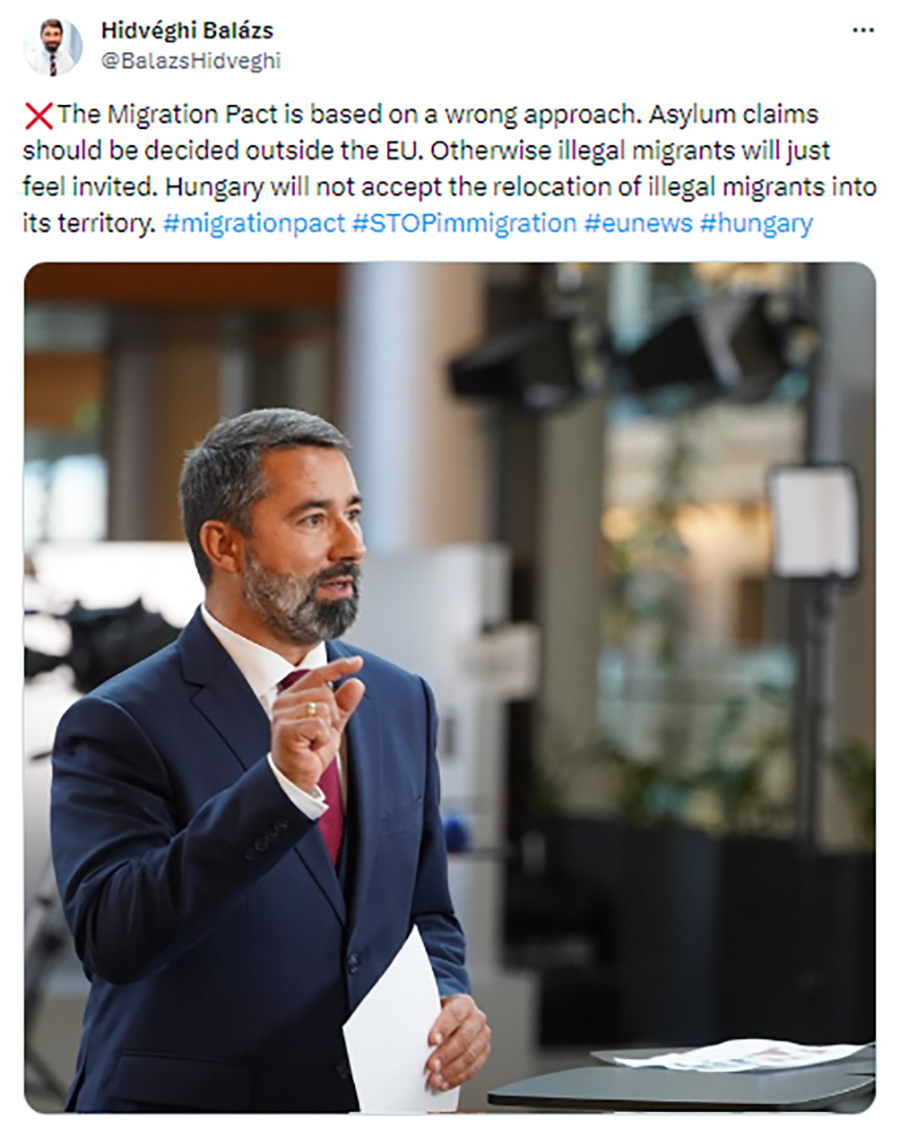
Hungarian Fidesz MEP Hidveghi Balazs reiterated their demand that all asylum claims should be made and processed outside of the EU. In other words, that each European state would have the right not to admit anyone who was not properly adjudicated and approved prior to arrival. Failing that, that each state gets to decide who may be granted protection. Nor ought any state be forced to take migrants or penalised for failing to do so.
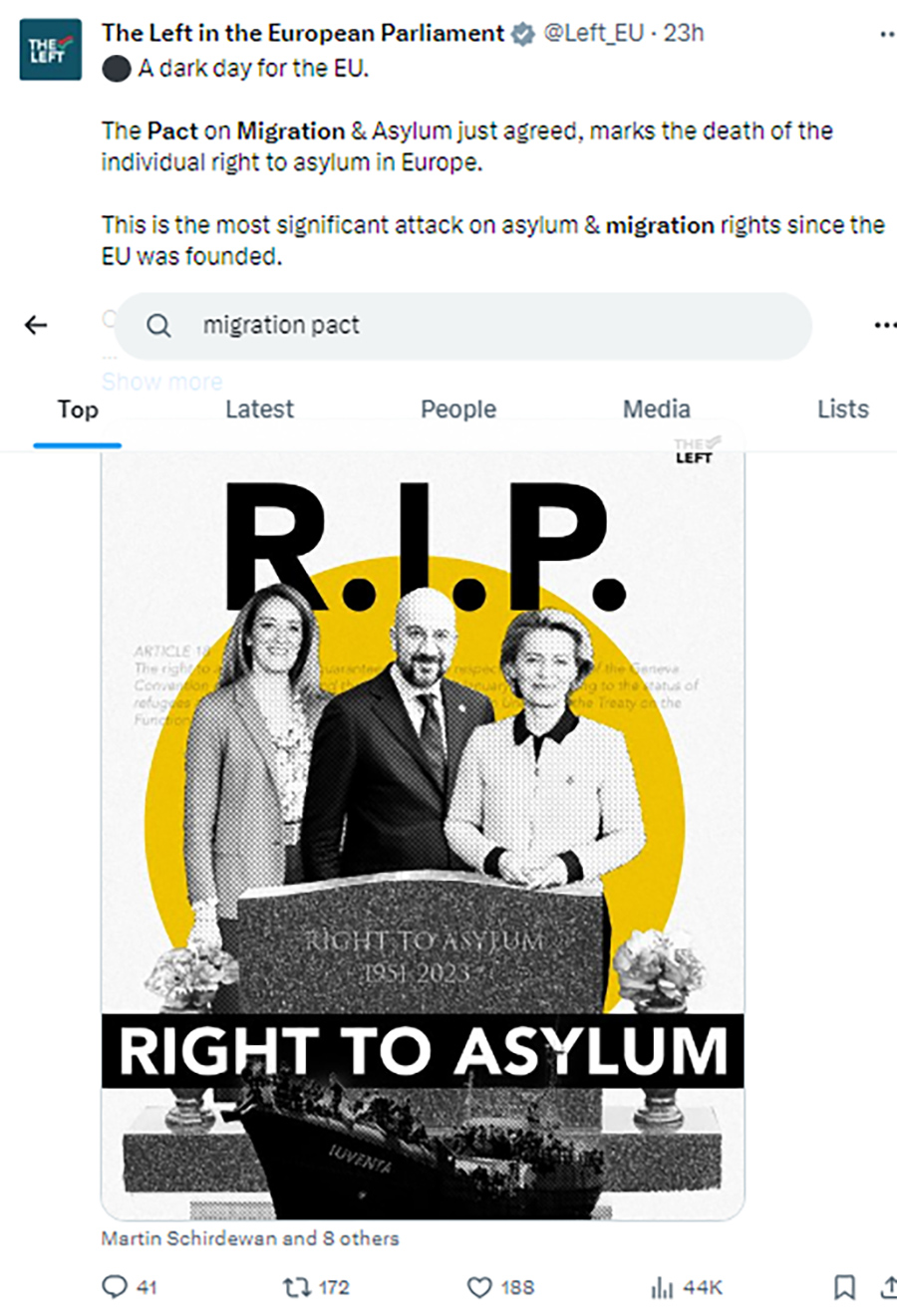
Among those condemning the Pact as “attack on asylum and migration” rights are the European far left communist and green dominated grouping to which Sinn Féin MEP Chris McManus belongs. The GUE/NGL group are opposed to the Pact because they believe that it represents a barrier to the open borders policy that they wish to see imposed across the whole of the EU.
Sinn Féin’s membership of the group and its support for the overall thrust of the most liberal migration policies at European level – where it actually matters because they along with the rest of the elite are happy to surrender our sovereignty on the matter – makes a mockery of Mary Lou’s desperate attempts to put a halt to Sinn Féin’s slide in the polls by claiming, against all of the evidence, that they support a more restrictive policy than the current Government. Au contraire.
The Irish state has not yet opted into the Pact which still awaits formal signing off but of course it will. Nor has it indicated which criteria it will choose to determine what part of “sharing the burden” of “solidarity” they assume on our behalf. A state may also choose whether to pay the vig or to accept a quota based on a formula related to population and GDP size.
Given that somewhere in the region of 25% of Irish GDP is transferred out of the country, that would surely be a rather stupid one to pick. But stupid is as stupid does. The “solidarity” fine actually makes sense in a way, as the least worst scenario, although the no sovereign state ought to be forced to pay for the privilege of protecting its borders,
Had this been in place in 2022, the Irish state might theoretically have refused to take around 13,000 applicants. That would have led to a fine of €260 million. A lot of money but it would actually represent a saving given the annual cost of accommodation for all of these people, the vast majority of whom could quite easily have been rejected from day one.
The realpolitik of all of this is that as long as the EU is dominated at central levels and politically by those who support mass immigration, the Pact will be used to further that policy. Any change ultimately depends both on alternative nationally minded governments being elected and the balance of power shifting not only against the liberal majority in the Parliament and Council but against EU power over ostensibly sovereign national states in the first instance.