Almost €2.7 billion has been charged on or is estimated due from Irish consumers in the green levy on electricity bills since 2011, figures provided by the Minister for the Environment show.
Data released by the Minister in response to a question from Independent TD Carol Nolan in October detailed the annual Public Service Obligation (PSO) levy – applied to all electricity customers and collected through electricity suppliers as part of their bills – for each year since 2010/11. The net total of all the levies collected since 2011/12 will come to €2.7 billion euro.
“The money raised from the levy funds renewable electricity generators that qualify for support through various government schemes including the Renewable Electricity Support Scheme (RESS) and its predecessor Renewable Energy Feed in Tariff (REFIT) schemes,” the Department of the Environment said.
The negative figures shown indicate repayments to the PSO when supported renewable energy projects paid back surpluses after market prices exceed their RESS support price.
|
Year
|
€ Millions
|
|
2011/12
|
92.12
|
|
2012/13
|
131.24
|
|
2013/14
|
210.89
|
|
2014/15
|
335.44
|
|
2015/16
|
325.25
|
|
2016/17
|
392.42
|
|
2017/18
|
471.90
|
|
2018/19
|
209.29
|
|
2019/20
|
176.46
|
|
2020/21
|
393.13
|
|
2021/22
|
263.70
|
|
2022/23
|
-491.25
|
|
2023/24
|
-67.47
|
|
2024/25
|
251.79
|
In 2020, the EU signed off on the Renewable Energy Support Scheme (RESS) for Ireland, which tied the state to provides a minimum budget of €7.2 billion to subsidise Green energy sources such as wind and solar.
The CSO says that in 2022 alone, environmental subsidies and similar transfers in Ireland were €1.6 billion, which was an increase of €105 million, or 7%, when compared with 2021.
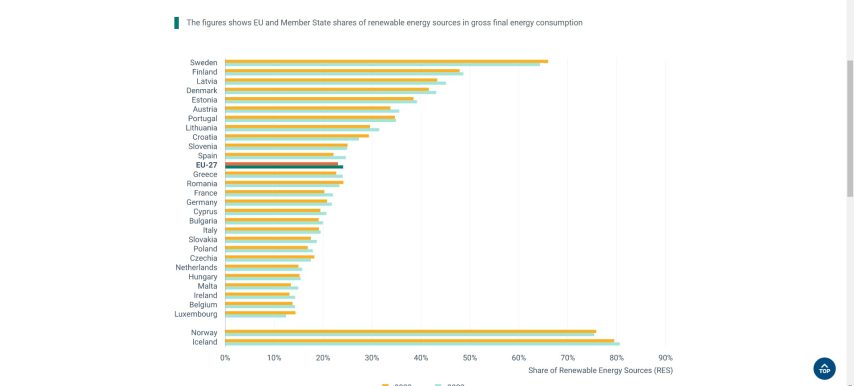
The EU statistical agency, Eurostat, said that in 2023, renewable energy sources represented an estimated 24.1% of the European Union’s final energy use.”Meeting the new minimum EU target of 42.5% for 2030 will demand more than doubling the rates of renewables deployment seen over the past decade and a deep transformation of the European energy system,” the agency added, noting that “the EU is likely not on track to meet its target unless a deep transformation of the EU energy system takes place this decade, encompassing all sectors”.
Difficulties with renewable energy persist, particularly with variability and unpredictability, the inefficiency of infrastructure, the cost of installation, and the inability to store power.
The EU statistics office showed that Ireland, with 15.253%, ranked well below the EU 27 member states in 2023 for its share of energy consumption coming from renewable sources, although the Irish percentage had risen from 13.068 the previous year.