Have a look on musicians’ timelines on social media, and a recurring phrase you will encounter is “turn off spotify and buy direct from the artist”. We all know why we use spotify, but at the same time we sympathise. The stories we hear seem downright exploitative, 30,000 streams and you are paid 17 c or something. But for the listener it’s so convenient. If only we could have it both ways.
The convenience part is gradually being addressed. In the past few years more and more musicians are selling directly on apps like bandcamp where they can sell directly to their customers, and the same customers (is there a better description, I don’t really like the word customers or fans?) can also avail of a convenient streaming service similar to itunes, where they can listen to their purchases on any device where they have access to the web.
Most musicians are selling their CDs for between €15 and €20 on sites like bandcamp, which they will post directly to purchasers. This best of both worlds means you can get that physical stocking filler and stream the same music for a cost, all in, of €20 or so. Perfect stocking fillers and sometimes the best present, because as many have experienced, the music on a previously unfamiliar album can be a very unexpected delight.
So if you have someone who loves their traditional music maybe have a stroll through the catalogues that are out there online. You might pick up their favourite gift this year for all you know. Here is a small selection I listened to this year. Three albums, three styles. Not all new releases, but a great album lasts for years – and anyway it’s new for you if you haven’t heard it before.
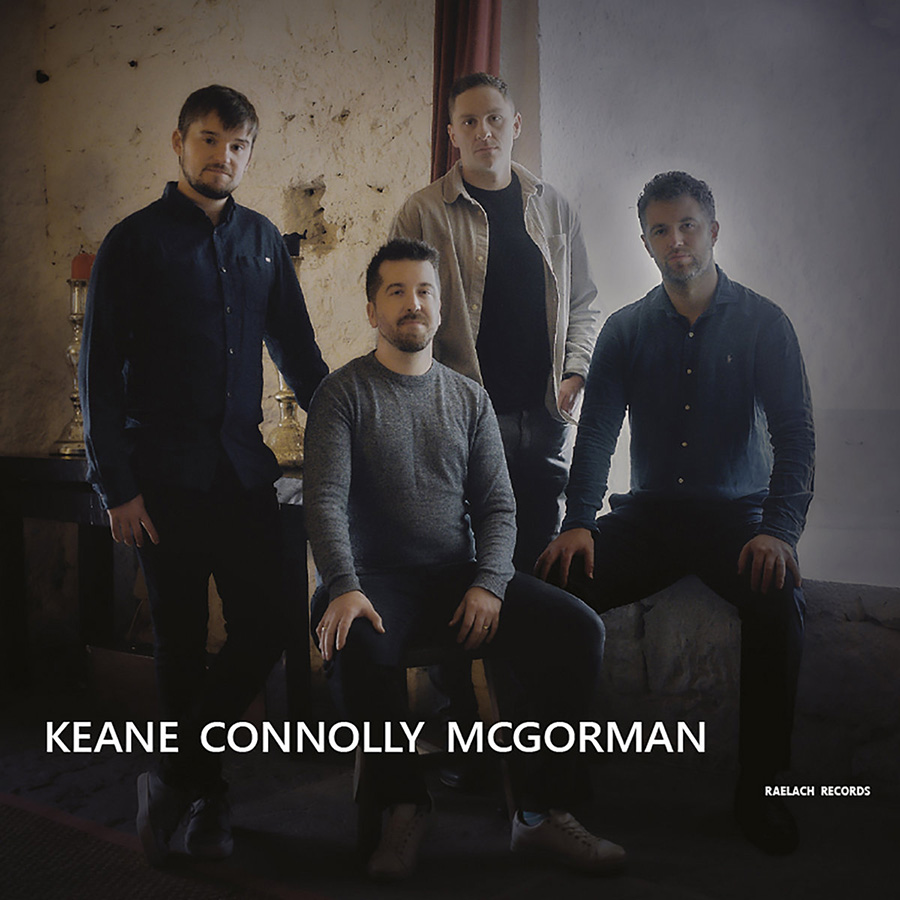
The eponymously named Keane, Connolly, and McGorman consist of brothers Fergus and Ruairí McGorman on flute and bazouki, Pádraig Keane on pipes, and Aidan Connolly on fiddle.
This is an album that will last a long time, and I think people will be returning to it for years while more people will discover it and love it for years to come. The appeal of this album is the connection between the four musicians who all seem to know their roles within the soundscape they weave, even as they swap these roles. Who is controlling the rhythm, who is the main melody, who is playing support in the high frequency range, who is in the countermelody role? They fit into their respective roles with ease, giving the album a constantly changing aural fabric.
The opening set of reels sets the pattern for an album that never dips below inventive. The transition from Ted Furey’s to Athnuachán Dónal is sweet. As the melody segues onto an only slightly different path we see the roles of each musician adapting, so that the feeling of the set changes noticeably. Ruairí McGorman on the mandolin, who had been dictating where the emphasis in the rhythm was, leaves off and settles into a delightful counterpoint which lets the melody shine above the rhythm. Similarly the pipes and flute swap positions as the lead in the melodic drive. Connolly on fiddle continues in the support role on the main melody. But all these subtle changes combined make such a difference; you feel you are in a different set.
Ruairí’s accompanying style is typically light touch, reminiscent of Alec Finn’s unobtrusive style in De Danann. Mostly he just adds another texture and gets out of the way of the rhythm driven by his brother Fergus and the others.
Connolly’s great sense of rhythm is most audible on The Lady on the Island on track 9 where he expresses those delightful slurred-stretched notes that define the sway of the tune and ocassionally dips into the lower octave, separating himself audibly from the others, where his command of the rhythm is further accentuated. Connolly also pulls out a Melodeon on Bridget McRory, which adds a very satisfying bottom end to the track, which is complimented by a whistle on the other end of the spectrum.
Keane’s piping is excellent. Close and controlled and happy to let the instrument shine on occasion. In The Blackhaired Lass he lets the instrument breath and takes the command position with flute and fiddle in supporting harmony lines. This transitions into and The Ravelled Hank of Yarn where the flute takes primacy and the pipes sit below in a beautiful mellow register. Adding well chosen use of the regs make the pipes shine on this track.
You will hear him again on the final track, a collection of stratspey’s emphasising a merry upbeat rhythm, not totally unlike this classical version delivered by De Dannan De Danann “Love Will Ye Marry Me” many decades ago.
Overall this is a thrilling album of four master musicians who know how to play virtuoso and how to play support. Available here: https://keaneconnollymcgorman.bandcamp.com/album/keane-connolly-mcgorman
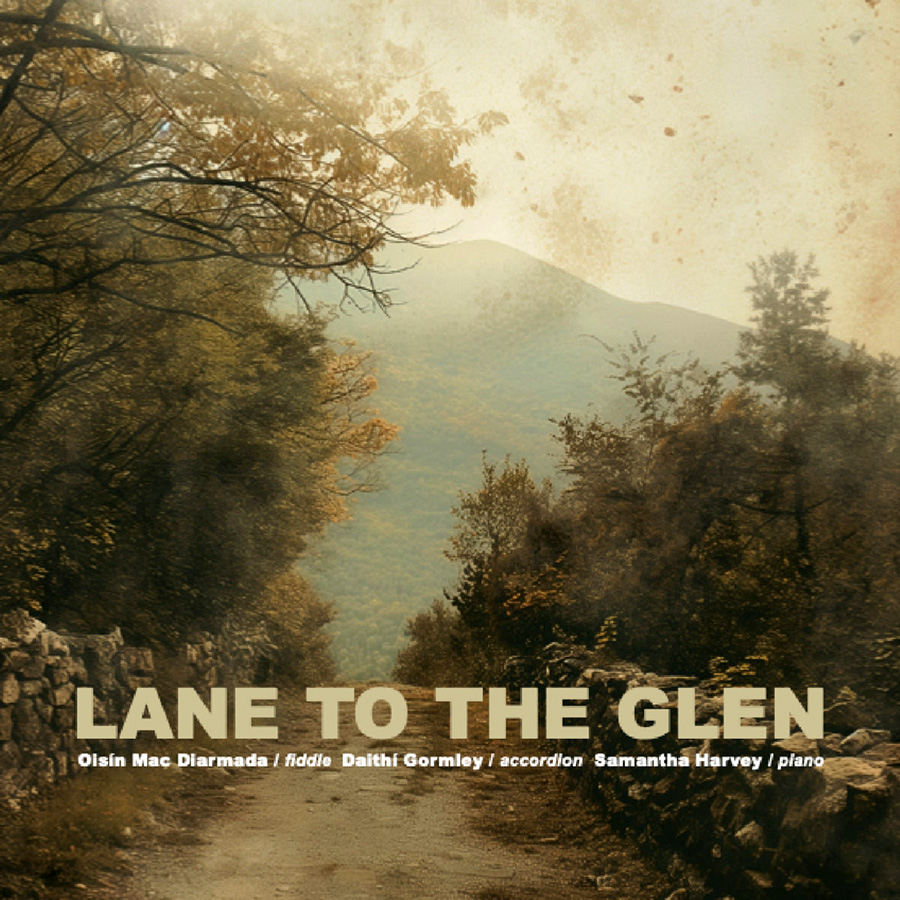
Lane to the Glen, released last July, features Oisín Mac Diarmada, Daithí Gormley, and Samantha Harvey
If your hankering in traditional music is for the ethos of familiar scenes, and a melodic feeling so familiar that it could bring you back to your first memories, this is it. This works its way into your bones, and before you know it you are tapping away with the swing of jigs and reels (there’s a hornpipe, and there’s a barndance also mind ya) from the purest well.
Oisín Mac Diarmada is one of the most assured musicians we have. Whether he is playing solo; in the company of Téada; or in a small session such as this album typifies, he is always completely at home. First and foremost he is at home in the tradition and his playing is a warm welcome to the familiar, where he seems able to uncover an even more intimate layer to tunes that you feel you know backwards and forward.
Samantha Harvey (who is married to Oisín) provides a sparkling, encouraging piano to his warm, merry music.
Mac Diarmada plays melodies like he was at a house dance. Light to the floor. Always moving at an easy jaunt and it is nice to hear Harvey sometimes stretch the emphasised notes or descend down the counterpoint in the bar. It just gives a sense of the possible paths that the tune can take at any stage.
And still I haven’t mentioned Daithí Gormley. Which might seem strange as it is his accordion which seems to drive the whole session forward. Track 6 (The Dog amongst the Bushes and two reels named Paddy Gavin’s) is underscored by a deep rhythmic bass in a style that brings the great playing of Joe Burke to mind. Harvey’s counterpoint on this one is a beauty also, occupying the higher end of the register where it stands out clearly in counterpoint to Gormley’s driving rhythm.
But the primary aesthetic of the album is of tunes that have been lived in, and played so frequently that they bring a new fondness to the familiar. There is warmth to this playing. An invite to get reacquainted with an old home where the fire has been reset in the hearth.
Gormley and Mac Diarmada’s playing is so close in unison that it’s difficult to disentangle them other than occasional flourishes where Mac Diarmada will go off on a harmonic flourish on the second or third rep, or thrill a high phrase such as in Tommy Maguire’s (track 8). In Malloy’s Favourite Barndance we get that same countermelody playing as Gormley sinks to a lower line for a few bars of the tune. These are occasional explorations, bringing a pleasant little twist to an already familiar tune on the second or third time through.
Mac Diarmada takes the stage solo for Crotty’s Glory / Reel 295. Well, solo melody that is, as Harvey keeps company with sparse encouraging piano. It is nice to hear him on his own for a bit where the lower mellow tones of his fiddle can settle on the ear.
Like the name suggests this is warm welcoming playing. Like a return to something you had forgotten about and are surprised to find it is unchanged and as vital as ever. Available here: https://lanetotheglen.bandcamp.com/album/lane-to-the-glen
The past decades or two has seen a growing interest in traditional musicians playing in larger arrangements similar to classical orchestras. Dave Flynn’s, Irish Memory Orchestra, was one of the pioneering groups to set the scene on how this might be approached since its foundation in 2012. As the name suggests, one of the big questions is whether the orchestra members should play off a score like a classical orchestra, or play more from memory such as you would in a giant session.
Two things we know for sure at this stage is that there are plenty of young musicians who are keen to play in this type of setting, and there are a number of budding composers formed within the traditional music scene who are only too happy to guide them.
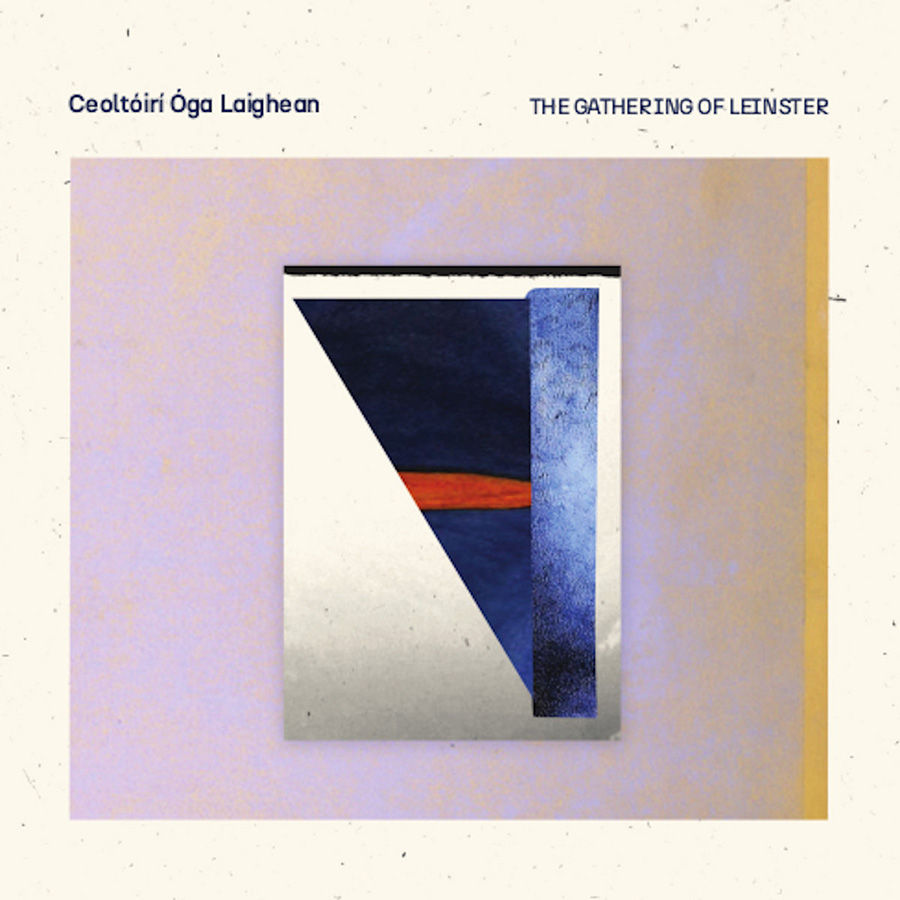
Robert Harvey, a talented flute player originally from Laois and now living in Dublin, is the director of Ceoltóirí Óga Laighean who recently released The Gathering of Leinster and it is a very enjoyable compilation of new works composed and arranged by Robert and some familiar tunes and songs with Leinster associations, for this collection of some of Leinster’s finest young musicians.
Rosc Catha na Laighean is lovely reworking of the basic melody of the traditional air Rosc Catha na Mumhan. Harvey holds back on it a little. Led by harps and pipes and with the addition of a legato string section it is slightly subdued for a war march, but it suddenly bursts out into a reel, doubling the tempo with full timpani effect. A fine full-throated finish to a well-constructed arrangement.
There are a number of very well arranged pieces here. Just one for example: The Leinster Outcry has a well pronounced 4/4 rhythm around which is based a duelling exchange between the orchestra sections, which swings between tension and melodic release. All this culminates in a full arrangement of the tune which I have always known as “Táim in arréars” which has been set to lyrics by Richard Dalton Williams. It’s a great track, and well executed.
Some of these tracks have the familiar style of just well arranged traditional tunes. The Ladies of Leinster could easily be an entrant into a grúpa ceoil competition at a Fleadh Cheoil. Similarly, The Old road to Garry, has that raucous sound of musicians finding each other and playing through a tune that they all knew so well they could play it together seamlessly. They sound like they are having a great time.
There are a few solo pieces here, Belhavel lough on the whistle is fine playing, and Caoineadh Carrow Row is a beautiful rendering of lyrics to the air of the Rocks of Bawn, a very unusual whistling (with the lips not a whistle) of The Harp and Shamrock, and a rendition of Poor little Jimmy Murphy has the most enjoyable regional twang you could imagine -the greatest testament that traditional music is from a place and the place gives it its flavour, you could imagine.
I’ve a great love for airs played to the lyrics of the song, and Slán le Maigh on the pipes here has all the tragic magic of Aindrias Mac Craith’s majestic words as he is cast to the roads of Munster and banished from his beloved Maigh.
This is a lovely album overall. It has a lot of what you would want. A bit of “knees up” session music, some excellent solo pieces, and some very intriguing trad orchestra arrangements from a promising young director and composer.
Orchestras are difficult to organise and their direction does take a lot of time. Harvey made a wise decision to do a few original arrangements very well, and play more traditional for the rest of the pieces. I like both, and primarily I want to hear good musicians give great performances and enjoying their performance. This has a lot of both. I would like some more of this please. Available here: https://ceoltoiriogalaighean.bandcamp.com/album/the-gathering-of-leinster