Irish homelessness charity, Tiglin, has been given more than €4 million in taxpayer funds to provide services for asylum seekers, figures from the Public Accounts Committee (PAC) and the Department of Justice confirm.
The most recent report from the PAC shows that Tiglin was granted a 2026 budget from the Department of €455,000 for an outreach team, and €512,383 for day services to deal with unaccommodated asylum claimants, a total of €967,383 for this year.
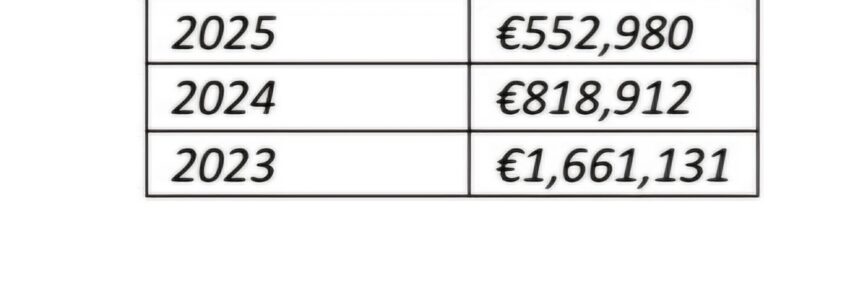
The homeless charity had previously received more than €3 million from the Department of Justice for support services for asylum claimants: with €1.661 Million received in 2023 alone, while €818,192 was received in 2024 and €552,980 was paid over in 2025.
The PAC said it had examined information gathered by the Tiglin outreach team, “who are funded to meet daily with unaccommodated [international protection] applicants in Dublin in order to connect them with services and record their details on behalf of IPAS”.
“The Department confirmed that, from October 2025 to March 2026, an average of 64 people per week were referred by the Tiglin team to IPAS, and that an average of 50 people a week received a first-time offer of accommodation from IPAS on foot of a referral,” the PAC report said.
And it added: “Tiglin is also funded to provide day services, such as cooked meals, toilet facilities, tents, and sleeping bags to unaccommodated IP [asylum] applicants. Tiglin was granted a 2026 budget of €455,000 for the outreach team, and €512,383 for day services.”
In July, the Department of Justice had told the PAC that the service with Tiglin “commenced in 2023 when, due to an unprecedented increase in applications for international protection and severe shortages of suitable accommodation, the State was unable to accommodate all applicants for international protection who requested accommodation under the Reception Conditions Directive. Support services for unaccommodated applicants became part of a range of responses to this increased demand.”
The Department said “the numbers of international protection applicants presenting for support services fluctuates over time and the costs incurred reflect the variation in demand for services since 2023. As part of implementation arrangements for the EU Migration Pact, since 12 June 2026 IPAS now provides accommodation to all applicants entitled to Reception Conditions upon arrival.”
“As a consequence, and while capacity to provide accommodation will be kept under ongoing review, the requirement for this service is expected to continue to decrease.”
It also told the Public Accounts Committee that “across the EU, a 15% vacancy rate is regarded as necessary to ensure flexibility in a system subject to fluctuating demand. However, IPAS were operating at 9% vacancy which made them vulnerable to surges. The Department explained in May that the Minister’s decision to limit the opening of new accommodation centres, because of the challenges that can arise, has resulted in consolidation of the overall system and a revised approach to meeting demand.”
The Committee said it “explored the question of applicants remaining in accommodation centres after being granted international protection, a situation with clear cost implications for the Department but also, in the context of the housing crisis, no immediately obvious solution. The Department said in October 2025 that, though 10,000 successful applicants moved out in the preceding 28 months, approximately 5,000 of the 33,000 IPAS residents remain accommodated despite having been granted status.”