In the course of 40 years of being involved in election campaigns I can safely say that the main barrier to be overcome by any candidate on a canvass is name and face recognition. That can be either a good or bad thing.
Sometimes a sitting candidate or a high-profile challenger may find out that they are well known, but not in a good way. If an instinctively hostile reaction from one part of the constituency is balanced by an equally positive reaction in another then it can be a portent of good things – on the lines of the much coined “It is better to be hated than ignored.”
If what I have seen of Independent Malachy Steenson’s campaign for a Dublin City Council seat in the north inner city ward and for one of the four Dublin seats in the European Parliament is any indication, then he has passed the recognition test.
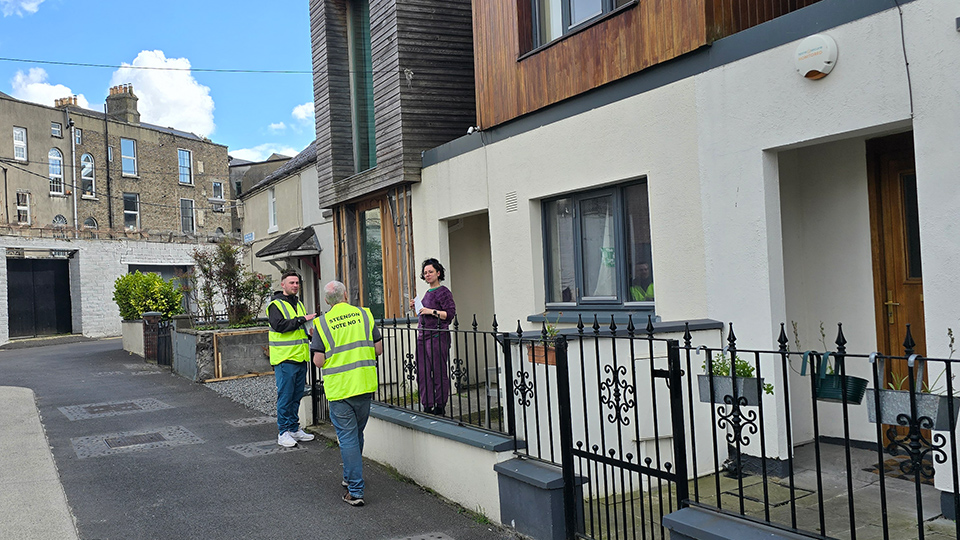
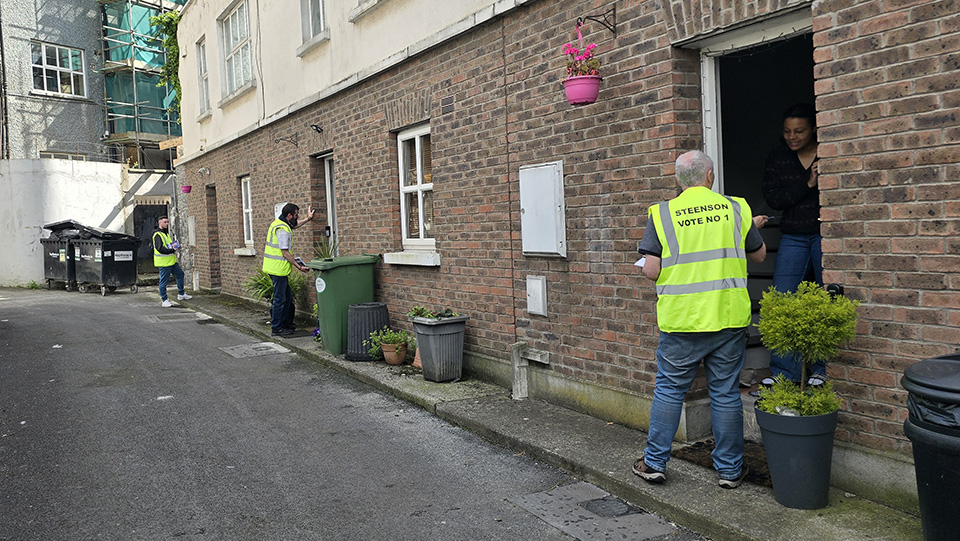
On a canvass that took in the Montpelier district and on Killarney Street which is closer to Steenson’s home base he was certainly known and generally warmly greeted and with no overt signs of hostility.
There were also several instances of canvassers calling him over to doors where voters had questions about the mostly housekeeping issues that are the province of elected Councillors.
One voter who I spoke to in Montpelier told me that she had asked Malachy about how he would address people’s safety concerns regarding crime. There were practical solutions she believed which sitting Councillors and TDs had promised to tackle but had not done so. She also said that most people she knew thought the same about the need to address immigration.
One woman did remonstrate with a canvasser who told him that she did not agree with Malachy’s position on immigration but she didn’t elaborate further.
Another woman on Killarney Street appeared generally favourable but mentioned crime and anti-social behaviour as a key issue for herself.
Malachy told me that the two main issues that come up on the doors are housing and immigration, and that people see the connection between the two. They believe that the two are interlinked, and “that you will never solve the housing problem until you stop increasing the demand.”
He also claimed that there was a deeper sense among people that was reflected in their reaction to the established political parties who Steenson says are “being chased out of working class areas.” Part of that he thinks is because many people are “sick and tired of the political and NGO class in this country telling them what to do, what they should think and how they should behave.”
Malachy was one of the local organisers of the protests that took place at the former ESB premises in East Wall which began in November 2022 when persons claiming International Protection were moved into the building. He describes that protest as the “key event that mobilised people around the country,” and that this had a catalytic impact on other communities throughout the state who were inspired to take similar action when faced with the imposition of IPAS facilities.
Steenson believes that this has given rise to a genuine “grassroots” movement which is led from the “bottom up” and which he likened to the Land League of the 19th century and other popular mass movements. He believes that this will, similar to the rejection of the two referendum proposals in March, lead to a resounding rejection of what the “political and NGO class” have been saying about immigration, and the manner in which they have denigrated communities who have protested against their imposition of the centres.
He also believes that the election of nationalist Councillors and MEPs will bring “structure to the movement” and that this will take things to a different level and as part of an overall “realignment” in European politics of which Irish MEPs from outside of the political establishment may become part of. Whether he is correct or not will become clearer after June 7th.
The north inner-city ward elected three independent Councillors in 2019, two of whom are running again. Of the other seats filled in 2019, Fine Gael, Sinn Féin, Labour and the Greens each took one.