There have always been, as Mark Twain may have said, lies, damn lies and statistics, which doesn’t mean that numbers lie (they don’t) but that their presentation can be used to distort the real picture.
The phrase came to mind when projections were made this year that the soaring, unprecedented numbers of migrants claiming asylum in 2022 would not be matched in the 2023.
Or when data is cherry-picked to focus on a fall in the number of single men arriving to claim asylum over a couple of weeks without giving the full picture for the year, which is surely what matter.
So, for example, its strictly true that there has been a fall in the number of asylum seekers in 2023 compared to 2022 – but the fall is tiny with 13,649 applications made in 2022 and 13,277 made in 2023, according to IPAS.
The record levels of people coming to Ireland claiming asylum in 2023 almost matched the record numbers in 2022. And they are arriving at a time when Ireland is struggling to cope with provision of housing and services to 102,000 Ukrainians.
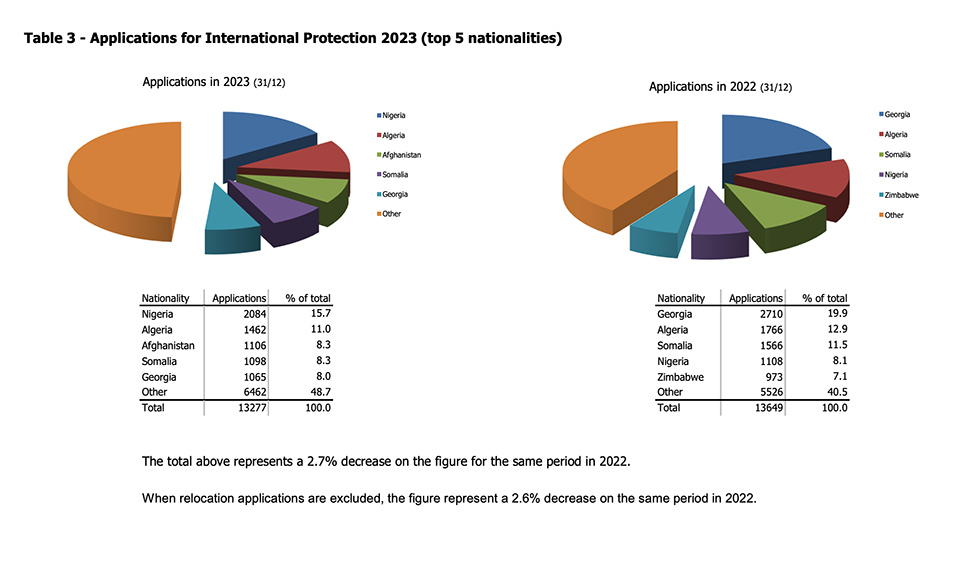
The 2023 figure of 13,277 applicants is almost three times greater than the 2019 requests – and more than five times greater than the 2,649 applications made in Ireland in 2021 when Covid was still a factor.
It seems that, despite the bluster about increasing checks and spreading the message that accommodation was not available, Ireland is still a preference for huge numbers of people.
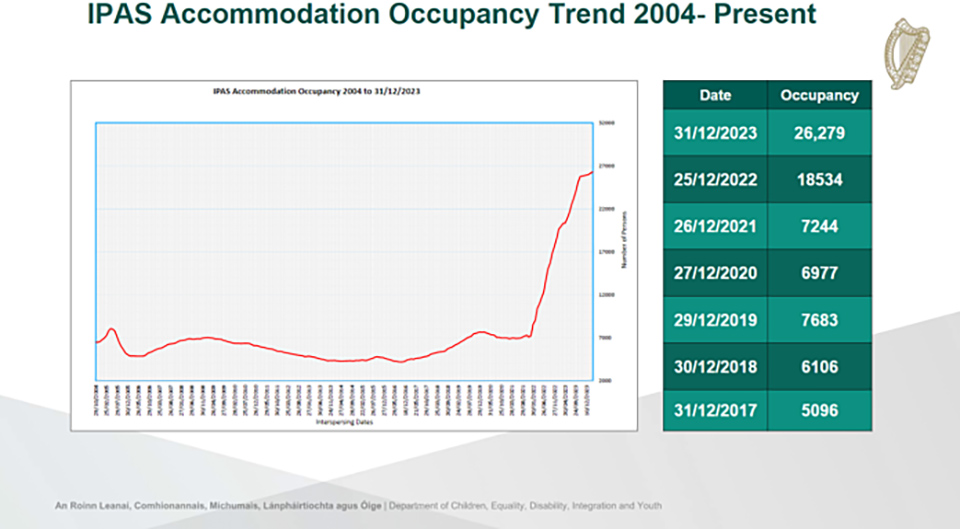
The IPAS report as at December 2023 also tells us that there are now 26,279 people in asylum accommodation, even as the Irish housing crisis seems to continue without end, and the government says it can’t find accommodation for all those arriving.
Eamon Ryan was partly right, Ireland isn’t full, when it comes to housing, we’re bursting at the seams. The situation is clearly unsustainable.
The graph below illustrates the folly of government policy: the sharp uptick and rocketing surge in arrivals seeming to coincide with the decision to tell the world that we could and would take all comers.
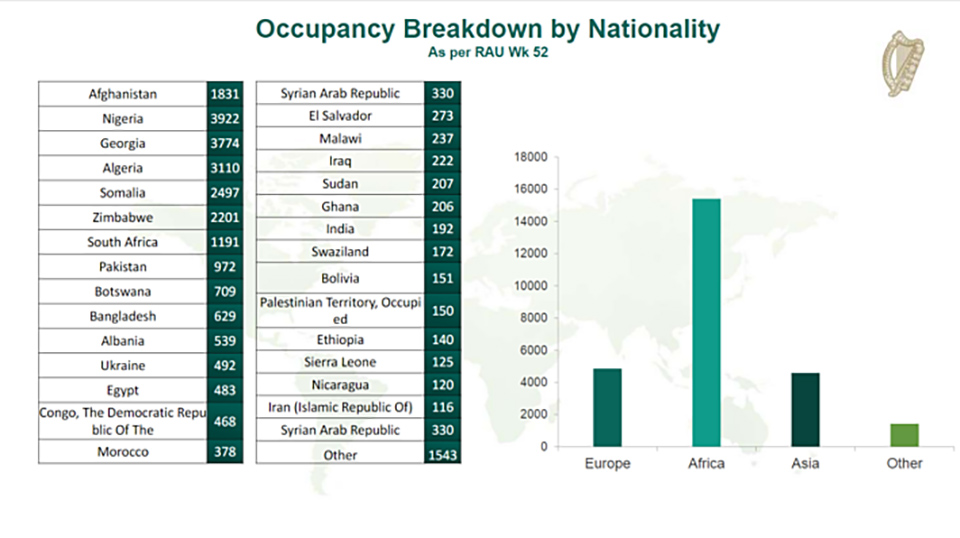
IPAS figures also show that, in regard to those already in the system, which must include thousands of people without documentation, almost 11,000 are from Algeria, Nigeria, and Georgia, countries not experiencing war.
In 2023, as in 2022, the largest cohort of all those arriving here were single males – quite often being recorded as at more than 50% of arrivals in monthly IPAS reports. The government, as was seen in Ballinrobe and Carlow in the past week, is running into sustained local opposition to the imposition of direct provision centres for young men.
The International Protection Office says that Georgia is now on a list of safe countries and that fast-tracking of assessment of those arriving from such jurisdictions is likely to have led to the lower number of Georgians applying this year.
That is welcome news in terms of dealing with unsubstantiated applications, but the improvement in one area seems to have simply been matched with a surge in people arriving from other countries.
That leaves the bigger question: are the Irish people willing to accept the assertion by two government Ministers in the first weeks of 2024 that the unprecedented numbers arriving are ‘the new normal’, as Roderic O’Gorman said – or that we have to accept “the world is on the move” to quote Neale Richmond.
"Your policy has produced this situation, nobody elses" – Gript Editor @john_mcguirk and Fine Gael Minister Neale Richmond have a heated exchange on the immigration crisis in Ireland.https://t.co/jjKSPzl3X6 pic.twitter.com/s2MjRMJ1yQ
— gript (@griptmedia) January 9, 2024
75% of Irish people are telling pollsters they think we have taken in too many refugees – and as John McGuirk said above, 25% of voters now say it is their priority issue, with 58% believing that accommodation centres for migrants are being unfairly distributed across communities.
What Roderic O’Gorman believes should be the ‘new normal’ seems to be the polar opposite of what the majority of people want. And with unprecedented numbers of people now living in Ireland who were not born here, these issues go to the heart of key questions, not just about housing and services, but history and identity.
Clarifying and reporting the statistics on immigration published by the state is important. But formulating what our response as a nation should be is far more critical. To date, the government and much of the Opposition including Sinn Féin has failed to figure that out.