Curiously nobody in the Irish mainstream media, nor among the political establishment, who have openly questioned free and fair democratic elections in EU states like Hungary and Poland, has had anything to say about Sunday’s elections in Cuba.
The silent include the largest party here, Sinn Féin, which openly celebrates its love for the brutal one party dictatorship, as does President Michael D. Higgins who has visited the island, and who has made no secret of his admiration for the Castro gang which has virtually owned the island for over 70 years.
(Interestingly, Cuba has one of the strictest immigration policies in the world as well as allowing only members of the elite to freely leave for short periods.)
The elections were to the National Assembly in Cuba which is comprised of 470 members. Filling the seats was pretty straight forward as there were only 470 candidates. The only choice was whether to approve the named candidate or not. The Communist Party is the only legal party in the country and only members and “allies” of the Party are allowed to stand, although – as with the overthrown socialist states in eastern and central Europe – there is a façade whereby allegedly non-party candidates can be nominated and approved but solely through organisations controlled by the Party.
Despite the regime’s own propaganda regurgitated by gullible or compromised naifs in other countries, the Communist Party itself, known until after the revolution as the Popular Socialist Party, played no part in the armed overthrow of Batista and indeed at one time supported the comic opera dictator, and initially denounced the July 26 Movement.
That changed of course after the Castro gang cynically opted to ally themselves with the Soviet Union and to brutally purge the revolutionary movement of its democratic elements who were tortured, murdered and sentenced to long periods in infamous prisons such as the one on the Isle of Pines. In 1965, the other organisations were forcibly merged with the CPC which Moscow had insisted be the official conduit for relations between the countries.
The Soviet Union had attempted to place nuclear missiles on the island in 1962 and helped the incompetent Castros to turn a once-thriving island into an economic basket case in which even the sugar sector was crippled after mostly small farmers had their land stolen by the state. The regime survived, however, thanks to the secret police and prison system that was put in place with the assistance of experts in terror from the other socialist states. How much longer that can survive, even with the aid of China, is unclear.
As with all other totalitarian states, and indeed aspirant totalising parties closer to home, the regime still uses the meaningless slogans of the past to maintain the pretence that it stands for anything other than the maintenance of its own power and all the trappings of wealth and privilege which that entails.
Socialismo o Muerte! Tiocfaidh Ár Lá and so on and so forth… The reality, other than for the gang bosses who own their own islands and country estates, is rather different.
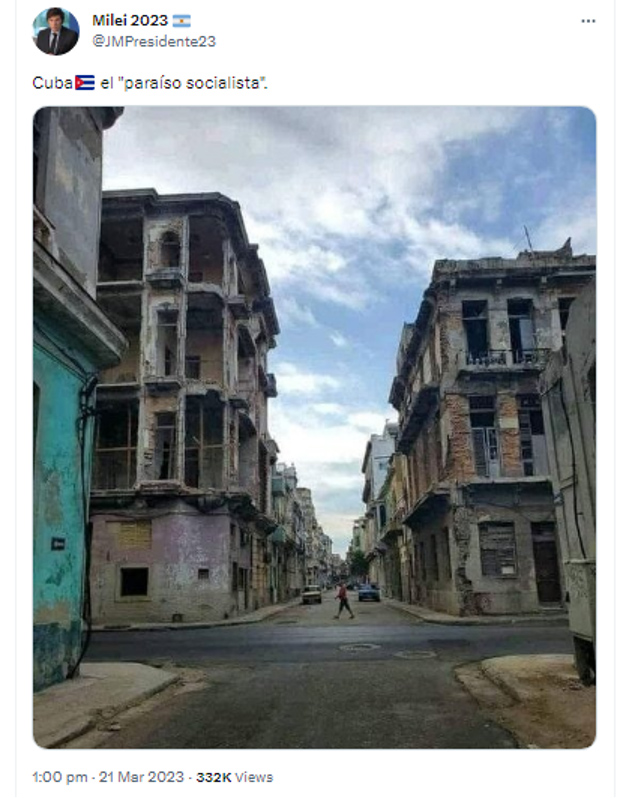
The elections were meaningless, although some look at turnout figures as a gauge of how “popular” the ruling elite remains. Opposition groups were claiming that turnout was lower but as with the other former socialist states, there are many ways to “persuade” people to participate in the charade, and failing that there is nothing to prevent the figures being falsified as there is no independent electoral oversight.
Cuba’s friends on the liberal left in Ireland and the EU insisted upon that oversight for the last Hungarian general election even though there was no basis whatsoever for such a disgraceful demand. No evidence of any malpractice was found in Hungary. But the obvious electoral fraud that are the Cuban elections elicited no such demands from the Irish left.
Some courageous people in Cuba did attempt to monitor what took place.
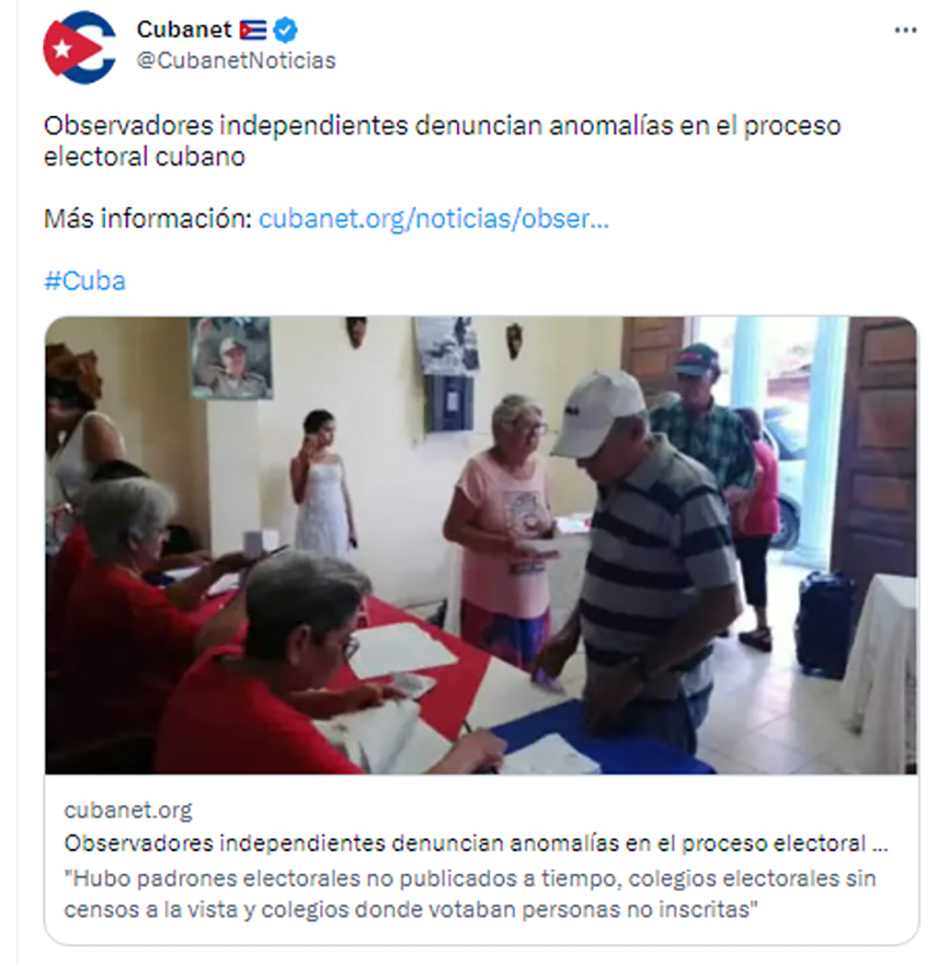
Among the things which the monitors reported were cuts to internet service to known opposition citizen journalists, the effective placing of others under house arrest, and the actual arrest and alleged beating of Elsa Litzy Issac (below) when she attempted to observe what was taking place at a polling station on Santiago.

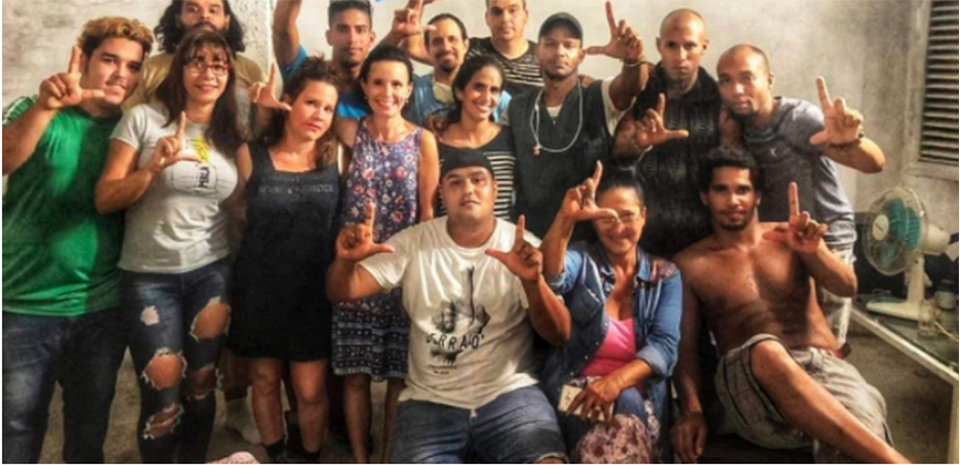
As Gript has reported previously, there are many brave people in Cuba who continue to resist the regime. Some of them are in prison and some of whom have taken part in hunger strikes and other protests inspired by Bobby Sands and the Irish blanketmen and women and the 1981 hunger strikers. Ironically, many of them including black and gay activists of Los Isidros, would probably be closer politically to the friends of Cuba in Ireland than anyone associated with Gript.
Venceremos! Beidh an Bua againn.