Nosferatu was always going to be a hard movie to remake. The release of the original silent movie in 1922 was a pivotal moment in the history of film-making, especially for the horror genre.
By rights, it should never even have been made. The German filmmakers had blatantly ripped-off Bram Stoker’s Dracula novel, leading to a legal battle which bankrupted the production company and culminated in a judge ruling that all copies of the film were to be destroyed.
Thankfully, this order was not carried out fully. And a century on, a director capable of remaking the plagiarised tale and doing it justice appeared in the form of Robert Eggers.
What has been produced is a visually stunning reimagining of the original film, which incorporates some of its best features – and draws upon various other Dracula productions as well – without ever becoming tired or repetitive.
The setting is the fictional coastal German city of Wisborg, and the year is 1838. Thomas (Nicholas Hoult) is an ambitious young estate agent eager to make a better life for his young bride.
At his side is the vulnerable Ellen (Lily-Rose Depp), who has overcome a dark and depressive past to find real happiness in married life.
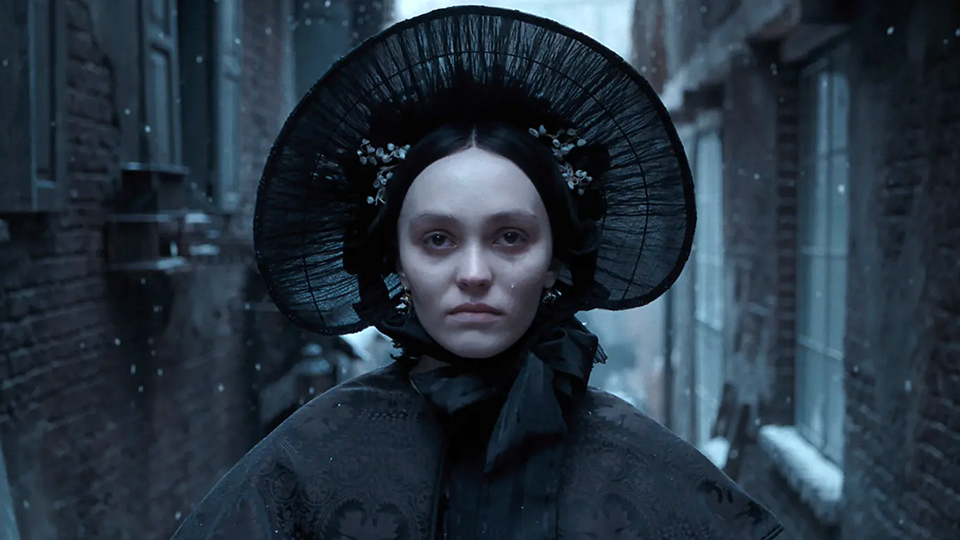
An unusual request from a prospective client in the Carpathian Mountains results in Thomas being lured eastwards where he encounters forces far beyond his understanding.
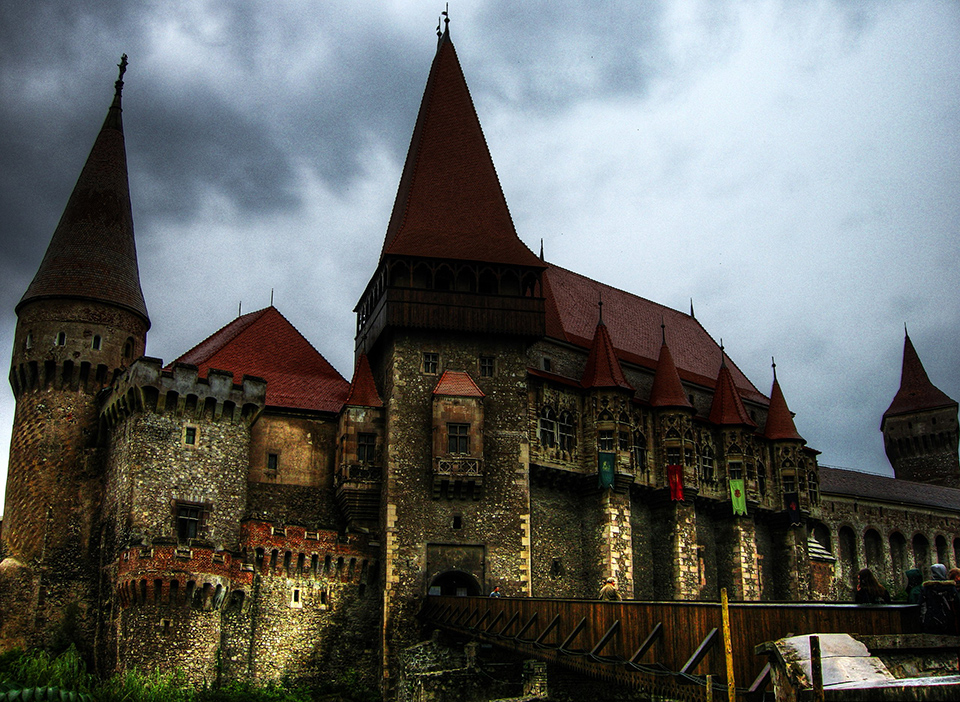
Ignoring warnings from locals fully aware of what dwells within the ghostly castle’s walls, Thomas ventures onwards into the claws of Count Orlok.
It soon becomes clear that both he and Ellen have become prisoners of the same diabolical figure, who soon makes his way to Germany to convert his spiritual possession into a physical one.
There are few true surprises in a film like this – the field of horror has been too thoroughly plowed to allow for that.
Yet the distinctive approach of Eggers as demonstrated in his previous three films – his fascination with mythology and the macabre, his commitment to historical authenticity in language and style, and the use of almost permanently dim lighting – breathes new life into a story of the undead.
Some scenes are breathtaking, particularly those depicting Thomas’s approach to Orlok castle, where he sees the measures to which the local gypsies go to ward off the wicked forces lurking just beyond. Dreams and reality fade into one, as husband and wife fall completely under the growing shadow of the monstrous Orlok, portrayed by an unrecognisable Bill Skarsgård.
The work of Eggers is not for everyone. His last two films did not live up to the great promise shown in his 2015 directorial debut, ‘The Witch.’
Certainly, some parts of the film work less well than others. The German setting is faithful to the original remake, but the use of British accents in an apparent effort to blend the Nosferatu and Dracula stories together is regrettable. The same can be said of Orlok’s voyage to Germany through a choppy sea; a rather circuitous route for travelling from Romania to Germany.
This is still the best film Eggers has made.
Aside from the strong performances by the captivating Lily-Rose Depp and by Nicholas Hoult alongside her, a key highlight is Willem Dafoe’s brilliant portrayal of Professor von Franz.
Von Franz is to Nosferatu what Van Helsing is to the original Dracula.
His ostensible significance is as a doctor called upon to save the stricken Ellen from her mysterious ailment, and later on as the key figure in the hunt for Orlok in a newly terrorised and plague-stricken city.
His true significance is far more profound, particularly considering the setting of 19th century Germany and the pervasive rationalism of that environment.
Von Franz is introduced as a quixotic medical professor whose credibility within the academy has been ruined by his interest in mysticism and the occult.
His belief in things beyond what can be scientifically proven gives him a second sight. When he sees Ellen’s inner torment and the other signs of Orlok’s presence, he knows that he is not dealing with a medical ailment, regardless of what those around him say.
“I have seen things in this world that would have made Isaac Newton crawl back into his mother’s womb,” he tells the sceptics. “We have not been so much enlightened as we have been blinded by the gaseous light of science. I have wrestled with the Devil as Jacob wrestled the angel in Peniel, and I tell you if we are to tame darkness, we must first face that it exists.”
Orlok’s evil, not being of this world, cannot be overcome by this world alone. In preparing for the battle to come, Professor Von Franz arms himself by invoking God’s blessing, just as Van Helsing and his friends drove back Bram Stoker’s Dracula by holding aloft “the envelope which contained the Sacred Wafer” and advancing towards him with crucifixes raised aloft.
In this film, the simple-minded gypsies who live in the presence of Orlok’s castle are protected by a peasant piety which the urbane German townsmen lack, and this is what makes them so vulnerable to attack. Disbelief in the Devil or his accomplices is no defence.
This too is not a unique feature of this film. Horror is surely one of the most religious movie genres of all, given that it is often concerned with the supernatural.
In such circumstances, faith quickly becomes an essential accompaniment to reason, and even surpasses it in importance.
In many films – The Exorcist and The Omen for instance – faith is represented by a priest, often one who possesses considerable secular learning too. Here, Dafoe’s Von Franz plays the role, and plays it very capably.
The tale of ‘Nosferatu’ is a timeless one, and this particular retelling will stand the test of time. Robert Eggers’s future as a director is as bright as his films are dark, and we have not heard the last of Lily-Rose Depp either.
Director: Robert Eggers
Cert: 16
Running Time: 132 minutes
Starring: Lily-Rose Depp, Nicholas Hoult, Willem Dafoe
Verdict: ★ ★ ★ ★