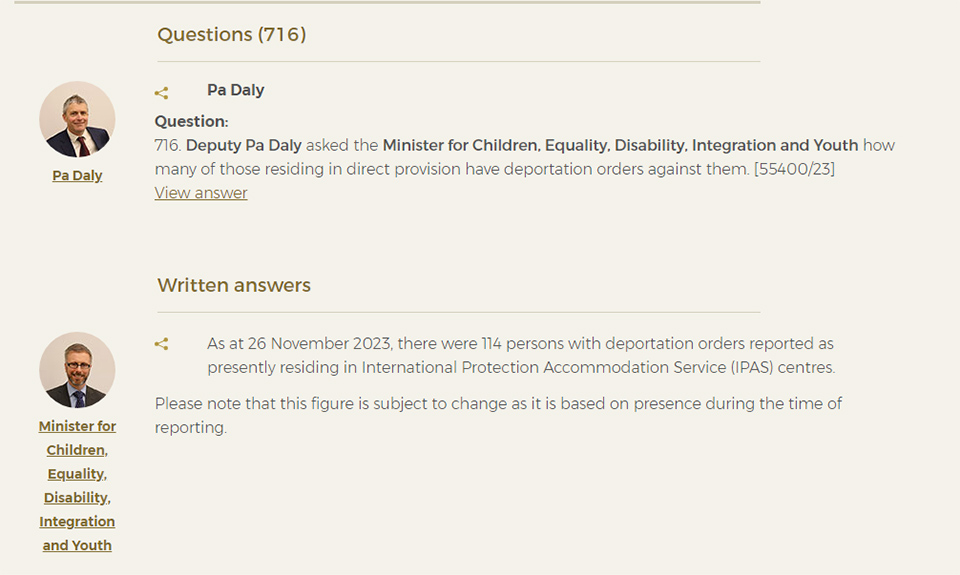
According to a response from the Minister for Children, Equality, Disability, Integration and Youth, Roderic O’Gorman, as of the end of November there were 114 people who have deportation orders issued against them who were still residing in accommodation provided by the Immigration Protection Accommodation Service (IPAS.)
He was responding to a question from Sinn Féin TD for Kerry, Pa Daly, which was answered on December 12. That figure casts further light on the manner in which the state deals with deportations. We have no way of knowing whether any or all of those among the 114 are currently appealing the order, or at what stage such an appeal may be at.
Perhaps they may even be organising their own independent departure from the country which appears to be the option left open to most who are told to leave.
Another response from the Minister for Justice, Helen McEntee, on the following day, December 13, to Rural Independent Kerry TD, Danny Healy Rae, places that in the context of the overall numbers who are actually deported following the issuing of an order.
In Minister McEntee’s reply, it can be seen that of 2,430 deportation orders signed between the beginning of 2019 and up to the date of the information supplied, that just 355 had been effected. There is some carry over from previous years, and indeed given the long drawn out nature of the appeals system, some of the orders effected in any given year might have been signed at any time in the past ten or more years.

Even given that carry over it can be seen that the number of orders that are put into effect represent just 14.6% of the orders signed. That figure is close to the 15% which was extracted from previous answers, although the overall numbers and the numbers for individual years seem to differ.
In a response which Aontú leader Peadar Tóibín received in May last year, the number of orders issued in 2022 was given as 528, and the numbers carried out as 119. Both figures differ from those in the table supplied to Deputy Healy Rae; the second quite significantly.
The discrepancies in another table that was supplied as part of a response to a Freedom of Information request which Gript saw in March last year are even starker. According to those figures, there had been a total of 3,340 deportation orders signed between 2019 and 2022, compared to 1,715 in the table given to Deputy Healy Rae.
Similarly, the number of deportation orders said to have been “effected” in those same years was 229 in the FOI table, compared to 318 in the latest response to the same question. I am no wiser than yourselves as to what might explain the differences.

What all the evidence, including the fact that more than 100 people who have been issued with a deportation order are still here and in state accommodation, proves is that the chances of being deported even after all of the procedures and processes are pretty slim.