Information received by a reader of Gript who submitted several requests under the Freedom of Information Act has revealed that more than 10% of deportation orders issued by the Minister for Justice between the beginning of this year and the end of November were revoked.
The information sought was:
- The number of deporting orders issued since the Minister for Justice Mr. Jim O’Callaghan took office in January 2025.
- The number of deportation orders appealed to the minister during the same time period.
- The number of deportation orders overturned by the minister for same time periods as above
- Any collocation of data on why deportations were revoked, i.e. health family etc
All of the information was supplied other than details regarding the reasons why a deportation order had been revoked.
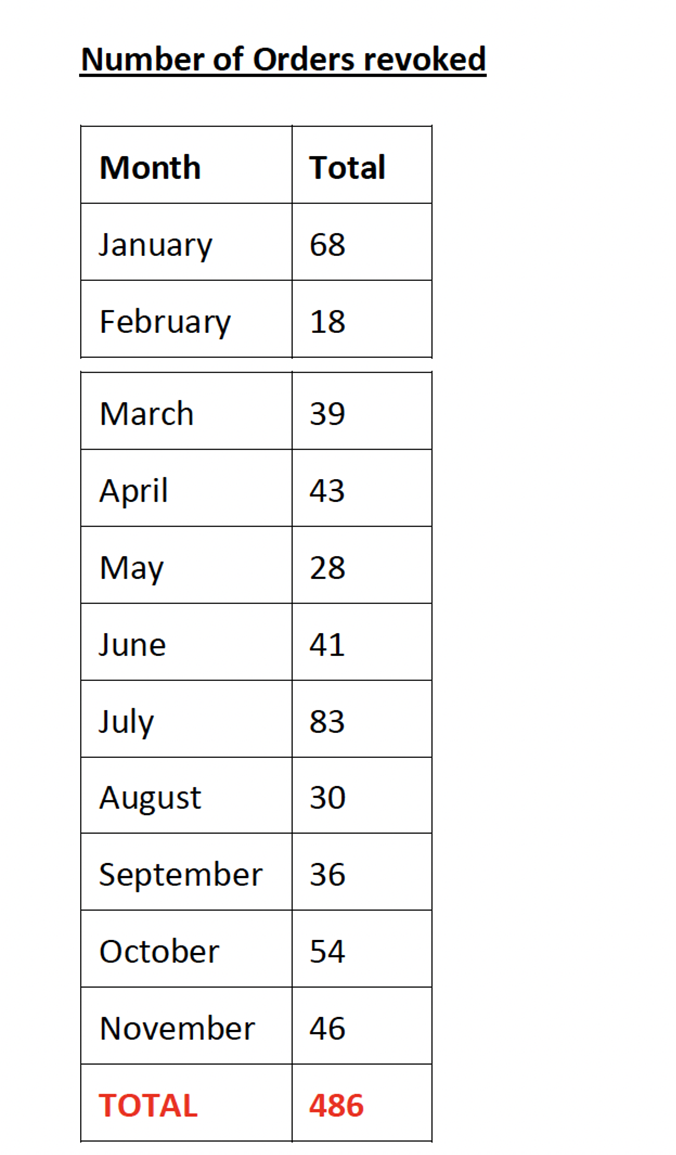
The figures show that in the period between January and November that the Minister issued 4,228 deportation orders and that 486 were revoked. Which means that 11.5% of the deportation orders were overturned.
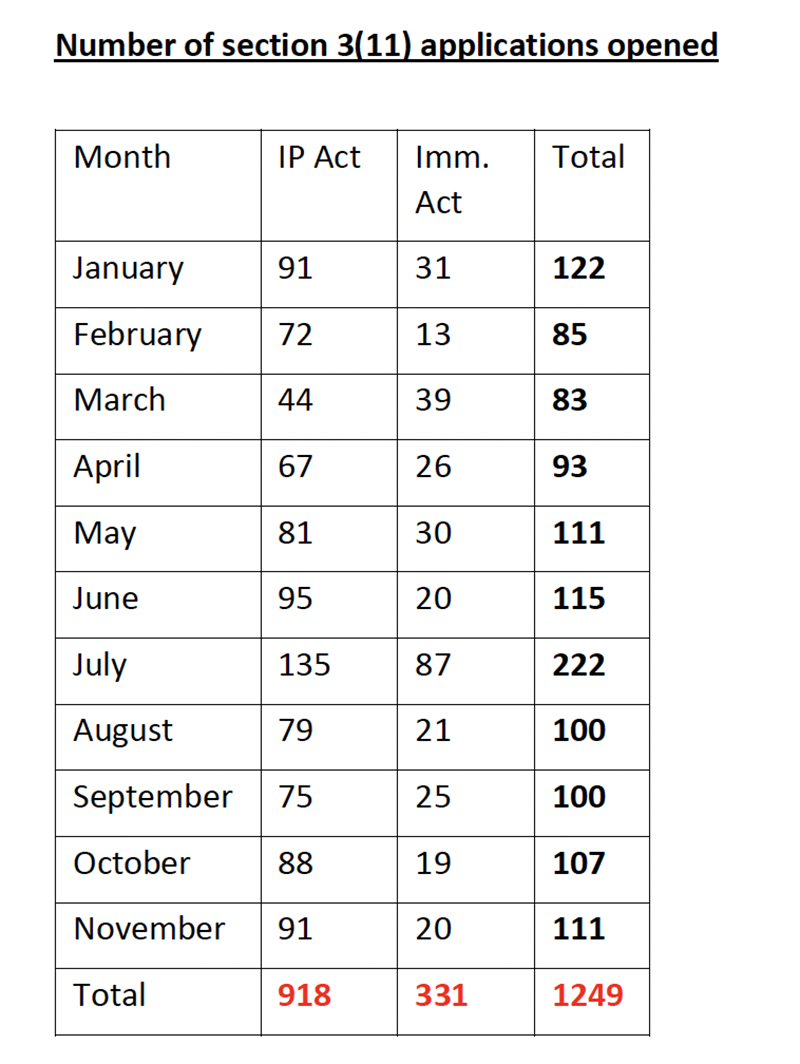
There have been 1,249 applications to have orders revoked which allows the subject of the order to request that the Minister cancel a deportation order under Section 3(11) of the Immigration Act 1999. No details are supplied so it cannot be determined how many of those applications related to orders made during the same calendar period.
Section 3(11) allows that the person who has been issued with an order can show why the order ought not to be processed; generally on the grounds of health, family ties or other mitigating factors. When a person is issued with a deportation order they are given 15 working days to appeal. The reader was not given any breakdown of the reasons why the 486 orders were revoked.
The number of deportation orders issued to the end of November at 4,228, is already on course to be twice the number – 2,403 – issued for the whole of 2024. It can also be compared to the 857 orders which were issued in 2023.
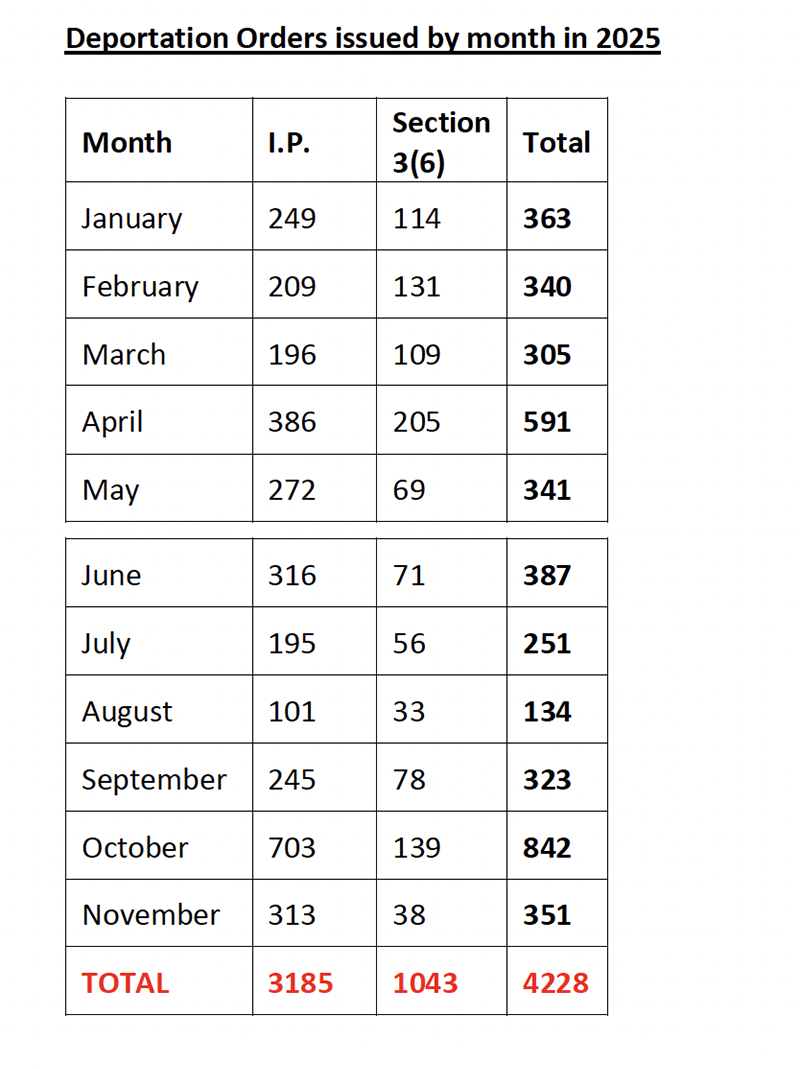
Apart from the significant number of orders which are revoked, it is also known that only a small number of people are physically removed from the state once an order has been issued. In a Dáil reply on November 18, Minister O’Callaghan said while 4,206 orders had been issued up to November 14 that a total of just 386 people had been deported.
That does represent an increase in the numbers from previous years. Just 162 people had been deported in 2024, compared to 79 in 2023, 117 in 2022 and 38 in 2021 when the State had decided to impose a moratorium due to the restrictions on foot of the Covid Panic.
There are no full year statistics on the number of orders that were revoked in 2024. There had been around 100 up to May last year. The former Minister for Justice, Helen McEntee, had supplied Aontú leader Peadar Tóibín with figures for the previous eleven years which showed an average of over 300.
The number of orders revoked so far in 2025, at 486, will mean that the total for the year will be at least the second highest since 2022 when 582 deportation orders were revoked.
The most significant difference in the past two years is the seemingly large jump in the numbers of people who leave the state voluntarily before a deportation order has been issued. According to the figures given last month by the Minister, 1,393 people had chosen to leave the state up to November 14.
That compared to 934 in 2024 – itself a fourfold increase on 2023. Indeed, the total number of voluntary returns up to mid November was more than twice that of all voluntary returns between 2020 and 2023.
Voluntary returns have always been referred to by the state as adding to the total number of people who ought not be here in the first place but who do leave. It might be argued that the figure is somewhat of a red herring given that they are separate from the numbers of deportation orders issued.
That is sometimes not apparent, and I have seen reports where voluntary returns are referred to as though they are people who have been issued with a deportation order but who have decided to leave under their own steam rather than suffer the indignity of being taken under Garda escort and placed on a flight.
Minister O’Callaghan clarified this when he stated that “A person can only avail of voluntary return before a deportation order is issued and I have increased resources into this programme to enable people who wish to return before a deportation order is issued to them.”
What makes the programme effective is not clear but if it removes what are in effect illegal immigrants that can only be welcomed.
However, it does not get around the fact that the current Minister is on pretty much the same batting average when it comes to the actual deportation of persons who have been issued with a deportation order.
The number of orders that are revoked remains more or less the same and while the number of physical deportations effected has increased it has only done so from a very low level and still amounts to less than 10% of the number of deportation orders issued.