A former PSNI detective has called for the death of Kelly Lynch to be treated as a murder investigation. It comes as a new forensic report published this week said that the 23-year-old’s death was a homicide.
Kelly was found dead in the Ulster Canal in Monaghan town on St. Patrick’s Day in 2024.
James Brannigan is a former detective who worked on the Katie Simpson murder investigation. He founded the charity The Katie Trust after the death of Katie Simpson, whose death was initially treated as suicide.
The charity, which has produced the new forensic report, has been supporting the Lynch family and was started to support other families who have lost a loved one in circumstances initially classified as suicide, accident, or disappearance but where concerns and unanswered questions later emerge.
Kelly’s family raised almost £20,000 through an online appeal for a legal and investigation fund after they began working with the Katie Trust in what they described as an “ongoing fight for truth and accountability” relating to Kelly’s death.
The Katie Trust said this week that a the new independent pathology report on the death of 23-year-old Kelly Lynch raises “significant concerns” regarding the investigation into her death as it has established she suffered a number of injuries and there was no evidence that she had drowned, the cause of death recorded by the pathologist in the Republic of Ireland.
The privately funded report claims Kelly died as a result of a violent assault, which is at odds with Garda findings that her death was a tragic accident and as a result of drowning.
Kelly’s mother Julianne Lynch previously told Gript that there were many unanswered questions surrounding her daughter’s death.
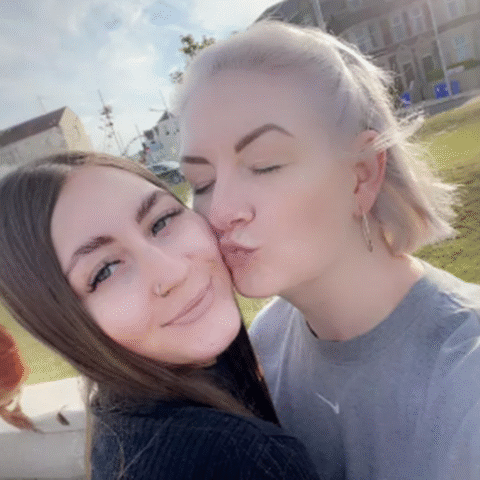
The last time Julieanne saw Kelly alive was when she left home on Wednesday 13th March 2024 to travel to Monaghan to support her boyfriend’s family, who had suffered a bereavement. Kelly, who was from Gilford, Co Armagh, had been living in Lisnaskea, Co Fermanagh.
What happened to Kelly in the last moments of her life are not clear, with the family suggesting key clues were missed during the Garda investigation. The young woman rang her mother a number of times in the hours before her death; but as it was during the night, Julieanne’s phone was on sleep mode and she only rang her daughter back the following day.
Kelly’s phone was found wrapped in her hand when she was found, but the family point out that it was not water damaged. Julieanne recalled how Kelly left her a voicemail, something which was highly unusual. There was no audible language in the voicemail, just noise.
“There was also a voicemail, which was highly unusual, as she’d never left me a voicemail before in her entire life. She’s not saying anything – there’s no audible language in it – and when I first heard it, I was a bit confused. I immediately sent her a text to ask why she had been ringing, but obviously she never replied. When she didn’t reply, I started ringing and ringing. I still have that voicemail, and now, in the context of everything, I realise she was probably close to dying when she left me that message.”
Julieanne Lynch says that no one alerted Kelly missing, and no one contacted the family until they received a call from the PSNI informing them that their “unique” and “beautiful” daughter was dead.
“I kissed her and I told her I loved her. Then she was on her way. Kelly came home a week later in a coffin,” Julieanne Lynch told Gript.
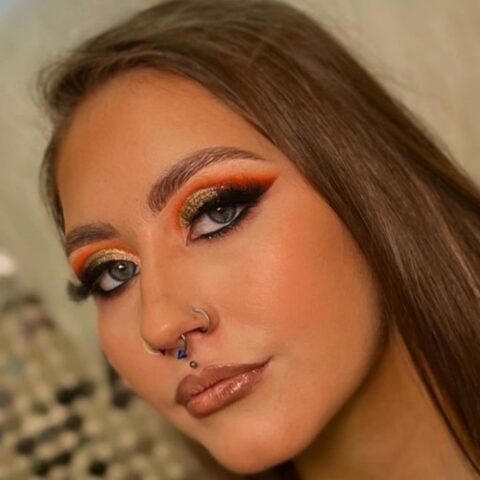
“Kelly was very unique. She was very vibrant, and didn’t take herself too seriously. She would be up for anything, and when she smiled, her whole face lit up,” Julieanne says. “She was very loyal to her friends, and her family. She was one of six children, the second oldest, and her family was everything to her.
“Even though she didn’t have a huge group of friends, she still had the close friends she went to school with. She was liked by everyone because she just had this natural ability to be likeable and to chat to anyone. There was a serious side to Kelly too; she enjoyed being with her family and loved her alone time too – her Netflix and her music and chilling out with her family.”
’93 INJURIES ALL OVER KELLY’S BODY’
The family had questioned the conclusion that Kelly had drowned, given that there was very little water in her lungs.
They have insisted since Kelly’s death that Gardai could not prove their theory that Kelly fell, hit her head and drowned in three inches of water in the canal. They have pointed to multiple injuries to her body, including what her mother told Gript looked like black knuckle marks on her neck, wounds to her hands and her jaw being “badly injured” as well as a significant head injury.
‘It transpired from the autopsy that she had significant injuries on her jaw. We can’t list all the injuries because the coroner is working on the final report. Kelly had significant injuries, but we were told that her injuries alone wouldn’t have killed her,” Julieanne said. She said that when Kelly’s body returned home, the family noticed multiple scratches, abrasions and bruising.
“In total, there were 93 injuries all over Kelly’s body,” Julieanne said previously.
The independent report carried out by a second pathologist concludes that a number of injuries identified on Kelly’s body were “inflicted postmortem.”
The report also seeks to address questions that have remained unanswered for Kelly’s family,” including how she came to sustain 93 separate injuries and the timing and causation of a number of those injuries.”
It also raises the concern that there is no pathological evidence of drowning, which was the cause of death recorded in the State Pathologist’s report issued in 2024.
The new report by the Katie Trust further highlights “an alternative mechanism of death” and says there was likely third party involvement.
In a statement, the charity behind the report said:
“The Katie Trust wishes to issue the following statement in relation to the recent independent pathology report concerning the death of Kelly Marie Lynch, whose body was recovered from the Ulster Canal in County Monaghan on St Patrick’s Day, 2024.
“Since Kelly’s death, The Katie Trust has been supporting her family as they seek answers to a number of serious and unresolved questions surrounding the circumstances in which their daughter died. These concerns were shared by the Trust from the outset and by its founder, retired Detective Sergeant James Brannigan, from an investigative perspective.
“In response to those concerns, and at the request of the family, The Katie Trust commissioned an independent desk-top pathology review by a senior pathologist based in the United States. This pathologist trained in Ireland, practised in the United Kingdom, and has extensive experience working in the United States.”
A Garda spokesperson said in a statement: “Garda Commissioner Drew Harris and Chief Superintendent Alan McGovern, Louth-Cavan-Monaghan Division, met with the family of Ms Kelly Lynch on 21st October 2024, and listened carefully to their concerns.
“Following this meeting, Commissioner Harris directed that a Senior Investigating Officer (SIO) from a Division external to the Louth-Cavan-Monaghan Division conduct a peer review of the investigation into the death of Ms Lynch.”An Garda Síochána is currently conducting that peer review of the original Garda investigation.
“The SIO is keeping the family up to date with the progress of the review. An Garda Síochána is also assisting the Coroner’s Inquest and fully cooperating with the Fiosrú investigation. These processes are ongoing.”An Garda Síochána appeals to anyone with direct information on the death of Ms Lynch to contact Gardaí.”
Julieanne has criticised the lack of duty of care the family say they have received from police with no in-person “death knock” or an update from a family liaison officer for more than two months after her death.
‘THEY AGREED KELLY’S CLOTHING SHOULD NEVER HAVE BEEN HANDED BACK’
Kelly’s mother further claims that evidence in the case was mishandled, and that there was never any forensic analysis done on Kelly’s clothing, which Julieanne noticed was “torn, muddy, and inside out.”
Her mother told Gript that the left arm in Kelly’s jumper was ripped at the seams, and that her coat was soaking and filthy. Her black Converse trainers were pristine with only the tiniest fleck of blood, while her white socks were covered in mud. All of this stood out to Julieanne, who was told by officers that she could have the clothing independently tested if she wished. According to the family, Kelly’s rucksack was mysteriously handed into the police station in Monaghan by an individual police could not identify.
“We photographed the clothing that Kelly had been wearing, which was returned to us on 25th March. They were just thrown into a bag, into a box, and covered with a white bin bag. We documented everything, and once Commissioner Harris and the Deputy Superintendent saw that, they agreed that this should never have been handed back to us, and that they would open a peer review. There were red marks on Kelly’s shoes, but there was never any initial forensic analysis of any of Kelly’s clothing,” Julieanne added.
Mrs Lynch also claims that there was no crime scene – only gardai directing traffic around the St. Patrick’s day parade.
“The crime scene wasn’t properly preserved. It was back open that day just after 2pm. There was no tape around it. My sister who lives 25 minutes from Monaghan, on her way to visit us after she got the news that evening, she stopped at the bridge and there was no activity at all other than the local Gardai redirecting traffic. At that point, we didn’t even know the circumstances. We just knew that Kelly was dead.”
In the months following her daughter’s death, Kelly’s mother has continued leading a social media campaign raising the family’s concerns over the investigation.
“We are begging people to come forward with information. There were no witnesses to say that they saw Kelly fall. The CCTV on the bridge hadn’t been switched on by the council. For us, there are many questionable inconsistencies related to Kelly’s final moments. The timing, CCTV, none of it adds up,” she said.
“The Gardai have been absolutely horrendous with the investigation and how they have mishandled evidence, and the way they have communicated with us. I learned of Kelly’s death via a phone call [from the PSNI]. No face-to-face liaising whatsoever,” Julieanne claims. “Kelly’s death has remained under the radar. Kelly’s case shouldn’t have been treated this way; she shouldn’t have been treated this way.”