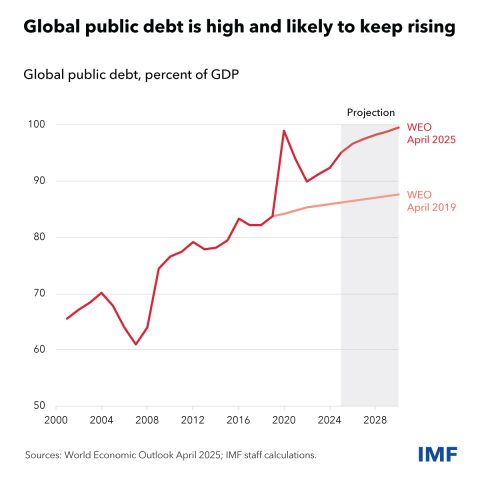
The International Monetary Fund (IMF) has said global public debt – the amounted borrowed by governments – are high and rising, and likely to reach almost 100% of GDP by the end of the decade, advising of increased financial market volatility, weakened growth prospects, and increased risks.
The IMF’s latest Fiscal Monitor projected that global public debt would increase by 2.8 percentage points to 95.1% of global GDP in 2025 – more than twice the estimates for 2024. This upward trend is likely to continue, with public debt nearing 100 percent of GDP by the end of the decade, surpassing pandemic levels, the IMF added.
In fact, the report said that risks were already elevated ahead of the uncertainty created by Trump’s tariffs announcements. According to the Fiscal Monitor’s debt-at-risk, which utilizes data up to December 2024, in a severely adverse scenario global public debt could reach 117 percent of GDP by 2027. This would represent the highest level since World War II, exceeding reference projections by almost 20 percentage points.
But it added that “risks to the fiscal outlook have further intensified” and that “debt levels may rise even further than the debt-at-risk estimates if revenues and economic output decline more significantly than current forecasts due to increased tariffs and weakened growth prospects.”
“Additionally, escalating geoeconomic uncertainties could heighten debt risks, driving up public debt through increased expenditures, particularly in defense. Demands for fiscal support could also rise for those vulnerable to severe disruptions from trade shocks, pushing up spending. The Fiscal Monitor estimates that a significant rise in geoeconomic uncertainty could lead to a public debt increase of approximately 4.5 percent of GDP in the medium term,” the report said.
Public debt shot up during the Covid lockdown, and while it then fell back 10% to previous levels, it has been edging back up and the latest forecast showed it accelerating
The IMF said that “tighter and more volatile financial conditions in the United States may have ripple effects on emerging markets and developing economies, leading to higher financing costs.”
“Limited fiscal improvements may further heighten risks from rising interest rates, especially as many countries have substantial financing needs. High interest rates could limit essential spending on social programs and public investments. Additionally, reduced foreign aid, due to shifting priorities among advanced economies complicates financing for low-income countries,” the report warned.
Much of the debt growth is concentrated in larger economies, IMF Fiscal Affairs Director Vitor Gaspar told Reuters. About one third of the 191 countries who are members of the IMF’s now have debt growing at rates faster than before the pandemic, but they make up about 80% of global GDP, he added.
COUNTRIES NEED TO PUT HOUSE IN ORDER
“In an uncertain and rapidly changing world, countries will need to first and foremost put their own fiscal house in order. This means implementing prudent policies within robust fiscal frameworks to build public confidence and help reduce uncertainty,” the IMF said.
“Fiscal policy should prioritize reducing public debt and establishing and widening buffers to address spending pressures and economic shocks. This means finding the right balance between adjustment and supporting economic growth, tailored to each country’s unique situation, available resources, and overall economic conditions.”
“Countries with limited room in government budgets should implement gradual and credible consolidation plans and allow automatic stabilizers, like unemployment benefits, to work effectively.”
“Any new spending needs should be offset by spending cuts elsewhere or new revenues. For countries with greater fiscal flexibility, it is important to utilize available resources judiciously within well-defined medium-term plans. Fiscal support for businesses and communities impacted by severe trade dislocations should be both temporary and targeted, with a strong emphasis on transparency and effective cost management.”
“More generally, advanced economies should tackle issues related to aging populations by reprioritizing spending, advancing pension and healthcare reforms, and broadening the tax base. In emerging and developing economies, enhancing the tax system is crucial due to historically low revenues. Low-income developing countries should stay the course on fiscal adjustments given financing challenges. Timely and orderly debt restructuring alongside such adjustments is essential for countries facing debt distress.”
“Additionally, fiscal policy, alongside other structural policies, should focus on enhancing potential growth. This can help ease challenging tradeoffs between growth and debt sustainability. For instance, well-designed pensions and energy subsidy reforms can generate savings that can be used to support social programs and infrastructure investments.”
“As significant policy changes and heightened uncertainty reshape the global economic landscape, the fiscal outlook has worsened. To effectively navigate these challenges, governments should focus on building public trust, ensuring fair taxation, and managing resources wisely. By doing so, they can foster resilience and promote sustainable growth in uncertain times.”