A 74-year-old safeguarding advocate living with disability has accused the HSE of denying her autonomy and dignity after her evening home-care services were withdrawn following a dispute over her care arrangements.
And she says she was told that if she did not agree to a 7pm visit – which leaves her sitting with wet incontinence pads for hours – she might not receive a service at all.
Dr Margaret Kennedy, who lives in Greystones, County Wicklow, says her evening care provision was cancelled in recent days following disagreements with an HSE manager over the timing and delivery of her home-care support.
The academic, who founded the charity Cothrom alongside Drogheda disability advocate Michael O’Dowd, held a seminar at Dublin’s Mansion House in October, highlighting what she described as serious concerns about the dignity, independence and human rights of older people and those with disabilities who rely on care services.
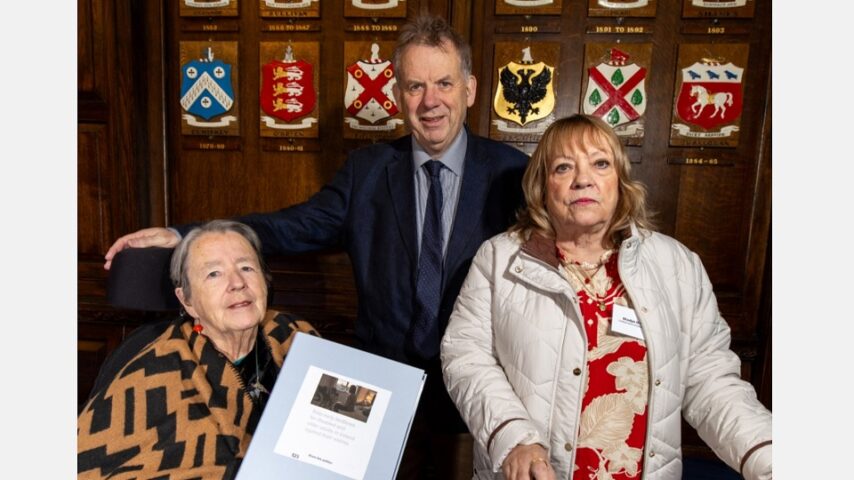
During the event, Dr Kennedy warned that people requiring assistance were being spoken down to, infantilised, ignored and coerced.
She also raised concerns about older people being put to bed as early as 4pm because of inadequate home-care provision.
Dr Kennedy told Gript that she had objected to being required to accept a 7pm care visit to get ready for bed, arguing that this was far too early and would leave her sitting in an incontinence pad for several hours before her usual 11pm bedtime.
“There’s a lot of demeaning. There’s a lot of putting down, a lot of control. I’m beginning to look at it very much as coercive control,” she said.
The former lecturer, who was awarded the Langton Medal by the Archbishop of Canterbury in 2020 for her services to the community, said she had experienced significant difficulties with her care arrangements following a serious illness and hospitalisation over the summer.
She said she had initially asked the HSE to help fill evening care slots between 8pm and 9pm after staff became unavailable due to maternity leave, illness, family circumstances and some leaving the area or taking up other employment.
Following her four-week hospital stay, however, she said she returned home to what she described as a “fractured and chaotic” care package.
Dr Kennedy said that, after becoming reliant on two additional agencies contracted by the HSE, she found herself with considerably less control over her own care.
She claimed she was no longer permitted to contact the agencies directly or have a say in who was assigned to her.
She recalled receiving an email from an HSE manager informing her that they were “in charge”.
“I was like a naughty 14-year-old who had been told, ‘You don’t pick up the phone and you don’t do anything, really’,” she said.
The dispute subsequently centred on a proposed 7pm evening care visit, which Dr Kennedy said would leave her in an incontinence pad for several hours before she went to bed.
She said she had previously received assistance between 8pm and 9pm, allowing her to get ready for bed closer to her usual bedtime of 10pm or 11pm.
“Now they’re changing me at seven and I am very wet by the time I go to bed at 10 or 11,: she said.
Dr Kennedy, who is unable to stand or walk independently, said she could not safely change herself and was left facing the prospect of either attempting to do so at risk of falling or remaining in a wet pad.
She said she had recently been catheterised while in hospital to give her a period of relief from wearing wet incontinence pads.
“You’re left in wet, in constant pads for six hours, sometimes nine hours. And overnight, 12 or 15 hours,” she said.
“I mean, it’s totally inhumane to leave an older woman at, say, 70 or 80 in an incontinence pad. It’s diabolical.”
The activist also described being pressured to sign a series of agreements concerning her care.
She said she was told that if she did not agree to a 7pm visit, she might not receive a service at all.
She also objected to a request to allow two care workers to attend simultaneously, saying the number of staff entering her home had become “untenable” and was undermining the privacy of her family home.
Another proposed agreement would have allowed care workers to share information with the HSE if they considered it necessary.
“I didn’t want snitches in my house,” she said.
Dr Kennedy said she had subsequently found that correspondence withdrawing services appeared to record her agreement to the 7pm arrangement without mentioning a caveat she said had been discussed about finding someone who could attend later.
‘THEY’RE PUTTING PEOPLE TO BED AT 4PM”
She also questioned why the HSE appeared to prioritise basic home-care provision over personal assistance, which she believes would allow older and disabled people to maintain a greater degree of independence.
“They’re putting people to bed at four o’clock, five o’clock in the community. It’s horrendous for many older people,” she said.
“One of the projects I’m doing is with the UN at the moment, and they’re having Zooms in the evening, in the UN, at around seven or eight at night.
“Now, am I to go on these Zooms in my pyjamas?”
Dr Kennedy said the restrictions on her care had affected her ability to continue working and participate in projects, including those involving the United Nations.
She also believes the current system fails to recognise the difference between a home-care worker and a personal assistant.
“The HSE don’t seem to realise that a Personal Assistant is what’s important for older people. There is a big distinction between basic home care and personal assistance,” she said.
“Having a PA is something which would enable older people to live their lives in a way they want. Home care, on the other hand, has become very basic. It is essentially only about washing, dressing and feeding the person.”
She contrasted her own experience with that of her twin sister, who also lives with her but receives personal assistance and is able to go to workshops, theatres and other activities.
“She’s gone to shows. She’s gone to shops. She’s gone to theatres. She’s gone out in the open air.
“That’s how it should be. Just the same age as me. But I’m sat at home because I can’t go out.”
Dr Kennedy told Gript that a social worker suggested she go into a nursing home following her hospital stay. She says she will remain at home and fight for a proper support PA package.
Dr Kennedy said the lack of personal assistance was particularly damaging for older people with disabilities, who risk becoming increasingly isolated and dependent on basic care provision.”
She also highlighted the difficulties facing care workers, arguing that poor pay, a lack of travel expenses and limited opportunities for training and career progression were contributing to staff shortages.
“Why are these care workers paid so little? Why do they not get their travel expenses? Why do they not get more training and more progression in their careers? Why are they not valued more?” she asked.
“THE LOSS OF DIGNITY, LOSS OF RIGHTS AND LOSS OF ABILITY TO SAY NO”
Dr Kennedy has launched a petition calling on the Government to end the practice of putting older people to bed early without their choice or consent. The petition had gathered more than 500 signatures at the time of the interview.
She said the wider treatment of older and disabled people reflected a combination of ageism and ableism, with many losing their independence and ability to make decisions about their own lives.
“It’s ableism and ageism together. And it makes it very potent,” she said.
“It’s a weapon because we’re not allowed to do anything or say anything or even have our own ideas and views, and I think that’s what I’m fighting against.
“The loss of dignity, the loss of rights and the loss of ability to say no.”
Dr Kennedy also warned that Ireland’s history of institutional abuse should make the State particularly conscious of the need to protect older and vulnerable people.
She said: “A large proportion of our older population would have been in Magdalene laundries or institutions or the abuse of children. We’ve had a very bad history with the state services.
“And I think people in their 70s and 80s can still remember how hard it was. They want to be now free.”
In a statement outlining her concerns, Dr Kennedy also warned that older and disabled people were at risk of exploitation, illness and accidents because of what she described as government inertia and inadequate safeguarding arrangements.
She criticised the expansion of residential care, arguing that some facilities risked becoming institutional settings rather than genuine homes.
Last month, Dr Kennedy and Mr O’Dowd called for an urgent meeting with Joe Ryan, the HSE’s National Director for People, Culture and Risk Management.
They say the meeting must now take place as a matter of urgency to establish what safeguards are in place and whether Dr Kennedy’s experience points to wider systemic failings in the provision of care.
“Older people need safeguarding from the HSE,” Dr Kennedy told Gript.
“It is a form of coercive control. My autonomy, independence and respect have been denied.
“As an older disabled person in Ireland, I have no voice. I have no control, and no say in decision-making.”
The HSE Dublin and South East has been contacted for comment but had not responded at the time of publication.