The Irish Refugee Council has been much in the news of late as its CEO Nick Henderson has been given ample opportunity to defend the refugee system due to the state’s apparent failure to impose proper controls exhausting the patience of communities that are being forced to cope with a problem that is not of their making.
It is hardly surprising that the IRC is so trenchant in its defence of all of this. In its pre-Budget submission the IRC was looking forward to Ireland welcoming many of the up to 1.2 billion refugees that the Council believes will be fleeing “climate impacts.”
All of this would annually cost billions and billions more on top of the already colossal bill.
In common with other migrancy/refugee/racism/diversity companies, the Irish Refugee Council will benefit greatly from your money as it is channelled to them by a state that often appears impotent to resist their demands. As too will the thriving legal businesses who specialise in referrals from the IRC and others.
In common with virtually every single advocacy NGO, the IRC would scarcely exist beyond a few well-meaning people selling buns and raffle tickets for genuine refugees were it not for the fact that they became convenient clients for the Woke Capitalists.
Said capitalists, as evidenced by the vast sums they dispense, saw the opportunity to camouflage the ruthless drive to break down all barriers to the “free movement of capital and labour” with the cover of the Pollyanna liberal left.
The fairy godmother of the Irish Refugee Council was Chuck Feeney and Atlantic Philanthropies. The IRC were given grants of over $7,000,000, without which they would have been unable to become the powerful lobby and legal conduit that they now are.
Atlantic money basically built the Irish Refugee Council from the ground up. In 1998, they paid a consultant to advise the IRC how to be a “more focused and effective organisation”. The following year they gave it €277,000 to employ a Chief Executive Officer and cover support costs. Then in 2001, Atlantic funded a “research project,” the objective of which was to find holes in the Irish system used to process applications for asylum.
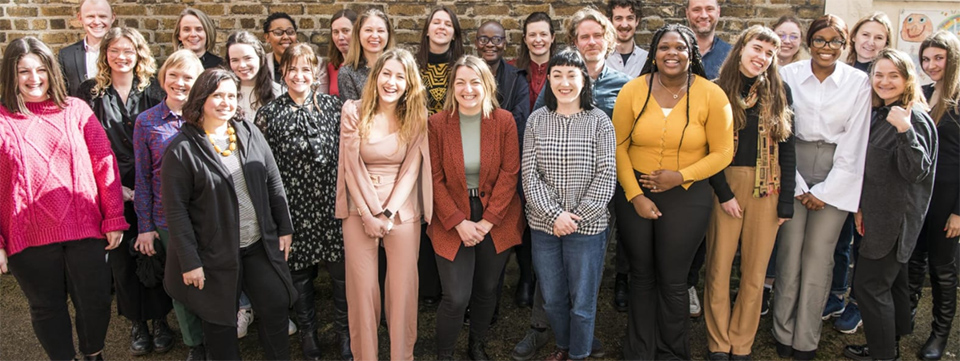
I do not have any numbers for the small scale of the operation run by the IRC prior to the Woke dollars, but they have managed to increase the number of people employed from 8 in 2014 to 42 in 2022. This exponential growth has swollen their wage bill from €483,607 to €1,409,300. So the quality of life has improved for some, not least its remarkably un-diverse looking staff.
The Irish Refugee Council is also a classic case study of how Woke foreign capital created a monster which now has to be sustained by the citizens. In 2014, the IRC had an income of €684,240. Of that, just €45,224 came directly from the state. In 2022, income had risen to €1,777,632 and €330,098 of that was directly from the state.
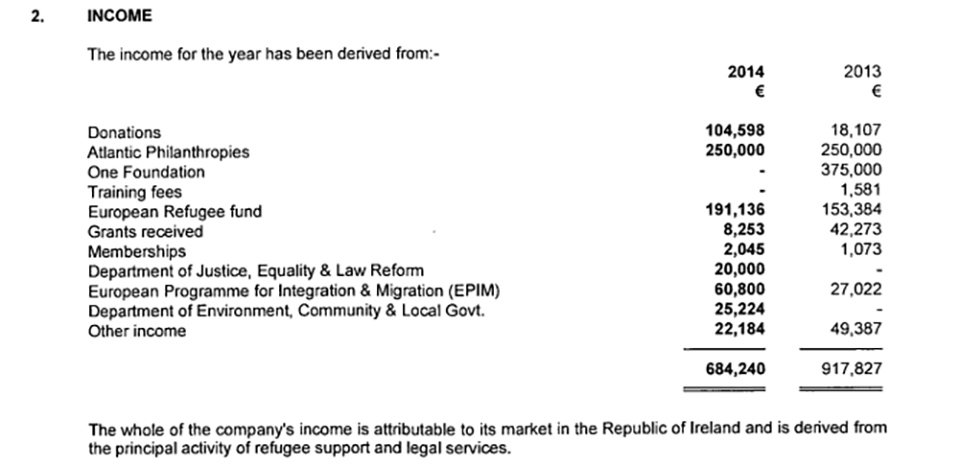
Irish Refugee Council – 31_12_2014 (1).pdf
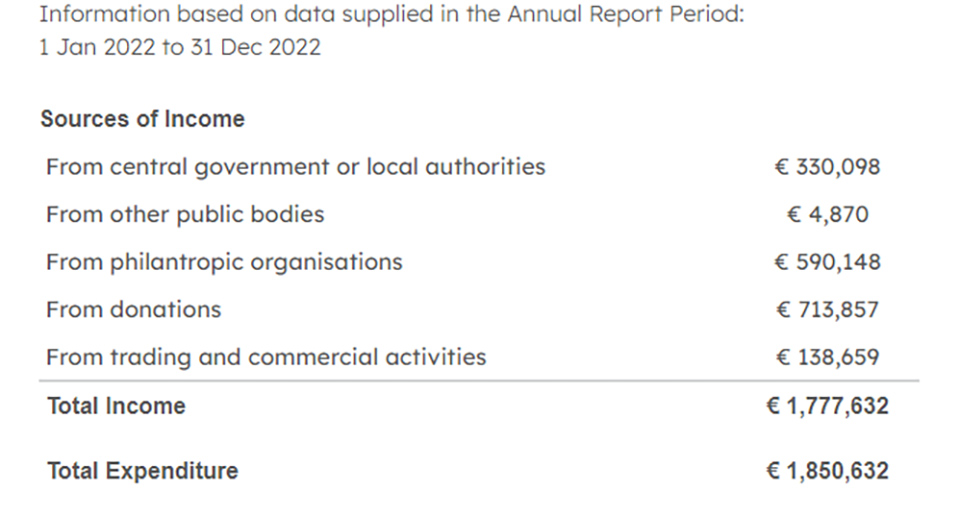
Sonraí Carthanachta | Charities Regulator
They still do extremely well from the foundations, and their dependence on the state is not yet as extreme as others, but you can see the pattern.
Woke capital provides the seed capital and the taxpayer has to feed its growing demands as it is weaned off the Atlantic and other legacy grants.
The irony of this is that even though recent polls have indicated that a large majority of citizens disagree with a liberal asylum policy, they are still forced to pay the wages of people whose job it often is to claim that those citizens are the dumb patsies of disinformation or racists.
The CEO of the Irish Refugee Council, Nick Henderson, has spent a long career in the NGO sphere. He was previously with Transparency International, Amnesty International, the Migrant Rights Centre (MRCI) and the Jesuit Refugee Centre.
The current secretary is Daniela Jurj of the Romanian Community in Ireland which represents a group comprised of EU nationals. She works in TUSLA.
Timothy Lee of the Dublin Lesbian Gay Bisexual Transgendered Queer Pride Company is also a director. We don’t have any figures on how many LGBTQ+ refugees have arrived.
Niamh Nic Carthaigh works for PLAN International’s European section and was previously employed by other NGOs such as Women’s Aid. Oisin O’Reilly was also with the Pride company and was a director of BeLongTo.
Lorcan Sirr lectures in housing in the Dublin Technological University and is a member of the expert group set up by Minister Roderic O’Gorman on how to end Direct Provision and move people claiming asylum straight into state provided housing. Susan Whelan has a legal background and was involved in the Generation Yes campaign to reverse the initial rejection of the Lisbon Treaty.
The chairperson of the board of the IRC is Doireann Breathnach who is a senior strategy manager with Accenture. She was also a consultant and intern with the Institute for Strategic Dialogue for a short period. This was part of the ISD’s CEDAR network to combat “Islamophobia.”
Cliodhna Murphy is an associate professor at Maynooth where she lectures in things to do with migration. She has previously worked with the EU Agency for Fundamental Rights, the Organisation for Security and Co-operation in Europe (OSCE) and the European Trade Union Institute. Maeve Foreman is an adjunct professor in social sciences at Trinity College
Reuben Hambakachere is employed by Meath county council as an integration officer and is on the board of Community Work Ireland. He is also still with the Cultúr migrant centre in Navan. Hamabakachere is described as a “former asylum seeker from Zimbabwe” who has been given leave to remain.
A section of the Irish Refugee Council financial statement for 2022 refers to their work in facilitating legal cases by persons claiming asylum. As can be seen, they have a good degree of success in attaining refugee status and family reunification, presumably after their clients have been previously refused and entered appeals.
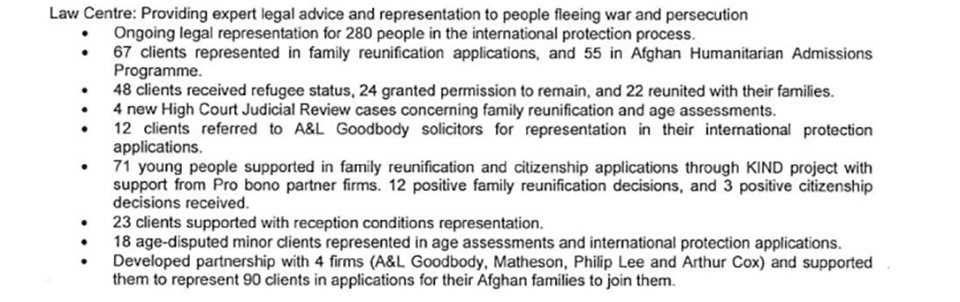
It is a small spotlight on the nexus between the migrancy advocacy companies and the legal firms who take on such cases and earn considerable amounts in fees in doing so. The report specifically refers to four legal firms; A&L Goodbody, Matheson, Philip Lee and Arthur Cox with which the IRC has a “developed partnership.”
Gript has touched upon this aspect of the asylum process here previously, and it is a theme that we shall be examining more closely. Especially as the legal fees involved continue to escalate into tens of millions of Euro.