With just days left to purchase Christmas presents, the gift of an album both supports the traditional arts and will bring repeated pleasure to the recipient. From the world of trad publishing there’s also a novel calendar and a new book – and concert tickets are always a great gift to receive. All available online with a few clicks in time for Lá Nollag if you hurry.
The Groves of Gneeveguilla: Aidan Connolly & Bryan O’Leary
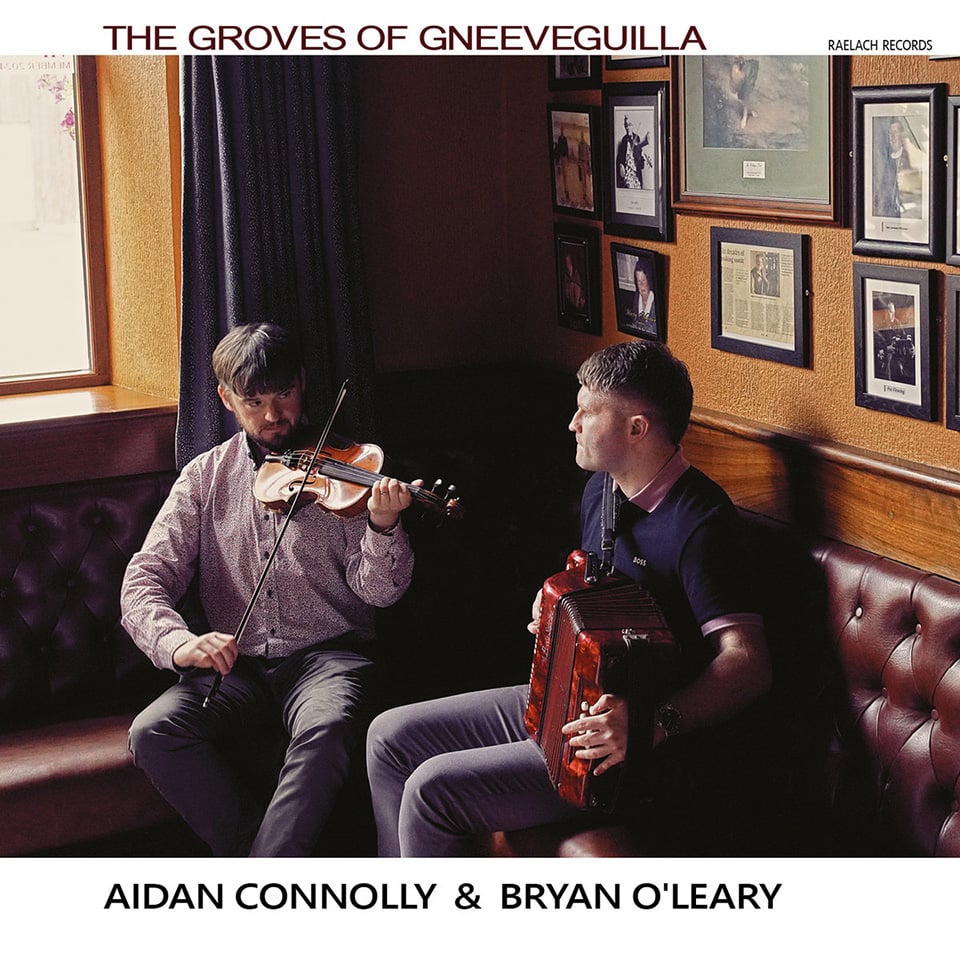
Gneeveguilla: it means a Deed and a Half, and this term comes from an old method of measuring land – ie one deed (or possible an heroic feat) being how much land a ploughman could encircle with a single furrow in one day. It is in the heart of Sliabh Luachra, that hilly land on the Kerry side of the Cork Kerry border. Bryan O’Leary and Aidan Connolly open as fine a tribute as you will find to the music of Sliabh Luachra with a rollicking polka, The Groves of Gneeveguilla.
The interplay between Connolly’s fiddle and O’Leary’s accordion on this album is fabulous. Always the bouncing merry style of Sliabh Luachra and the frequent jolt of the accordion bass cords are reflected by Connolly’s fiddle, who happily swaps up or down an octave giving the melody more breadth and more timbre. That push of the melody, like you would demand of a house dance, is always paramount, and the arrangements of this duo never diverge from this principle. There is no accompaniment on guitar or other rhythm instrument, all that infectious rhythm is straight from the melody.
But there’s more. Both Connolly and O’Leary, in their playing, never tire of exploring the counterpoint of their tunes. Whether its polkas, slides, jigs or reels that interplay never stops. Listen to the set of Jigs, Dan O Leary’s/Con Tadgho’s. That fiddle squeals along the cat gut at a steady and mesmerising pace, playing high or low, and all along there is this deep bass counterpoint from O Leary.
Tony Mac Mahon used to say, “but can he play a slow air?” The answer is yes. Sweet Donoughmore, a tune I hadn’t heard before, is rich with sweet poignancy; marvellously phrased, in complete contrast to the rambunctious dance music that graces the ear so easily on the rest of this album.
Briseann an Dúchas they say. Connolly and O’Leary’s grandfathers played together regularly many years ago in Thady Willy’s hall for dances. O’Leary’s grandfather was none other than the marvellous Jonny O’Leary, one of the great reference points for the Sliabh Luachra style. I imagine that Brian and Aidan would have fit perfectly at home in these sessions in Thady Willy’s hall.
Ar fáil anseo: https://raelachrecords.bandcamp.com/album/the-groves-of-gneeveguilla
Michael Steen’s calendar of traditional songs
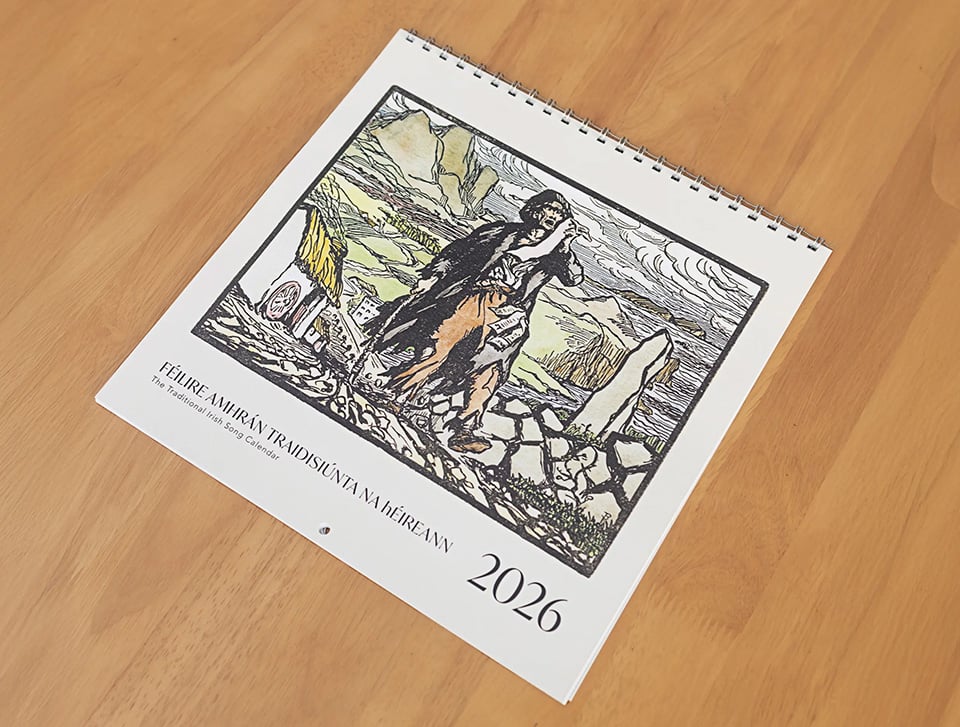
This is such a clever idea from singer and researcher Michael Steen, and will make a gorgeous gift for any singer of traditional songs, but hurry with this one as stock is reportedly very low.
It’s a traditional song wall calendar – Féilire Amhrán Tradisiúnta na hÉireann – and has been described variously as a journey through centuries of song, story, and heritage, and a journey of song through the seasons.
I’ve already received a gift of the Féilire and its an impressive undertaking, beautifully presented and gathering some of the great sings according to anniversaries or feasts or other relevant dates. More than 300 songs are featured and accessible by a QR code.
Thus pointing your camera on 21st January brings you to a wonderful recording of Peáiti Thaidgh Pheig of Cúil Adodha giving a stirring rendition of Cath Chéim an Fhia, a song of local rebellion written by Máíre Bhuí Ní Laoghaire. Alongside many favourites are some lesser-known ballads which many singers will no doubt find intriguing.
It’s a new way of using modern technology to build understanding of traditional culture, and the idea came to Steen when he began to notice a seasonality of certain songs in the Irish tradition. The QR codes almost feel like a treasure hunt and the use of so many publicly available recordings is its own reward.
Ar fáil ag: www.songcalendar.ie.
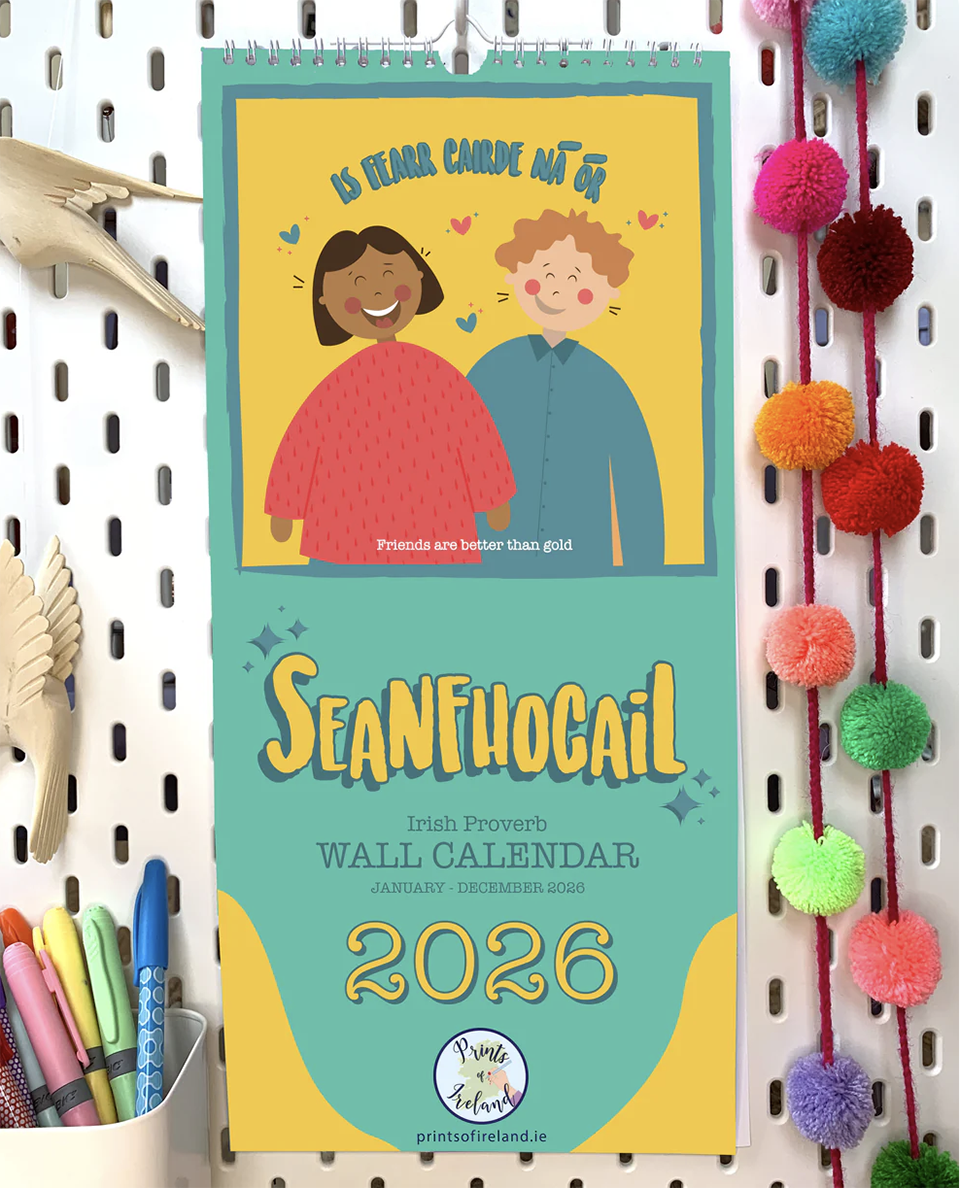
And a PS: if you’re looking for a fun calendar As Gaeilge this one featuring a seanfhocal each month looks pretty good but it won’t be dispatched until January https://printsofireland.ie/products/2026-seanfhocail-wall-calendar?
Anáil an Dúchais : Bríd Ní Mhaoilchiaráin
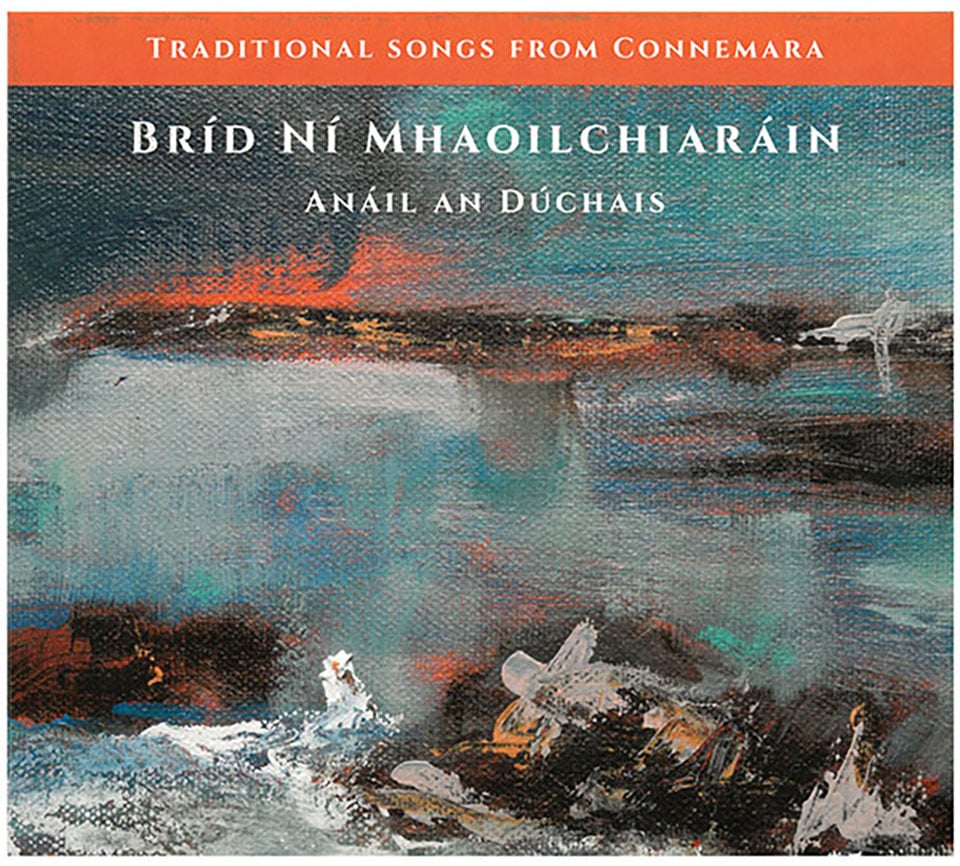
When I heard that this release of songs by Bríd Ní Mhaoilchiaráin of Carna was her first album of songs, I thought it couldn’t be true. But that’s what the press release by Cló Iar Chonnachta said. A renowned performer with a remarkable voice, Bríd has won the Corn Uí Riada at an tOireachtas three times, which is sort of a curse, because it means you can’t enter it ever again. For many singers of the Sean Nós tradition, the apogee of the art is the Oireachtas and the competing in the Corn Uí Riada. So what do you when you’ve climbed that mountain?
Well just carry on as before I suppose, and maybe issue a recording or two along the way.
Bríd featured on three tracks on the 2004 album of harp music, Cláirseach na hÉireann, by wire strung Irish harp specialist, Siobhán Armstrong. Her voice in that collaboration sits beautiful and clear with the wire strung harp of Armstrong, and it is still a strong recommendation. Anyway, despite this very impressive collaboration, she has not featured on any other collaborations I know of, and 23 years after winning her first Corn Uí Riada she has released an album of songs.
This album is of a more mature voice. The reverberant tone of the Armstrong recording is replaced with a closer ambience, one more frequently observed in solo singer recordings. It suits the material in a way. Makes it intimate and more casually domestic. It feels like the singer is right besides you, singing soothingly and captivatingly away at her ease.
There are twenty four songs. Five in English and nineteen in Irish. All of these are voice only and she is joined in simple unison singing for four tracks. It’s unison singing, no harmonies, but it is tight; clear that these are voices used to singing together and can sing in perfect unison. In Caoineadh na dTrí Mhuire this is very effective, especially as the refrain line takes on a communal lament aspect, accompanying the main story of the trial of Jesus’s mother during his persecution.
Bríd’s voice becomes a familiar friend over the course of the songs, and as you get to know it more, the flexibility of her voice and variation of her ornamentations become more interesting. Every line is invested with interpretive phrasing. She sings the songs note by note and syllable by syllable. It’s intimate and welcoming, as she “tells” the songs (an appropriate translation of the term “abair” amhrán, which means to give every phrase its appropriate narrative expression).
It’s so lovely to hear such familiar Conamara classics such as “An Caiseadach Bán”, “Cuaicín Gleann Néifin”, and Raftery’s classic ode to hospitality “Baile Uí Laoi” sung with such ease and dexterity. Bríd has full mastery of these wonderful songs, her craft honed since childhood and shaped by lineage and heritage. I don’t find myself imagining adding any accompaniment to any of these renditions, they are perfect as they are. Her voice is malleable to the words, moving rapidly with classical Conamara ornamentation and fine tremolo whenever she pleases.
Note of interest: There’s a song here called Malaí Ní Mhaoileoin, which I once heard, the comic song of the Dublin fishmonger who tragically died was inspired by. However the story in this song is no joke. It’s a dark murder ballad about a girl who is seduced and stabbed. It includes her murderer describing this horrific act “and I pulled my knife on her, and let her lifeblood flow from her, till it flowed into her shoes”. These songs sometimes deal with heavy stuff.
There is one song that stands out for me in a crowded field of beautiful performances in this collection. Róisín Dubh sounds like it was recorded somewhere else. The voice is clearer, the room sound is slightly more resonant. Maybe it was a live recording from some other time that was included because the performance was so good. Whatever the reason, it’s inclusion was a wise decision. Her performance of this song is extra special. Her voice is more alive, more agile, more explosive, more rapid in the ornamentation and more accurate in those small ornamentation intervals. This alone would be worth the price of the album. In another way it shows what traditional music is. The same song a thousand times can sound different, depending on a multitude of different factors. The energy of the singer; the room it is performed in; sometimes something as intangible as who was present listening to the performance can radically change these tiny factors and give the performance its entire tone and timbre. If you listen closely to this song you can hear the voice lifting ever so slightly off equal temperament in crucial parts of crucial phrases in the song. What a gift.
Ar fáil anseo: https://cic.ie/product-category/ceol/amhrain/sean-nos/
Agus anseo: https://www.siopaleabhar.com/en/tairgi/anail-an-duchais-2-cd-album/
Rachel Ní Fhaoláin’s In the Singing of Songs, Book 2
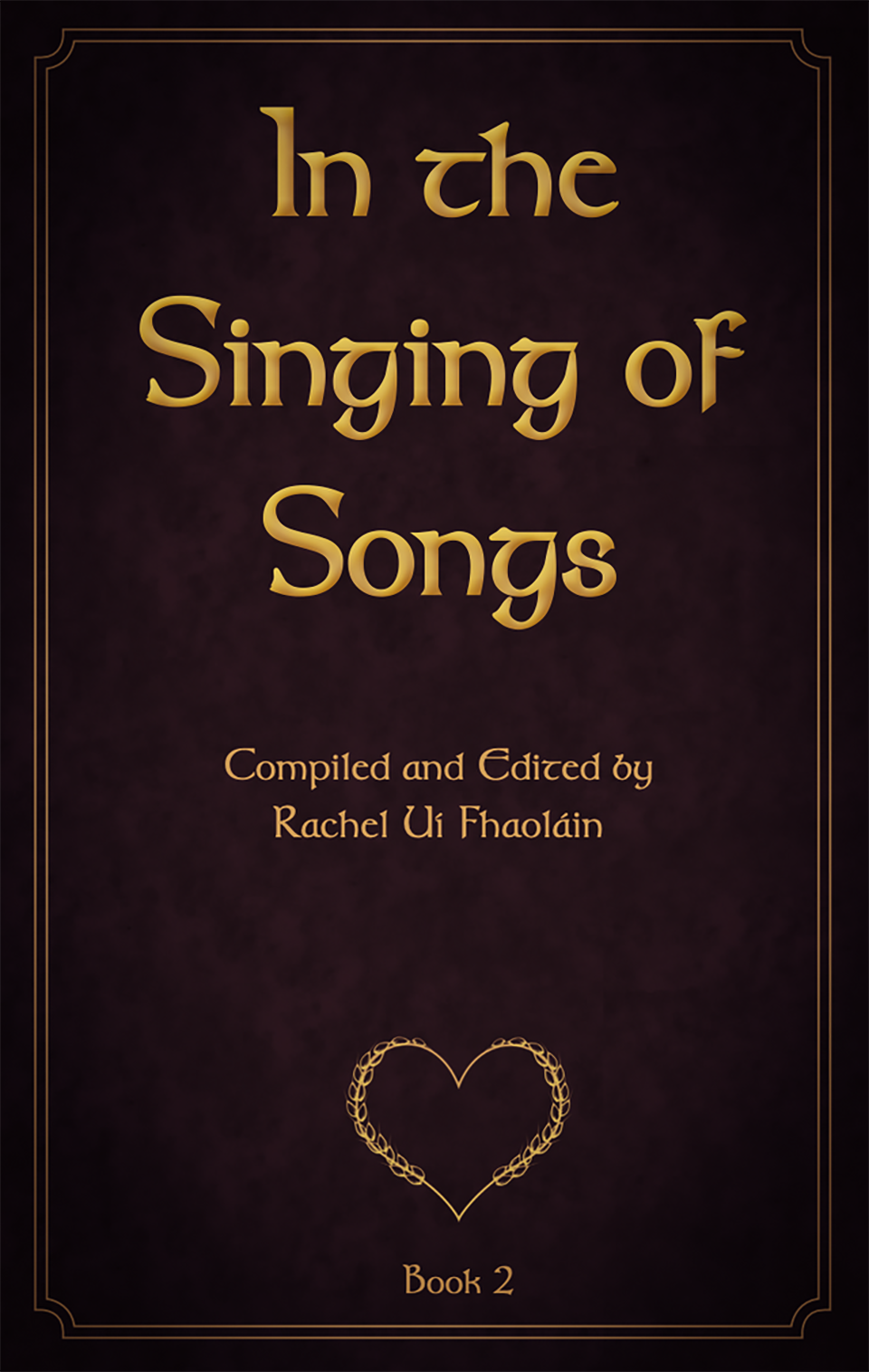
Rachel Uí Fhaoláin is a singer, folklorist and educator based in County Wexford, whose musical family is well known for promoting and conserving traditional and Sean Nós songs. Her work includes research on the songbooks of An tAthair Pádruig Breathnach and she is the creator of what is called an intergenerational project and songbook series, namely, ‘In the Singing of Songs’.
Book 2 in the series of newly composed songs in the traditional style came out this year and the 32 songs and recordings bring us on a journey from Wexford to Newfoundland and beyond. The children’s section of the book – ‘Ag Canadh trí na Séasúir’ contains newly composed songs in the traditional style, in both Irish and English, written by Rachel and her two children Éire agus Chulainn.
Published under the family publishing press fóġṁar (harvest), its an stylish book and includes beautiful illustrations created by Rachel’s children Éire Ní Fhaoláin agus Cú Chulainn Ó Faoláin in response to the new songs while her husband John Ó Faoláin is responsible for documenting the songs through film and audio.
QR codes are in use here as well, linking to recordings of the performances. and its brilliant to see technology supporting tradition in this way.
It’s an innovative approach that’s hugely respectful of tradition and exploring our rich culture of songs and stories. One for every singer’s shelf.
Ar fáil anseo: https://rachel-ui-fhaolain.sumupstore.com/product/in-the-singing-of-songs-book-2
Into the Loam : Liam O Connor and Cormac Begley
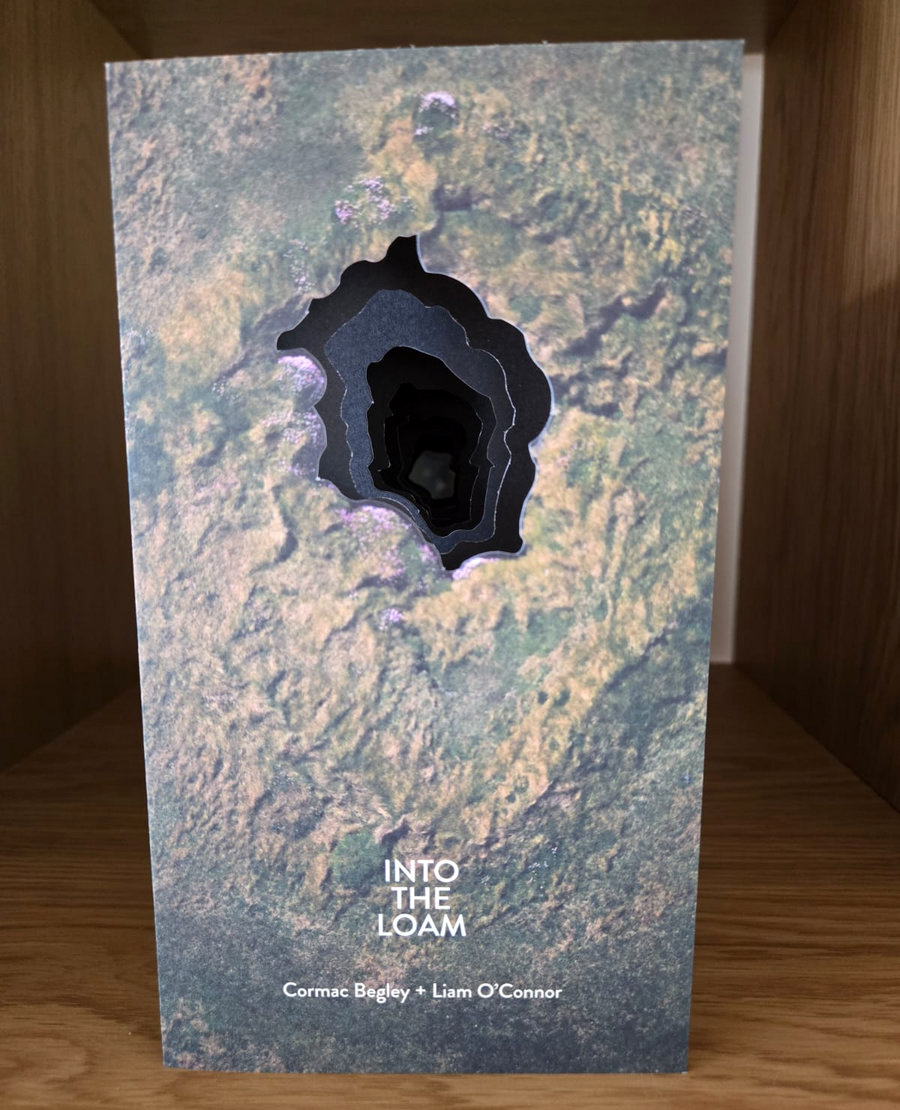
Two of the most skilful Irish musicians joined up for this one to produce a sonic exploration that goes way beyond the palette of sounds that we associate with traditional Irish music. Liam O Connor and Cormac Begley have, in my opinion, antipodean styles of excellence, and their coming together would either be a clash or a summing of opposites.
O’Connor has a recognisable discipline to his playing; a precise controlled excellence which he mastered decades ago. Even as a teenager his fingering was adept and prone to explosive jolts. Sometimes he would growl the G string or pluck a high note on the A or E string in the middle of a rapid phrase. It’s always worth listening when O’Connor is playing. He had not released anything since his 2017 Album of the Year “The Loom,” was he happy he had expressed all he wanted to express?
Begley released his debut in 2017 but his biggest announcement was in 2022 with a style defining recording named B on a Bass concertina; a growling, muddy, sweaty, instrument which puts a circus lion stalking a confined cage and rattling the bars in mind. Begley’s playing is spirited, vital, and husky; always rhythmic and throbbing.
Combining these two maestros was always going to be interesting. O Connors fine control and Begleys thick bassey throbbing energy could go anywhere. Track 5, The Reel with the Beryle & The Green Groves, has this thick throbbing beat underscoring fine interplay between the duo on the reels. The groove creates a glue that the melody just doesn’t want to escape from, it’s earthy; trance like; exciting. It follows the same style as the opening track Ryan’s Rant, which for all its experimentation is at core very recognisably traditional playing where the melody is master and the duet work to complement each other with each instrument playing distinct and dedicated roles at different points in the tune.
Mairseáil MacMahon features the viola played in a heavy languorous style, but the thickness of the tune makes this feel appropriate. It still has that marching momentum that I associate with the great Tony MacMahon. This is immediately followed with Master Crowleys and the Roscommon Reel, which while having the same growling tenor has a quick energy and an exciting tight control. The contrast you feel is a style choice, showing that music comes from an inner energy, and is not determined by the instrument. As a showcase of musicianship its fantastic.
Half way through the album and there is a sudden about change. John Doherty’s, a light touch waltz, discards the heavy loamy throb of the first half of the album. Sweet and untethered, it is followed by two reels whose sonic palette sits in sharp contrast to what we heard earlier in the album. Gorgeous duet playing with spans of beautiful syncopation, it is a set that keeps offering new twists.
Eochail has a sweet poignancy. O’Connor lightly touches the tremolo as he rapidly forms the phrasing over Begley’s sorrowful drone. When Begley takes on the melody his style is a notable contrast. His high notes flag with an appropriate ache. O’Connors fiddle swells in sympathy. The final verse is wistful and plaintively sparse.
I enjoyed this album a lot. The playing is great, what I would expect from both of these musicians. I like the interplay, and I am tempted to say this that bass throb they featured on a lot of the album is pretty cool.
Ag fáil anseo: https://cormacbegley.bandcamp.com/album/into-the-loam
And to finish: Concerts. There are too many to list or even to mention but the treat of a concert to look forward to is always one of my favourite Christmas presents. Check out The Journal of Music for listings – and local venues who are increasingly hosting the best of trad. https://journalofmusic.com/

Nollaig Shona!