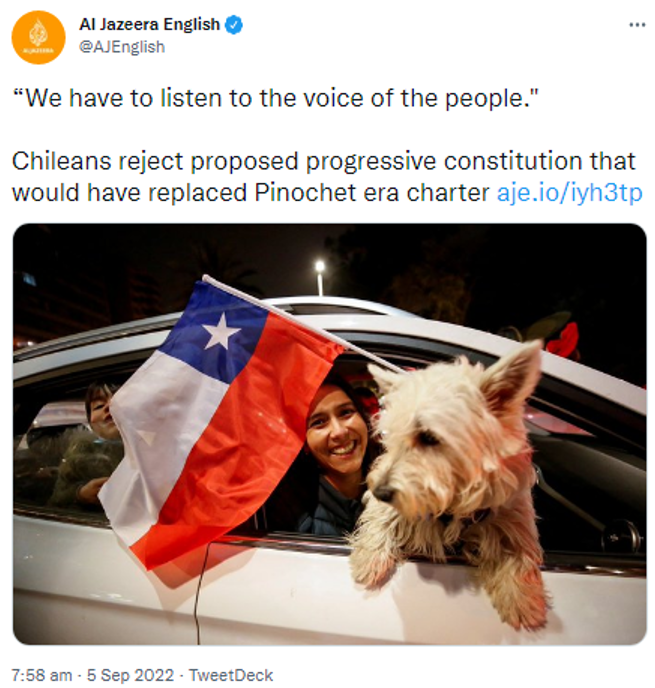
Chileans have rejected a proposed new leftist constitution by around 62% to 38%.
The far left, whose rioting in 2019 was largely responsible for setting the process in train, has reacted predictably.
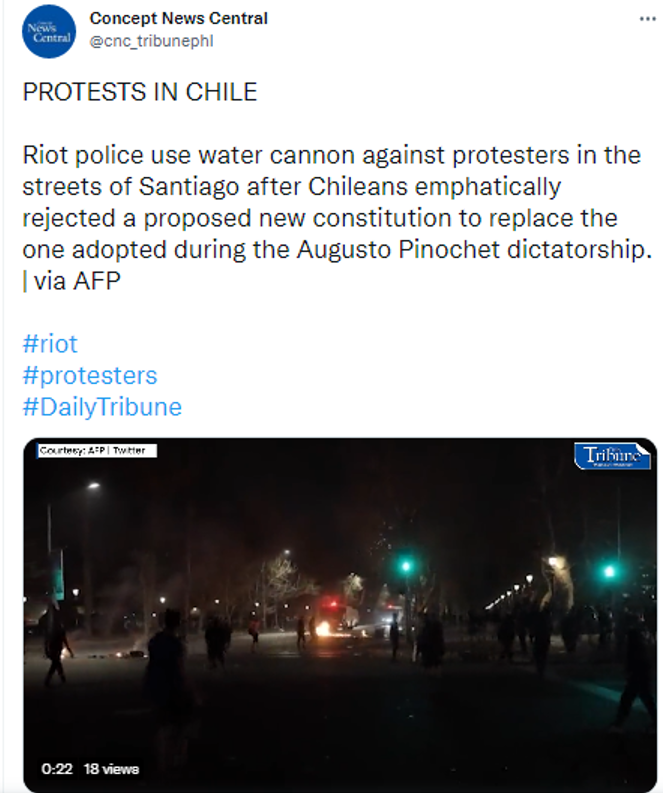
The proposed new constitution was to have included a number of key changes central to which was the expansion of the state under the dubious justification that this would protect a whole range of “rights.”
Among the most contentious “rights” proposals to be rejected was to legalize abortion. Opinion polls have shown that Chileans are opposed to the legalisation of abortion on demand, and in November last year the Congress voted against a Socialist Party bill to allow abortion up to 14 weeks.
Something to be noted too is that the dog’s dinner that has been rejected was the product of an entity not dissimilar to our own Citizen’s Assembly. In fairness, the Chileans did at least have an election to partly decide the makeup of said Assembly. I say partly, because it was restricted by a number of conditions which included reserved seats for indigenous groups, as well as gender and other quotas that distorted the actual votes cast.
The elections created a constitutional convention made up of 155 people in which the spaghetti soup of the left dominated and managed to turn most people off any notion of replacing the existing constitution which had initially appeared to be a good idea.
Indeed, some observers believe that the behaviour of the far left after 2019 and during the convention process reminded people of perhaps why the events of 1973 took place when there had been fears that a similar alliance would bring anarchy.
In a referendum in October 2020, 80% had supported the drafting of a new constitution.
The defeat represents a major setback for President Gabriel Boric who was elected last December as the candidate of the Apruebo Dignidad alliance, a key constituent of which is the Communist Party and which was formed specifically to boost the left’s campaign for the constitutional convention. It currently has only 37 of the 155 seats in Congress.