In 1957, Jack Kerouac’s novel On the Road delivered a sudden shock to the American psyche. With its raw and unfiltered narrative, it captured the essence of a restless generation yearning for freedom and adventure on the open highways. The Beat Generation, with Kerouac as its voice, found solace in the rhythmic hum of engines and the endless possibilities stretching out before them. Drive, he urged. The destination doesn’t matter; just keep driving. This literary masterpiece wasn’t just a book; it was a manifesto for a new way of living, one that embraced spontaneity, rejected conformity, and celebrated the spirit of the wanderer.
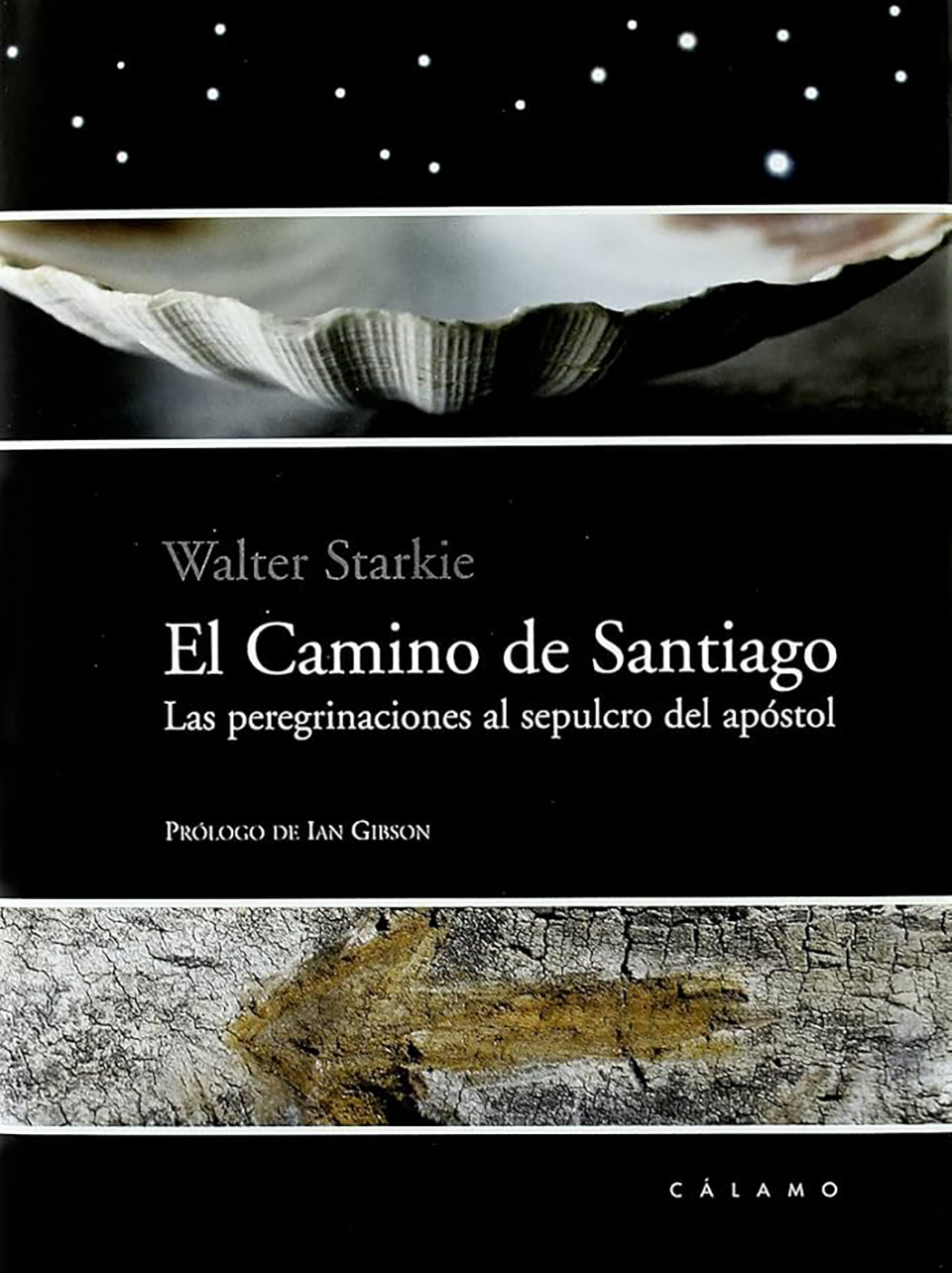
Across the Atlantic, at the very same time, another writer was penning a different kind of journey. In the same year that On the Road hit the shelves, Walter Starkie published The Road to Santiago, a book that, while lesser-known, would become a seminal work for those seeking a path less traveled. What Kerouac did for the American road trip, Starkie did for the spiritual pilgrimage.
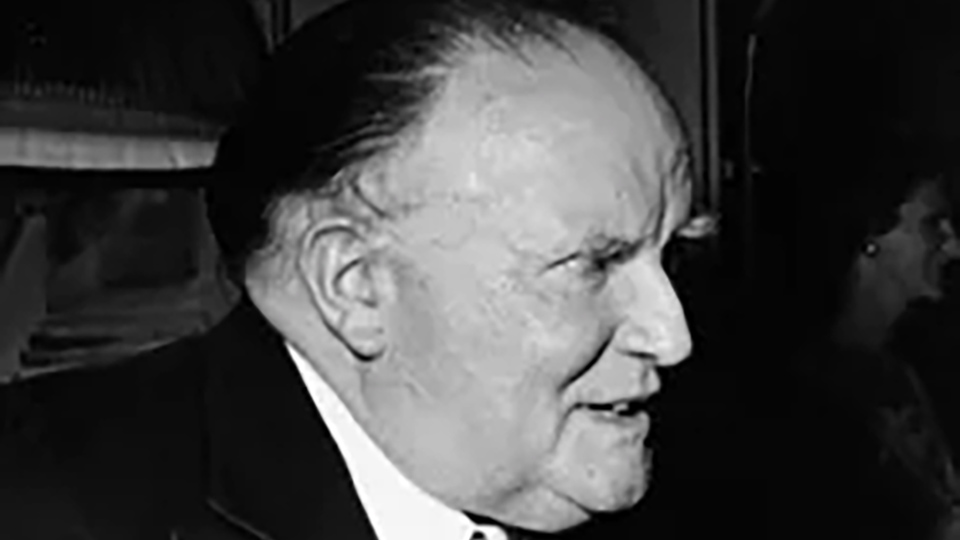
Born in 1894 and raised in Ballybrack, Killiney, County Dublin, Starkie was the eldest son of William Joseph Myles Starkie, a distinguished Greek scholar and translator of Aristophanes. Starkie’s mother, May Caroline Walsh, came from a well-educated background, contributing to the intellectual environment in which he was raised. In truth, Starkie’s family was steeped in cultural and academic excellence. His aunt, Edyth Starkie, was an accomplished painter married to the renowned illustrator Arthur Rackham, and his godfather was John Pentland Mahaffy, a mentor to Oscar Wilde. Additionally, his sister, Enid Starkie, became a notable academic in her own right. Growing up among writers, artists, and scholars of considerable repute, Starkie was always destined for a life of intellectual pursuits.
.
A gifted student, Starkie attended Trinity College Dublin, graduating in 1920 with first-class honors in classics, history, and political science. His talents were not confined to academics alone; he also excelled in music. In 1913, he won first prize for violin at the Royal Irish Academy of Music. Despite this impressive achievement, his father, preferring a more traditional career path for his son, refused to let him audition for Sir Henry Wood, the conductor of the London Symphony Orchestra.
Starkie was urged to be more pragmatic and instead concentrate on his studies; that is precisely what he did.
In 1926, at the age of 30, he became a fellow of Trinity College and the first professor of Spanish. One of his most notable students was none other than Samuel Beckett. Twelve months later, Starkie was appointed director of the Abbey Theatre, a position offered to him by another literary giant, W. B. Yeats. However, by the time World War II began, Starkie was working with the British Council. Shortly after his appointment, Britain decided to send Catholics as its representatives to Spain, and thus the Irish-Catholic, musically-gifted Starkie was dispatched to Madrid as the British Council’s representative. This move was crucial in fostering his affection for Spain, particularly his passion for the Camino de Santiago, a now-renowned pilgrimage route that leads to the city of Santiago de Compostela.
An Epic Journey
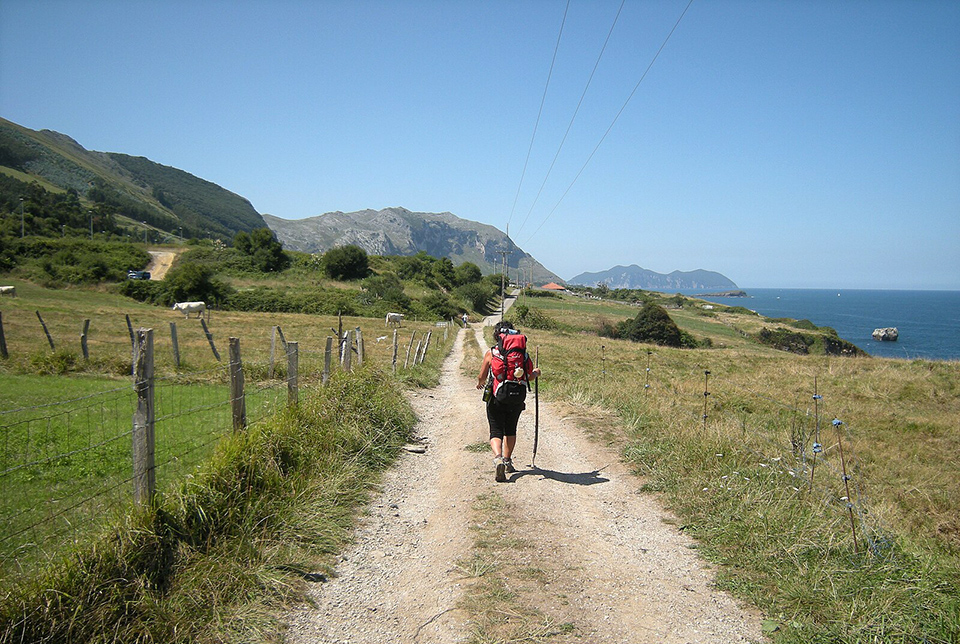
People walk or bike the Camino for various reasons. Some do it as a religious or spiritual journey, while others enjoy the physical challenge or simply the chance to experience the beautiful countryside and meet new people.
The most popular route is called the Camino Francés, which starts in the French town of Saint-Jean-Pied-de-Port and ends in Santiago de Compostela, covering about 500 miles.
Walking the Camino can take several weeks, and many find it to be both a personal and transformative experience. Whether these restless souls realize it or not, Starkie’s aforementioned book has laid the groundwork for countless individuals who have walked the very same path.
It is no exaggeration to suggest that The Road to Santiago inspired a new generation of pilgrims. That’s because, in the decades following its publication, there was a resurgence of interest in the Camino de Santiago. People from all walks of life—spiritual seekers, adventure enthusiasts, and those simply needing a break from the hustle and bustle of modern life—found themselves drawn to this ancient path. Starkie’s vivid descriptions and heartfelt reflections provided both a guide and a companion for these modern-day pilgrims.
Starkie’s influence can be seen in the countless travelogues, memoirs, and guides that have followed in his footsteps. Last year alone, 446,000 people made the journey. Over the past decade, the number of pilgrims has surged by 107 percent.
While Kerouac and Starkie traveled different paths—one literal and the other metaphorical—they shared a kindred spirit. Both authors embraced the journey as a means of exploring the self and the world. Both authors advocated for exploration and embracing the unknown.
The American’s characters sped across the U.S., fueled by jazz, drugs, booze, and a thirst for the unknown, The pilgrims depicted by the Irishman, walked slowly, more soberly, each step a prayer, each mile a testament to endurance and faith.
Both narratives, however, are united by the exact same theme: the transformative power of the journey. Kerouac is an American icon. How many Irish, one wonders, are familiar with Starkie’s story?