“The man who is tired of London is tired of life,” you’ve heard it said. However, having spent the last number of months in London, I would argue it’s much more a case that London, and its people, are tired of life.
We saw a signal of that on Friday in Westminster, the beating pulse of the capital, where a majority of MPs voted in favour of making assisted suicide, or as they prefer to call it because it sounds nicer, and softer, assisted dying, legal. There was a lot of talk coming up to the vote that the result hung on a knife-edge, simply too close to call. Yet it was only among the MPs who had declared how they would vote that a slim majority appeared to signal a potential rejection of the Bill.
The reality was that very many had not declared publicly how they would vote, and around 100 undecided MPs who had chosen to keep their cards close to their chests, voted in favour.
And so that was it. On Black Friday of all days, when tired-looking Londoners were swiping on their phones adding to their online baskets, when the twinkling streets were choc-a-bloc with shoppers distracted by Christmas discounts, the very people they voted into power chose overwhelmingly to back assisted suicide. It’s an enormous social change, and Britain is not the same place it was on Thursday.
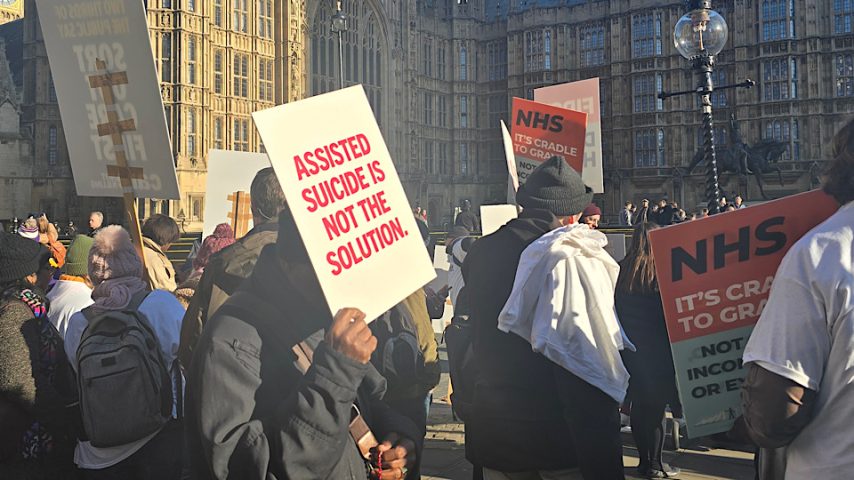
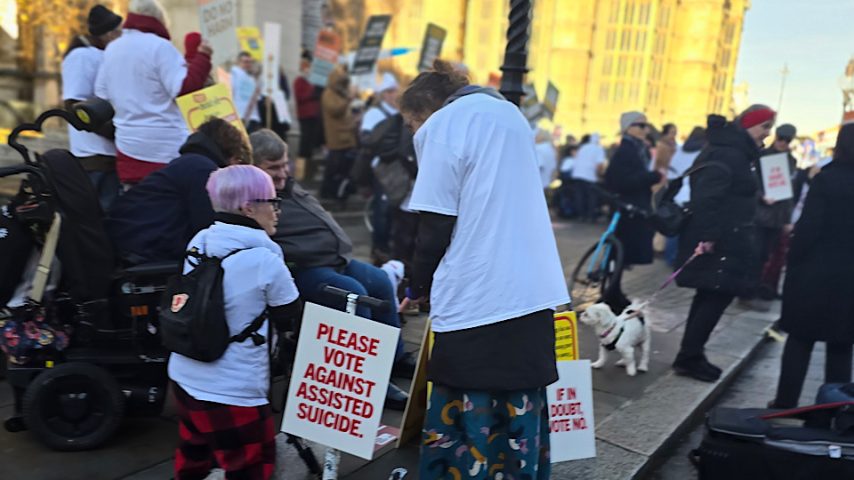
A dark cloud hung over London. There was a heaviness in the late November air. I watched as campaigners speaking out against the Bill, many in wheelchairs and with walking aids – so many elderly and disabled – wheeled themselves away from Parliament still holding signs with messages like, “Assist us to live” after their politicians decided, “No, you know what? We’d rather just assist you to die.”
It was indescribably sad to see the sun begin to set on a group of people who had summoned all their might to come out and try to tell their leaders that their lives mattered. That they had value and worth and stories to tell. They had families and friends who loved them regardless of their struggles and diseases and wanted them to keep living. They were not less than, and they shouldn’t be use to justify a change in the law. It suddenly felt, very tangibly at that moment, that the implication of the vote was too clear not to discern – you’re a nuisance, a burden, and we would much rather save our beloved NHS money than uphold your right to life.
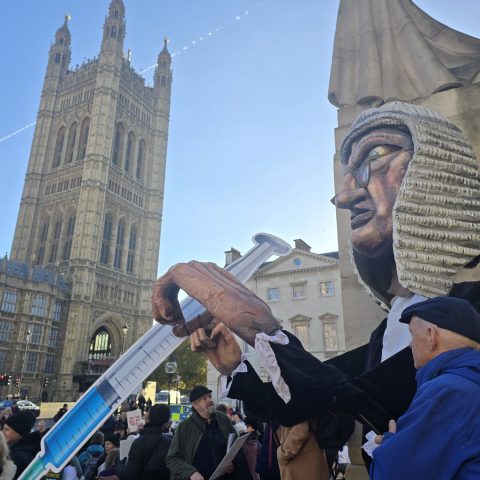
Things had very much come full circle. After just shy of 60 years of legalised abortion, the culture of death so entrenched in British society had finally reached the old and the sick and the infirm. It seems to have come suddenly, but it was only a matter of time really. We will legally end your life coming into the world if you’re inconvenient, and we’ll legally end it on the way out if you’re getting in the way (or at least feel you are), too.
Perhaps the politicians were swung by the emotional arguments made in the Commons, where a number of influential MPs referred to very sick loved ones, and argued that changing the law was all about “dignity.” That choice is the golden calf we must respect at all costs, regardless of the horror stories unfurling from Canada and Switzerland and Belgium and other places. We saw Rishi Sunak, who had pledged to vote against the Terminally Ill Adults (End Of Life) Bill, vote in favour, whilst others tipped to potentially go against it also backed it. Politicians were warned about the horrors of Canada, where safeguards have gradually vanished and deaths have skyrocketed, and they willingly chose to embrace that horror in the name of being liberal.
I spoke to two ladies at the tube station beforehand who were holding signs urging, “Don’t open the door to assisted suicide” while another campaigner stood adjacent, headphones on, with a “My Dying Wish: Legalise Euthanasia” placard. The women campaigning against said that they had experienced a steady flow of commuters all morning, some very vocally in favour of a change to the law, but that the majority of people who they had interacted with said they opposed euthanasia and assisted suicide. “What happens next if the Bill passes today?” I asked, to which they told me that while it would be debated further and brought forward to the House of Lords, it would be highly unlikely for it to be stopped at a second reading, practically unheard of, if it received backing at the first.
And so it seems that Britain has made its bed. MPs rushed home just after 3pm. Parliament finishes early on Fridays, meaning the debate was held on a day where parliamentarians were wearied from the week, and there was no hope in hell the arguments could be hashed out fully. There was the desire to have the debate, at least, because some 140 MPs requested to speak on the Bill. Some made the very good argument that a right to die becomes an expectation to die. But of course it seems that it was by design that only a small fraction were actually able to speak because of “time constraints.”
As if something so major does not merit even a few more hours of conversation. Even the total con-job that is Black Friday seems abundantly more important to us. There is a cruel irony to be found in the fact the vote happened on the biggest shopping day of the year. When we are made to feel almost an obligation to pick up a slightly discounted bargain for fear of missing out after being bombarded with SMS messages and emails. Yes, you might not be able to afford the saved items in your ASOS basket, but bagging a few of them at £20 off is better than missing the hype.
We’ve become so horribly materialistic that at the end of the day, things and items and money are more important to us than people. That was very clear today in London. People matter less than they used to. Things we can buy and own matter more.
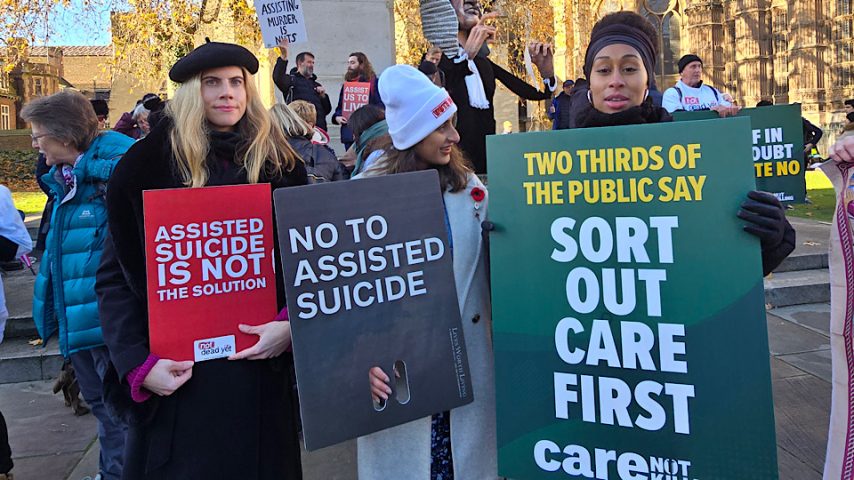
While very many Brits were fixated on the drive to snap up more things we don’t need, politicians voted in a deeply flawed, highly problematic law which targets those with terminal illnesses like they are throwaway. Campaigners argue that the Bill in the best interests of those who want to die, who don’t want to suffer, but I fail to see any way that it doesn’t send a clear-cut message that if you are carrying a cross, it’s better to just drop it, and we’d all be better off without you. That is a travesty.
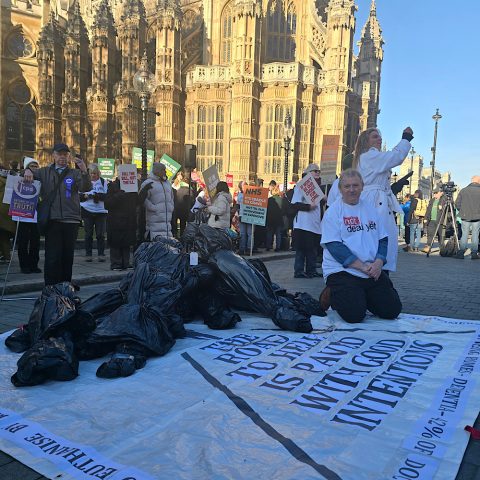
I’ll never forget the faces of some of the most vulnerable leaving Westminster with their posters after the vote. The hope in their eyes extinguished. We’ve welcomed in a new era of hopelessness. I’ve found London pretty soulless at times, a rushing big city where people don’t make eye contact and where ‘getting ahead’ is the name of the game. I’ve found it spiritually dry and lacking in hope and charm – but never did it seem more soulless and secular and bleak than it did on Friday afternoon. It felt, at that moment, downright dystopian. But this is the logical endpoint for a Britain so hardened by secularism and materialism and the promotion of self.
Dying is, as we know, a part of life. Dying is not easy and it’s never going to be, whether it’s assisted with palliative care or hastened by a lethal injection. There is no easy way to die despite what euthanasia campaigners tell us on bright pink, attractive looking placards.
And suffering, a key crux of the issue, is also a part of life. One which, although unpleasant, sometimes even fatal, can, if we choose to accept it, strengthen and sharpen us like gold in a furnace. We all suffer and we all carry burdens. We can either let the tough times and the traumas destroy us, or we can let them make us better.
Some of the best people I know have been through the greatest trials and tribulations. They are better people for it. They know that there is no love without suffering – that to love means to suffer. Suffering is the cost of real love, not wishy washy Romcom love where we only look out for ourselves.
The UK has turned its back on what it means to truly love, and for all of its wealth and prosperity and ‘progress,’ it will be all the poorer for it.
