Well, I have two little boys that are mad for Godzilla, and a few hours doing something they really like with them is never a waste of time, so off we went to see the movie.
It’s in Japanese, but that didn’t seem like a hindrance as the boys are only interested in the action parts of these films. The trailer had buckets of top notch destruction, so that looked promising.
But, even daddy and sons time – the boys are jacked up to the max with monster destructo excitement – can be improved with an interesting story line between the monster scenes. What we got was a very un-Hollywood story arc, one that was a little more thoughtful than the woke garbage that usually comes with big studio productions. One which extolled very positive traditional values.
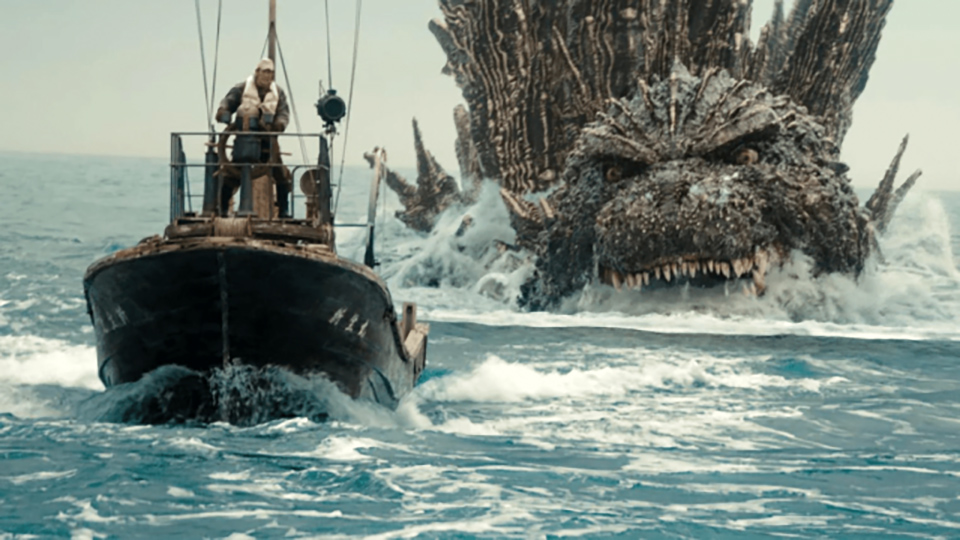
Godzilla was unequivocally an enemy of humanity in this tale. He was not a misunderstood monster looking for empathy and understanding. He came, he saw, and he destroyed. And when he was on screen he was in full impressive display.
The young lads loved this. It was a change from the hyper CGI style of Hollywood productions of the last decade which for some stupid reason do all this expensive CGI rendering and then turn down the lighting so that all you see is a dull glint and barely discernible shadows.
Director Takashi Yahazaki put his monster on full display and added that sub sonic sound effects that shake the room while being barely audible. There was lots of this, and I don’t mind admitting, it brought a smile to my face as my boys were literally bouncing in their seats watching it.
This film is set in a Japan reeling from the humiliation of defeat and destruction of WWII.
The lead character, Koichi Shikishima, is a former pilot in the Japanese air force beset by guilt. In the dying days of the war he evades his Kamikaze mission by feigning damage to his plane. He ends up on the repair station on Odo Island where he is the only soldier.
Having abandoned his obligation, he then fails when his chance comes to shoot Godzilla and save the men on his base when the monster invades.
Shikishima is wracked with guilt and a sense that he has betrayed his people.
When he returns to a destroyed Tokyo, he is berated by a neighbour who has lost all her family in the bombing. She blames him for surviving, as he does himself.
This is a complex thing. Whenever he owns up to having been in the air force there is a tension in the air. When he gets a job with a mine clearing crew, the captain of the boat, a veteran of the navy named Yōji Akitsu, levels a look that is both accusatory and understanding, when he finds out that Shikishima was in the air force.
Shikishima’s guilt leaves him blind to his redemption arc; one that is rich in parable. As he returns to his home part of Tokyo he has a surprising encounter with a thief at the market. Fleeing her pursuers, Noriko Ōishi shoves a baby into his hands and disappears. Shikishima, left with the helpless child, embraces this unexpected duty and waits the entire day for the young woman to return. She doesn’t, and he leaves with the child. She follows him and they strike up an unusual co-dependence. The child, a baby girl, isn’t hers. She found her after a bomb raid in the arms of a dead mother, and took on the responsibility of caring for the baby.
And so in this broken city, this unusual family forms unbeknownst to the nominal father figure, who in his own mind is still fighting his war. The child, it seems, is the only one who sees this for what it is and she affectionately addresses Shikishima and Oishi as her mammy and daddy.
This family of the three oddbods is a positive contrast to the reality. Dysfunction and guilt prevents Shikishima from seeing this. The Child, innocent and unaffected by the trauma of war, is the only one who sees clearly. Oishi, though tending to the shack and child as if she were the wife of the household, cannot reach Shikishima emotionally, though her love grows. The dysfunction from guilt that leaches into all of Shikishima’s life, makes it impossible for him to see what is clear for everyone else.
When Akitsu, visiting socially one evening, discovers that the child is not theirs and that they are not married he berates Shikishima for not marrying the girl. This would be the natural and right thing to do he advises.
When Godzilla arrives in Tokyo it is left to civilians to come up with a plan of defence, and Professor Kenji Noda, a former naval weapon’s engineer, is elected to lead the mission. He gets volunteers together to try a very unrealistic but insanely ambitious plan.
All throughout the film we get a recurring theme of respect for traditions that hold society together and a discernment that this same homage to tradition can become corrupting.
The Kamikaze tactic of the closing days of the war drew on the Japanese cultural premium on duty. In the films relationships we see a respect for authority and competence and intergenerational mentorship. But in a speech by Professor Noda to his volunteer crew he rejects the militarism that represents an adulteration of these traditions.
“We have held life too cheaply” he says. “Rusty tanks! Planes with no ejector seats” implicating the Kamikaze craze that took hold of Japan as they entered the lost cause phase of the war.
This is a very valid critique of the Kamikaze tactic, by the way. Historian, Victor Davis Hansen, once gave a marvellous breakdown of this. The Kamikaze were flying broken down planes on death missions which became progressively futile and desperate. By the end of the war they were flying wooden planes with half loads of fuel, which glided in for the last leg. They were basically manually guided missiles.
The mention of the ejector seats, we learn later, was significant. Director Yahazaki has obviously read his Chekov.
Unknown to professor Noda, Shikishima has another plan. He sees this as an opportunity for redemption, and secretly plans to fly a plane on a Kamikaze mission to take out Godzilla. He finds the chief engineer of the Odo Island crew, Tachibana, and convinces him to fix up a plane which he will fly, laden with explosives, into the mouth of Godzilla.
The film starts with the neighbour berating Shikishima for not dying as a kamikaze; it ends with Tachibana admonishing him to live.
It all ends well. Or does it? Methinks Godzilla will return.
Godzilla impressed my boys and the story wasn’t infuriatingly woke. If a Hollywood woke studio got their hands on it, Godzilla would probably have been empathetic and misunderstood. In short, ruined.