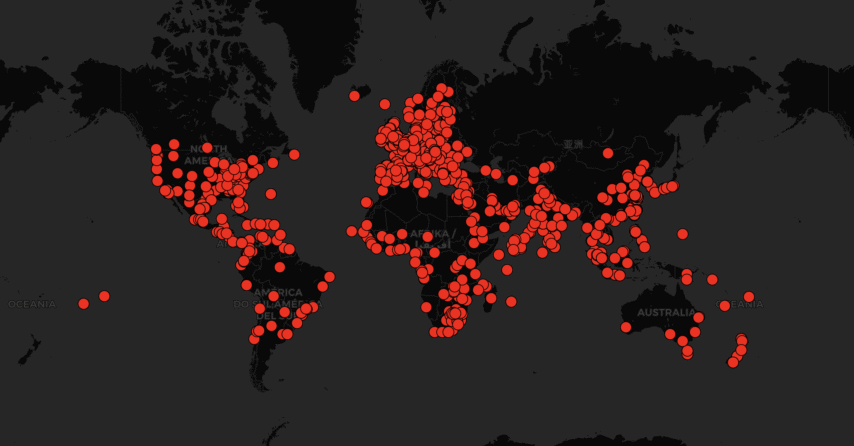
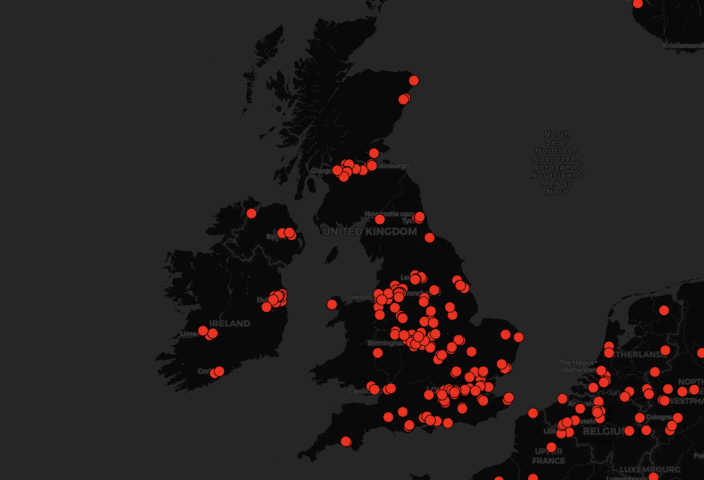
The ‘Palestine Action’ group has produced a “target map” including the addresses of 18 businesses located on the island of Ireland, including three locations close to Shannon Airport.
The map is aimed at coordinating actions towards “dismantling complicity in Israeli apartheid” with suggested targets located in Cork, Dublin, Limerick, Belfast and Derry.
Palestine Action was proscribed as a terrorist organisation by former UK Home Secretary Yvette Cooper in 2025; however, this was deemed unlawful by the High Court.
An accompanying seven-step manual, which offers would-be “cells” or individual members on how to cause “damage” to business premises which are associated with Israel, advises the use of “sledgehammers” and “fire extinguishers” which can be filled with “blood red” paint.
Members are advised that they can act alone, and cells are advised to ideally have three to five “trusted” members.
It advises readers to use a “secure browser” to “pick a target” and suggests targeting companies affiliating with Israeli weapons firm Elbit Systems.
Users are directed to the group’s website to “find a list of secondary and primary targets who enable and profit from the Israeli weapons industry in Britain.”
“If picking your target didn’t get you excited enough about your new venture to dismantle Israel’s war machine, preparing for action definitely will,” it says.
The manual also advises would-be vandals to cover their faces, wear black clothing, preferably baggy, to hide their body type, and to pay for their equipment in cash only.
“Dream up crazy ideas in your cell, remember that your action is to destrupt (sic), damage or destroy your target,” it advises.
It also advises activists to record their criminal activities and send them back to the group and to “destroy all evidence” of what they have done, with advice to leave their outfit at a friend’s house if they don’t wish to dispose of it.
The manual offers a list of solicitors to contact if their “reconnaissance” or “recce” activities are detected by police.
In June of 2025, Home Secretary Yvette Cooper announced plans to ban Palestine Action pursuant to the UK’s Terrorism Act, three days after the group claimed responsibility for breaking into a Royal Air Force base and spraying red paint into the turbines of two military aircraft, causing an estimated £7 million in damage.
Muhammad Umer Khalid, 22, was accused of conspiracy to commit criminal damage and conspiracy to enter a prohibited place knowingly for purposes prejudicial to the safety or interests of the UK in relation to the incident.
Palestine Action co-founder Huda Ammori initiated a legal challenge at the High Court seeking judicial review of the lawfulness of the ban, which drew concern as a possible encroachment on civil liberties.
Last April, over 500 people were reported to have been arrested in London at a protest opposing the imposition of the banning of the group.
Before the protest, the Metropolitan Police issued a warning against“criminal offences” and advised those planning to attend to reflect on the “potential consequences”.
“Those attending should be aware that showing support for a proscribed organisation is an offence under the Terrorism Act, and we will not hesitate to act where the law is broken,” the statement said.
Last February, the UK High Court ruled the proscription of the group to be unlawful, saying that Cooper had relied too much on the perceived benefits of the proscription without giving due consideration to the cons, chiefly the negative impacts on the right to protest.
The court concluded that the Home Secretary’s own policy on banning groups under terrorism laws contained “limits” when it is appropriate to do so; however, the government maintained that the court had placed a disproportionate focus on the cons associated with the ban.