The author and behavioural scientist, Gad Saad, has just published a book on what he calls “suicidal empathy”. He says that “a society dies when it cares more about exhibiting infinite tolerance and empathy than invoking its survival instinct”.
The key word there, in my opinion, is exhibiting. So much of the political grandstanding on display in relation to immigration and other issues are largely exercises in virtue-signalling: expansive, showy gestures which indicate superior moral character and warn that any divergence from the narrative will not be tolerated.
Anyone who questions spiralling migration rates is accused of lacking compassion – a deft move which tells the listener that not only is said questioner a cold-hearted bigot, but the accuser is also a better person and a morally superior one, and therefore above question.
A video which resurfaced this week of Micheál Martin’s response to Cork 96’s Neil Prendeville in a discussion on migration is a classic example of this nonsense. Prendeville had relayed much of the frustration his listeners were expressing in relation to what he described as the government’s open borders policy. He listed the billions spent on asylum seekers and refugees – included those coming from safe countries saying it was “an incredible amount of money”, raised the pressing issue of the enormous percentage being allowed enter the country without documentation, and said that many people felt that some of the enormous expenditure should be spent helping Irish people.
“What would you do?” Micheál Martin asked. “I’d close the border,” Prendeville replied. Cue the suicidal empathy. “That’s shocking,” Martin said – adding “have you any humanity?” in a suitably disgusted tone.
It’s a ridiculous response. But it’s also highly revealing. Prendeville correctly points to the impact on housing and healthcare and services – and Martin tries to shame him by talking about the horror of war, when everyone knows that most of those coming through the IPAS system are not actually fleeing conflict, while since that interview the most recent poll indicates that 80% of people may feel that our generosity to Ukrainians could have been pushed too far.
“Putin weaponises migration,” Micheál Martin said. But isn’t he weaponising a patently unsustainable empathy – a sort of bottomless compassion that no country could possibly continue to support?
This tactic was also used against Carol Nolan TD, when she was one of a very small number of TDs who sensibly argued from the outset that Ireland could not take an limited number of Ukrainians, however dreadful the war was, because every small country has limits to its capacity.
When she asked in the Dáil if assessments had been carried out by the government in this regard, Fianna Fáil’s Darragh O’Brien arose in high dudgeon to castigate Deputy Nolan whom he accused of walking “a very fine line.”
And what you’re calling for, effectively, is a cap on immigration and a cap on asylum into this country. Let’s be clear. I’m calling it. That’s what you’re calling for. We will not support that” he said indignantly, pointing his finger at Carol Nolan.
And he accused her of posing a “threat to social cohesion” with her comments on the issue. It was pretty outrageous.
Darragh O’Brien, of course, was gustily representing Fianna Fáil’s brand of meaningless compassion – meaningless because it is built on sand. It is very easy to feel virtuous and smug when promising the world, and positioning your unbridled compassion as some sort of heroic virtue. It’s another thing to follow through on those promises – and O’Brien’s government have failed utterly to manage the asylum process in any kind of a fair or coherent way.
Where does this swaggering empathy, this self-interested virtue-signalling, this illogical and ill-considered distorted sense of compassion, lead us? Well, to chaos obviously and to some truly dreadful outcomes: in the IPAS system, in villages and towns where local people were sometimes literally beaten into submission, in housing, in the courts, and elsewhere. And it has led, in a certain cohort of people, to a very dangerous sort of naivety – deliberate or otherwise – which has had horrendous results for entirely innocent people.
That brings us to another radio conversation in recent days which saw a medical professional blithely, even chirpily, respond to revelations that large numbers of asylum seekers are pretending to be minors – and therefore being placed in care with minors – by saying that it was “possibly a good thing” and “hopefully an indication” that Ireland is a “caring and well-functioning society that looks after its vulnerable young people.”
Dr Angela Skuce did not seem to share the view expressed by Claire Byrne on Newstalk that this was a “desperately risky situation” – which she said was causing the public reading the details to be “horrified” that this situation was allowed to happen.
Byrne was discussing the evidence given by the The Child and Family Agency, Tusla, who told the Public Accounts Committee that almost 300 asylum seekers who claimed to be children were found to be adults, and that there had been “significant delays” to eligibility assessments last year.
Dr Skuce is Medical Director of the SafetyNet Primary Care healthcare agency which says it specialises in providing primary care to marginalised communities including asylum applicants and refugees.
She told Newstalk that she thinks that Tusla has taken a “very caring, pragmatic approach to it” – saying the agency seemed to be taking the view that “it doesn’t matter what your actual date of birth is – what matters is how mature you seem to be and what your behaviour is like. And then, you cannot assess somebody on the spot, but with the experience of staff living with these kids 24/7, they get a much more accurate impression when the person settles and relaxes into the country.”
It’s flabbergasting – and almost inexplicable, unless you consider suicidal empathy, and the sort of dangerous naivety that has taken hold of so many practitioners and politicians and policymakers and commentators who are in hot pursuit of the claim to the most compassionate people on the planet.
The revelations regarding asylum claimants pretending to be children – which I wrote about previously here – are happening against the most horrific backdrop imaginable: the violent, savage killing of a young Ukrainian refugee – 17-year-old Vadym Davydenko – who died after a “frenzied” knife attack in an apartment where he was bring housed by Tusla with unaccompanied minors seeking asylum.
The 17-year-old suffered multiple stab wounds to his head, eyes, chest and hands following a sustained assault inside an apartment in Grattan Wood in the north Dublin suburb. The Somali male accused of killing Davydenko – supposedly a minor – has told the court that the document with his date of birth still had to be confirmed, saying it was “not real” and his “country has gone to bits, and anyone can make a document to say they are 17”.
How can anyone call the Tusla approach caring and pragmatic or claim it is ‘possibly a good thing’, given that horrendous outcome?
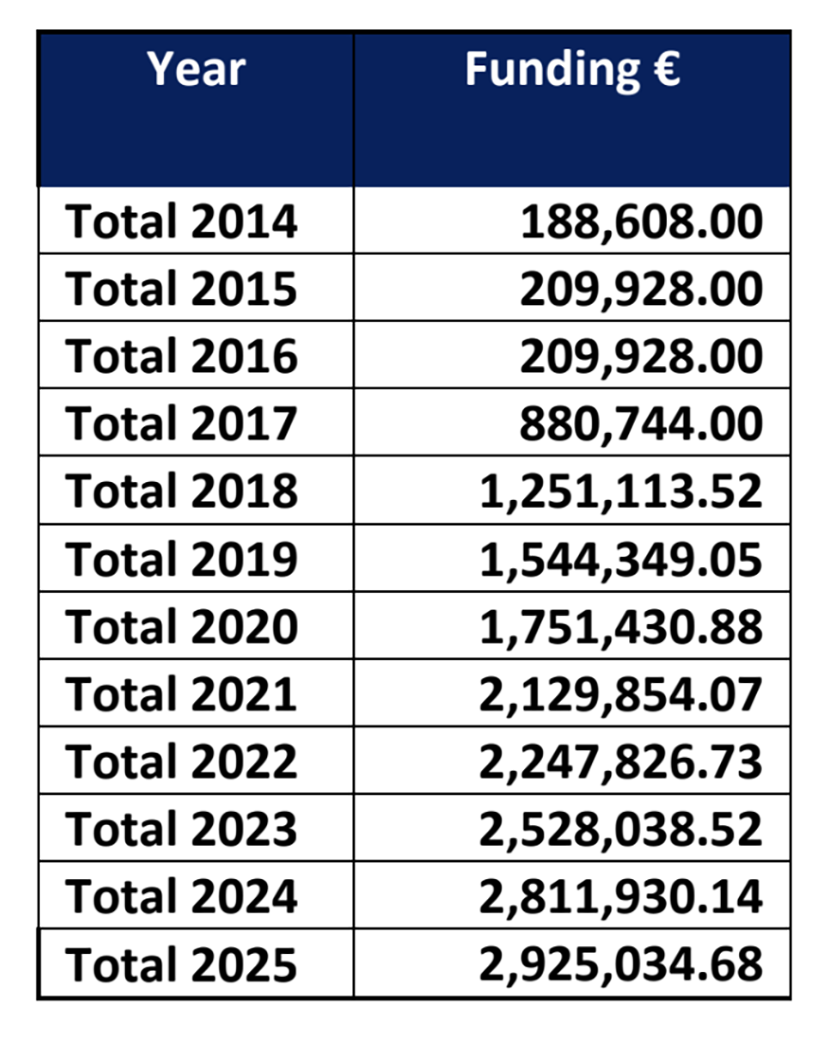
Carol Nolan looked at the extent of SafetyNet’s funding from the hard-pressed taxpayer and found it had received at least €18.6 million between 2014 and 2025 – with about €12 million of that received since 2021, a time when asylum claimants numbers surged including an explosion in the rise of supposed ‘unaccompanied minors’ – many of whom we know are simply pretending to be children and allowed into the system.
Safetynet also recently wrote that: “Our most urgent concern is healthcare access following deportation orders. Currently, when someone receives a deportation order, they immediately lose access to their medical card. The period between a deportation order and actual deportation can extend for many months or even years. During this time, people with diabetes, heart conditions, HIV, psychiatric conditions, or who are pregnant cannot access essential care. From both a humanitarian and health systems perspective, this is unacceptable.”
They added that, in their clinical practice, they had “seen multiple cases of people concealing HIV diagnoses because they fear discrimination in their protection application”. Their concern wasn’t however for the impact this might have on the Irish healthcare system, which is now dealing with a surge in HIV cases driven by immigration, but with the Irish system failing to build trust.
This kind of dangerous naivety isn’t just on the airwaves, it’s embedded in our systems and in the culture driving policymaking and state decisions on everything from spending to migration limits. Gad Saad could be right. It may well be the death of us unless we wake up to the enormous risk of a meaningless empathy that places virtue-signalling above safety.