Lionel Shriver is a writer who has attained world-wide recognition. Her novel, We Need To Talk About Kevin, won her the Orange Prize and was made into a big film, starring Tilda Swinton. The book, which deals with gun violence in the USA, has sold in the hundreds of thousands. It is a difficult theme but one which Shriver did not shy away from.
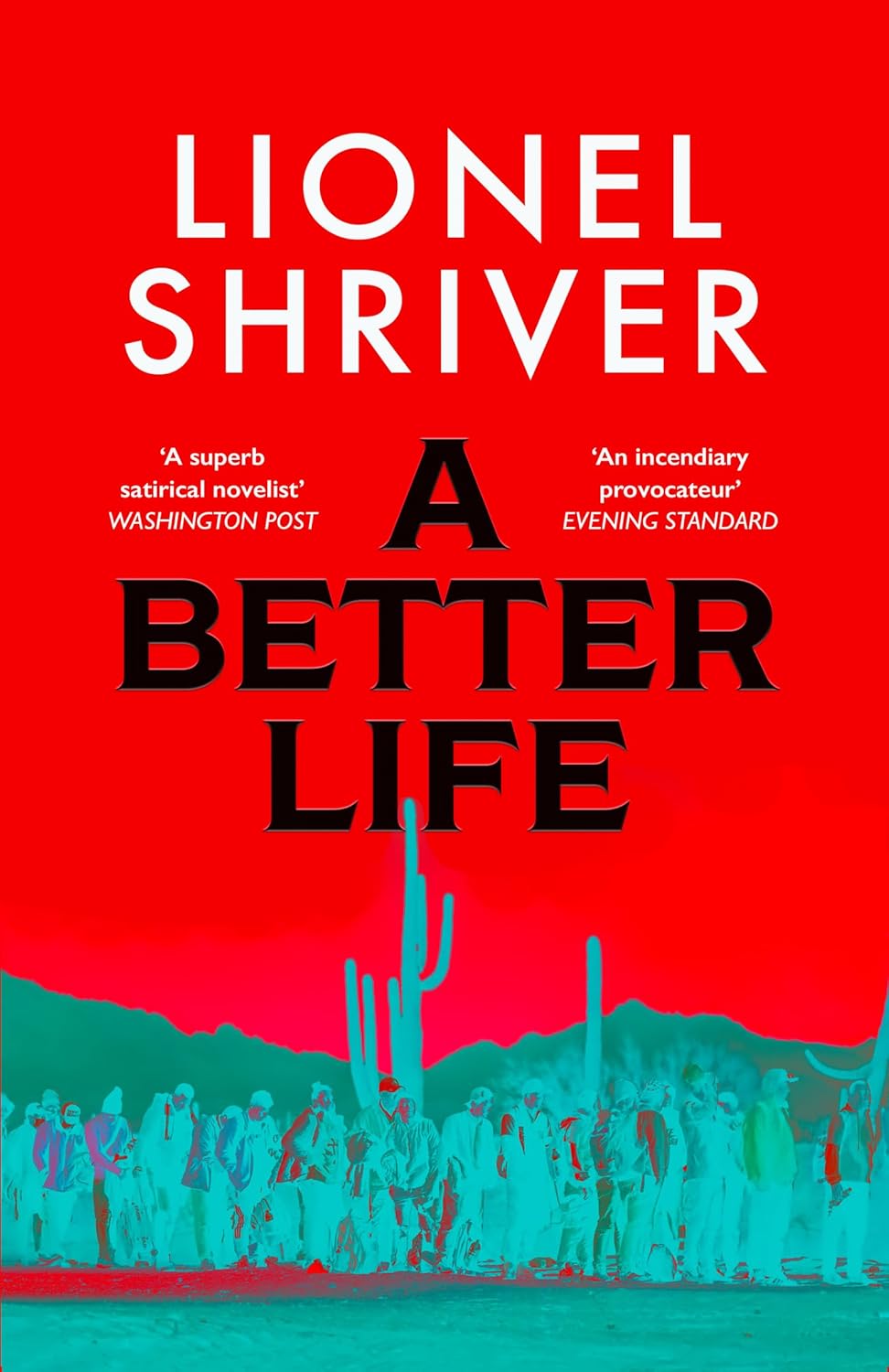
Her current novel, A Better Life, also deals with another contemporary and sensitive issue, mass immigration and the effect it has on long-established communities.
I remember feeling real joy when hearing that Shriver had won the Orange Prize. She has long been one of those authors whose progress I have noted because, believe it or not, Shriver’s literary journey can be traced back to the very, very, very small literary scene in Belfast back in the 1980s and 1990s.
Way back then this writer, a barely 20 something, contributed bits and pieces, in English and Irish, to a now-defunct magazine based in the city called Fortnight. Things were tough up North then (still are really) for those of us with an interest in writing. Fortnight was one of the few outlets for many of us with an enquiring mind and it had a small office – two rooms only – in the university area of the city.
I drifted into its orbit after writing a letter – yes, pre-Internet days – to the then Editor wondering if the magazine should have something in Irish every once and a while to mark the development of the language in the city. Yes, said the Editor, why don’t you do it. And that is how, forty years later, I am still knocking out pieces for your pleasure.
I happened to be in the Fortnight offices once when I noticed a young woman, a little older than me, talking to the Editor. The accent was American. “Who is that?” I asked a colleague later. “Oh, that’s Lionel Shriver. She is an American writer living here.”
Lionel Shriver, I think straight away, that’s not a name that falls into the Catholic/Protestant thing we have got going here. An American writer? Goodness, if I were an American, I would not be living here. Still, I wonder if she has ever been to Beardsley, Minnesota, where my aunt Mary lives.
Needless to say, I was very shy back then and never got around to asking her out for an Ulster fry – Nothing romantic! Nothing romantic! – to talk about books and tell her to wise up and go and live something safe and sensible – which she eventually did by moving to London.
(Though how safe London now is, is another story.)
And then she wrote about Kevin and that became big and she pops up regularly in The Spectator, a regular read of mine since Brexit and first class for its books section. (Why waste time on second-hand analysis in Irish papers when you can get all the info first hand from Tory toffs?) And there she is again with another novel, a long way from Fortnight’s small rooms and the single Macintosh computer with Aldous Pagemaker.
(By the way, it’s New Statesman if you want to keep abreast of the Reds in British politics.)
But Shriver? Some pup, swapping Belfast’s tiny literary scene for London’s big lights and The Spectator to boot. No Ulster frys at their summer parties, I bet. They wouldn’t know veggie roll and soda bread if it bit them in the arse.
(Do you know the best thing about veggie roll? It’s not vegetable!)
And fair play to The Spectator. Somehow, someone gave her a chance and Shriver met the challenge and has been a regular fixture for years now while still pursuing her literary career. She did not entirely forget her Belfast roots either; she has a wonderful, hilarious, short-story, The Subletter, in her collection, Property, about the city and competitive American attitudes to, shall we say, emotional ownership of the place.
She is in the news again for A Better Life. The book is excellent, sharp and sour – Belfast! Belfast! – and well written. It is set in monied New York, but could easily be Dublin’s Ailesbury Road, with its depiction of Gloria Bonaventura, well-heeled and well-intentioned but lacking in intellect. Her money keeps her safe from real life and compensates her for her lack of purpose.
Ultimately, her largesse sets her family on a perilous course when she decides to sponsor a Honduran ‘refugee’ under a city initiative to provide sanctuary for those in need of it. Shriver skilfully draws out the narrative and builds the tension as Bonaventura, and her children, are eventually caught between the hammer of Honduran hustlers and the anvil of affluent ignorance.
It is undoubtedly one of those books that carries a hint of controversy with it, forbidden writing for the well-read. After all, it is not the sort of thing that one expects from London’s literati and certainly not from what passes as the Dublin literary set, being the sort of topic that polite people do not talk about. Nonetheless it is an important subject and one which the writer approaches courageously and artistically.
I doubt it will ever be made into a film and I doubt that Shriver cares. Still, isn’t literature incredible? Here is a writer who has moved from the USA to Belfast to London to Portugal and has found herself on the world stage through her own hard work, determination and being true to her own literary aims. Here is a writer being interviewed on YouTube – free of the traditional media gatekeepers – and racking up hundreds of thousands of views for her opinions.
And she was in Belfast! Belfast!
- Publisher : The Borough Press
- Publication date : 17 Feb. 2026
- Language : English
- Print length : 304 pages
- ISBN-10 : 0008800103