A new report sees Dublin rising up the global congestion rankings to become the 11th-most congested city in the world, according to Inrix, a US-based transport data and analytics company.
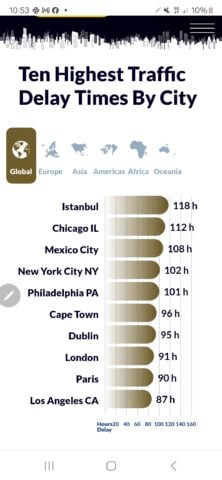
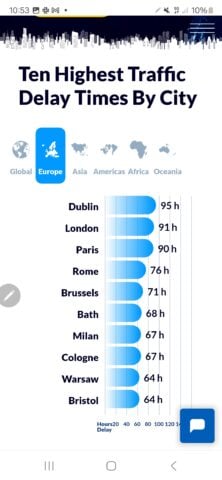
The Irish capital was described as one of the “big movers” in 2025 in the report, up four places from the 15th spot, and Dublin drivers were delayed by an average of 95 hours in 2025, an increase of 17 per cent when compared with the 81 hours lost to congestion in 2024, and a 32 per cent rise from 2023.
The 2025 Global Traffic Scorecard provides three years of transportation data for a more granular and holistic analysis of mobility within the world’s most-congested areas. It provides travel delay comparisons, costs of congestion to drivers and regions, and commuting trends based on the unique travel patterns within each metro area.
The Scorecard utilizes up to date, observed commute trips to truly analyze and compare how travel behavior differs in more than 900 cities across the globe.
When ranking the Ten Highest Traffic Delay Times By City on a global basis, the scorecard saw Dublin recording longer traffic delays than London or Paris, while Dublin came in at the top of the ranking – with the worst traffic delay times – in Europe.
Noting the economic cost of congestion, the scorecard said that as traffic builds time and fuel are spent unproductively. “In addition to lost time, negative externalities like freight delay, inflationary pressure and environmental impact are generally exacerbated due to traffic congestion. While not measured in this report, these externalities decrease our quality of life,” Inrix noted.
Another large cost of travel is fuel. Throughout 2025, global oil prices resulted in a small decrease in fuel costs to motorists, the report added.
Commenting to the Irish Times, Brian Caulfield, professor in transportation at the Centre for Transport Research at Trinity College Dublin, said Dublin’s ranking was “not surprising, given the amount of extra people that are living in the capital”.
“It’s the people cost of this, the cost of the partner left at home with kids while the other spouse is out going to work and they’re not getting back until after the kids are gone to bed,” he said.
“This is alongside the economic cost associated with congestion, he added, noting the Department of Transport estimates this to be in excess of €1.5 billion per year by 2040”.
In a statement, the Department of Transport acknowledged the congestion challenges in Dublin, and said the policy of shifting from private cars to public transport remains a “core priority” for the Government.
However, last month Aontú leader Peadar Tóibín told the Dáil that Dublin “is now the WORST capital city in Europe for time and money wasted through traffic congestion”.
“We must fast-track the delivery of public transport infrastructure such as the Dublin-Navan rail line,” he added.
“The Greater Dublin Area is grinding to a halt. Hundreds of thousands of people are living in a commuter hell. Congestion will cost €1.5b by 2040. Traffic speeds are slower than the horse and cart in the 19th century,” the Aontú leader said.