Ireland’s ancient Brehon laws placed extraordinary emphasis on hospitality, mandating that strangers passing through be welcomed and provided with food and lodgings, an edict which likely assisted not just with safe passage but with trade and exchanges of tales, poetry, and songs. However widespread the practice actually became, and whether it really applied to those of status rather than every household, the importance of welcome persisted as evidenced by the practises of ag dul ar chuaird (house visits) or bothántaíocht.
Some folklorist believe that the significance afforded to oigidecht (hospitality) led to Ireland becoming famed for our Céad Míle Fáilte, though it may have also led to a lack of caution regarding those who came to our shores with less than honourable intentions. The admonition heard in some of the old songs – seachain an strainséar, be wary of the stranger – is a warning worth heeding.
And while many of the crimes that make the headlines, including those involving domestic violence, are perpetrated by attackers known to the victim, it remains the case that allowing a stranger to enter your home, especially if you know nothing or very little about their past, their disposition, and their proclivities, carries an inherent danger that should not be ignored.
We need to be wary of blurring the line between kindness and credulity, because there are too many who will be only too happy to repay your trust with abuse, vile manipulation, and violence. It saddens me to write that: I believe in the intrinsic goodness of human beings, but the exceptions to the rule can be not just unpleasant, but deadly.
I thought again of those conflicting impulses yesterday when Brian Ibe was sentenced for the brutal murder of a “kind, generous and charitable man”, Peter Kennedy, who had given Ibe and his mother a place to stay when they were homeless.
That Peter Kennedy was an exceptionally unselfish and compassionate person seems to be in no doubt. The judge at the trial of his murderer, Ms Justice Melanie Greally, noted that the jury had heard an unusual amount of evidence about the deceased, because so many people who knew Mr Kennedy wanted to give accounts of his decency and generosity.
His sister, Anne-Marie Kennedy, in her victim impact statement, said that her family and Peter Kennedy’s friends continue to be shocked and traumatised by the murder, describing the deceased as “a thoughtful, charitable and generous man” who was ‘always available to help his community and freely gave of his time’.
“He was good humoured and positive, always had a smile and was always up for a chat,” she said of her brother, a view many others seemed to share. The impression was that of a man whose actions made the world a kinder, more generous, more giving place. It is sickening to think that his goodness was eventually met with such horrendous violence.
His friend, Linda Mannion spoke of Peter helping her to visit her parents, and going guarantor on a car loan for her. “You felt very safe in Peter’s presence,” she said, describing him as a “kind” and “extremely intelligent” person who was “always concerned with helping you out, helping you to better yourself.”
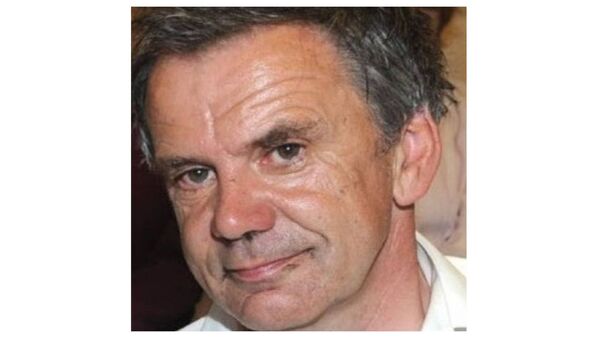
Like so many other of his friends, she also described how Peter had grown increasingly distressed after allowing Brian Ibe, who was homeless, to come and live in his house in September 2019. Ibe’s mother, Martha, had been living in her car, and had come to live with Peter, but after her son arrived things turned desperately bad, very fast.
The testimony of his friends to the court paint a disturbing picture of just how terrifying and upsetting the situation became for Peter Kennedy, as Brian Ibe terrorised him in his own home, repaying his kindness with vicious cruelty.
The trial heard from friends of Mr Kennedy, who gave evidence of their belief that Martha and Brian Ibe were taking advantage of the victim’s good nature. In the run-up to Christmas 2019, Rita Swords said Mr Kennedy was “dishevelled”, “unkempt” and hungry. “He was just a broken man, he just wasn’t himself,” she said.
While Mr Kennedy was sitting with her, she said Brian Ibe called his phone and demanded a meal from McDonalds. She said Mr Kennedy was “panicking” and “terrified” when this happened.
“I said Peter you’ve got to get help, you’ve got to get him out because this chap was dangerous; he was afraid of him,” said Ms Swords.
Linda Mannion said in December 2019, Mr Kennedy told her that Ibe would come into his bedroom and shout at him for money. ”
“He would just burst into his room when Peter was in his bed asleep,” she said. “He would be woken up by Brian shouting, demanding money off him and Peter would say ‘I can’t get it for you now, I’m sleeping but I’ll get it for you in the morning’ and Brian would demand that he get up right then and get him whatever was required,” said the witness.
Damian Molyneaux recalled Mr Kennedy, whom he described as his best friend, telling him that Brian Ibe twice threatened to kill him, saying he would “slit his throat”.
That’s the behaviour of a sadistic, evil, deliberate bully. It’s easy, isn’t it, when you’re a tough 19-year-old to bully a gentle, elderly man. Anne-Mare Kennedy said that Peter Kennedy had suffered “a cruel and terrifying end”. He had heard glass breaking in his home on the night of April 28, 2020 and knew it was Brian Ibe. He must have been terrified as Ibe stabbed him and kicked him while he lay on the ground bleeding. He died on May 12th in Beaumont Hospital.
After a year in custody, Ibe, obviously possessing some sort of low cunning, decided that his best defence was to claim he was not guilty by reason of insanity. However, that strategy was thankfully upended by a psychiatrist whose evidence showed him for the demanding, entitled, despicable tormentor he is.
A consultant psychiatrist had told the jury that the first time Brian Ibe (23) reported hearing voices in his head was over a year after he was remanded in custody, on the same day his awareness of the possibility of the special verdict was first documented.
Psychiatrist Mary Davoren disputed a schizophrenia diagnosis for Ibe saying that in his teens, “it was documented that Ibe had regularly threatened and assaulted staff members at the institution where he was housed and smoked cannabis daily despite numerous appeals and warnings from gardai”.
This was, she said, evidence of a childhood conduct disorder which progressed to a dissocial personality disorder as he developed into adulthood.
The threats he made to Mr Kennedy were goal-directed and rational, she said, and not evidence of the development of schizophrenia. He demanded money because he wanted money, she said.
And he murdered Peter Kennedy because, it seems, he was annoyed his demands weren’t met and because, perhaps, there are some people for whom kindness and compassion are signs, not of goodness, but of weakness.
There’s another old saying that, when I was younger and perhaps more naïve, I used to think reflected the terrible cynicism of the world: ‘No good deed goes unpunished”. Maybe cynicism is a protective measure against the viciousness of people like Brian Ibe who stab and beat gentle, kind, decent people – who repay generosity with violence and killing, and who will likely be let out of prison while he is still young enough and strong enough to do the same.
It’s very likely, too, that in the time of the Brehon laws that elderly people had the security of not living alone, and that most of those who came looking for hospitality were, in fact, known to the household who happily gave it to them. We live in a different world now.
I still believe in the inherent goodness of most people. But we can’t be blinded to the evil that lives amongst us. Seachain an strainséar.