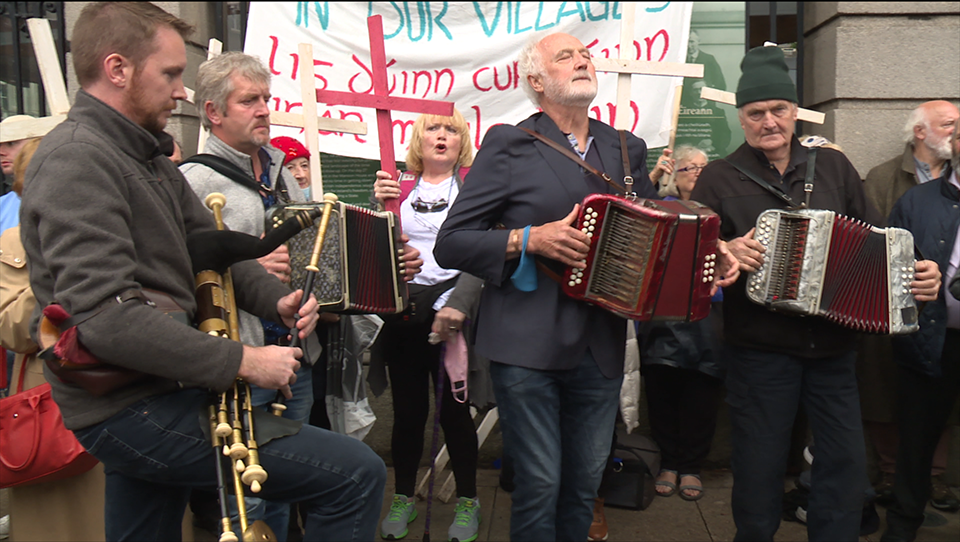
Breanndán Ó Beaglaoich gave a very interesting and impassioned interview on Raidió na Gaeltachta’s Saol Ó Dheas on Monday morning. Ó Beaglaoich will be known to many as part of the famed Corca Dhuibhne musical family and in recent years as the protagonist in a long-running battle with Kerry County Council over his “moving house” at Baile na bPoc.
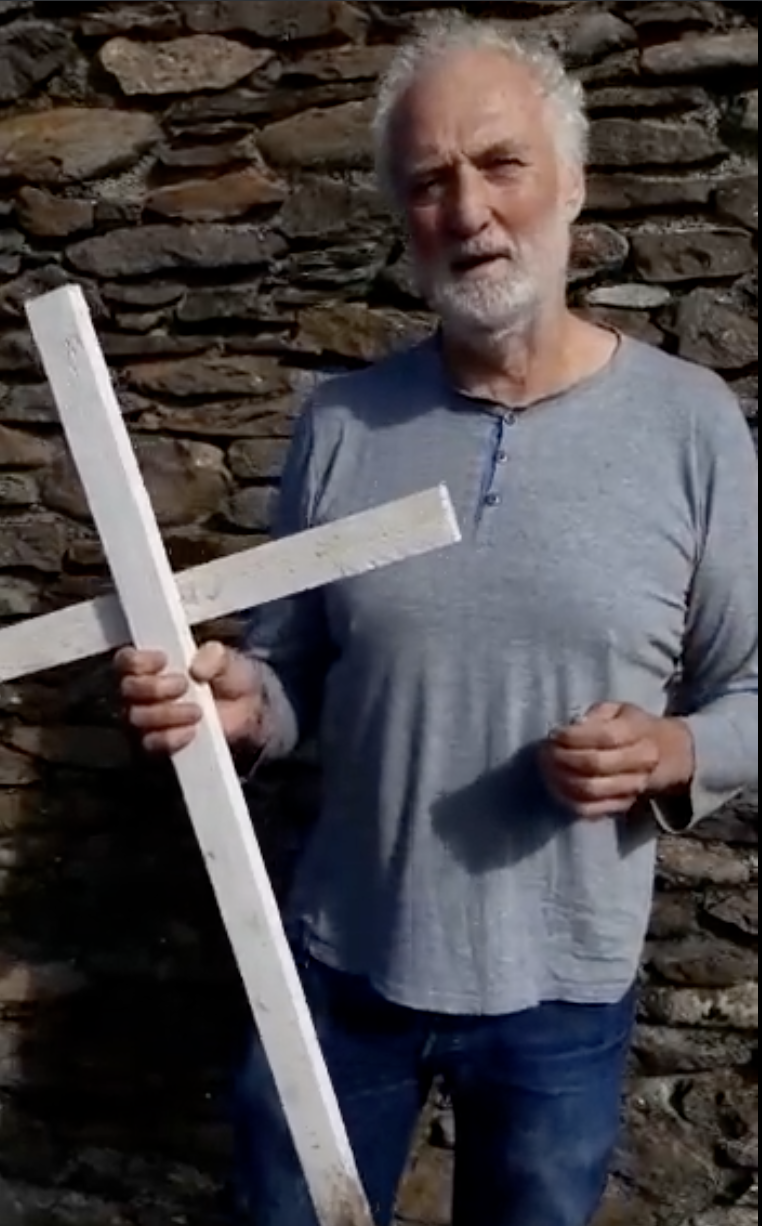
Having been refused planning permission for a stone dwelling on his own land, he built a cabin on a trailer. During his battle with the bureaucrats in Tralee he erected 235 crosses in his field to represent the number of people who once lived in the townland which is now reduced to around 12.
It was on the subject of housing in Corca Dhuibhne and the Gaeltachts generally that Ó Beaglaoich was interviewed yesterday. He is part of a group called Todhchaí na Tuaithe which has been attempting to draw attention to what is going on. Breanndán stated bluntly that the Gaeltacht communities needed to do something more dramatic, more striking to draw attention to what is happening.
He claimed that if similar were taking place in France that the Planning Department would go up in flames. And that people had been “ró deas, ró fhada” – “Too nice for too long” and that no attention was being paid to the concerns of the Gaeltacht communities and that worse still, there were people in state and planning departments who were quite open about their hostility to that community.
Nor is he assured that the ties of the Healy Raes with the new Government will act as any impediment to what he describes as the driving out of the youth and the destruction of “An Gaelachas” – a way of life based on the language and its music and dance and storytelling and listening.
I have recently been reading An Ghluaiseacht le Rónán Mac Con Iomaire which is the history of the Gaeltacht civil rights movement started in Conamara in the late 1960s and which also focused on “banú na Gaeltachta,” the forcing of another generation of Irish-speaking young people out of their own communities, with the lack of housing again as Breanndán says at the core of why people are leaving.
For one of its first large gatherings at Cois Fharraige in March 1969 one of the ten points made on the leaflet that was published referred to “Strainséaraí ar fáil urláimh ar a bhfuil fanta ins an nGaeltacht.” Ó Beaglaoich made the same point in relation to the priority being given to holiday homes over the rights of the local community to build houses for their own families on their own land.
He referred back indeed to the 60s and 70s in Corca Dhuibhne when Siamsa na Tíre was established along with the revival of An Ghaeltacht football club which brought people back and kept them there but which Ó Beaglaoich claimed would be impossible now with the planning restrictions.
Perhaps the most telling point made, and it is one that echoes what Máirtín Ó Cadhain and Desmond Fennell and others made in the 1960s and 1970s, is that if the Gaeltacht is allowed to wither on the vine as a viable social and economic community then the language and the culture generally is little more than its preservation in an artificial condition.
Mar a deir Ó Beaglaoich “Ní bheidh aon Raidió na Gaeltachta againn, beidh Raidió na Gaelann againn” because there will be no such thing any more as the Gaeltacht community. If that happens then the Ollscoil Oscailte – the open university of the living Irish speaking community with its intimate knowledge of its own place and indeed what has been lost to those of us whose ancestors lost the living language – will be lost forever.
He claims that this is being done at the moment and that Kerry County Council has become little more than an authority to oversee tourism which includes the priority given to tourist housing above the needs of the community. That he is correct is evident to any visitor to Corca Dhuibhne with estates of holiday homes for people drawn by the golf course, and most with little or no interest in Irish, and who stock up on groceries in Daingean because apart from the caravan behind the hotel in Baile an Fheirtéaraigh during the Summer there is no shop left.
Ó Beaglaoich concluded by musing as to what might be the reaction of the State were sufficiently large numbers of people to ignore the planning restrictions and to just go ahead and build houses on their own land without the by or leave of the planning department. They might then take their case to “Europe” and shame the Irish government by presenting their plan there.
Housing is obviously a key issue but so too is the growing pressures on Gaeltacht schools to teach English as a first language to the children of immigrants, as is accommodation for their families. The state employee who Ó Beaglaoich quoted as preferring that Corca Dhuibhne become a “national park” may well get her way.
A country of industrial estates, data centres, financial hubs in the middle of decaying inner city communities and national parks and golf course, holidays homes and accommodation centres in the midst of An Gaeltacht. An Todhchaí, b’fheidir…