A couple from Clonmel have spoken of their battle against Tipperary County Council to save their family home – and say they were “traumatised” after seven bailiffs turned up at their home,
Stephen Franey, and his partner Aileen Fitzgerald, say the local county council sent seven bailiffs to their home in Clonmel following an eviction notice, in a situaton they described as “absolutely crazy” and felt amounted to “threatening intimidation”.
Stephen has lived at the beloved family home at 22 Elm Park since 2015, when he returned to care for his late mother, Bridget. After losing his mother in 2018, he remained at the home, finding comfort in his connection to the family home and the memories it holds.
His family has called the property home since 1993, whn Bridget was rehomed there with her five young children in 1993.
Stephen and his partner Aileen told Gript of the upheaval and heartbreak caused by a recent court ruling, which means that the couple will have to vacate the three-bed council property for a two-bed.
While Stephen says assurances were given by the court that the family would not be made homeless, they have not been granted any alternative accommodation by the council. Stephen, who has been on the housing list since 2010, says the couple have always paid their rent, and are actually in credit with the rent.
They continue their battle to navigate the uncertainties brought on by the situation, and are appealing for the council to show some “fairness and compassion.”
The couple say that while they are appealing to be allowed to stay in their family home, they would be open to handing the keys to the cherished property back to the local council, under the circumstances that a two-bedroom house, which they qualify for, can be offered.
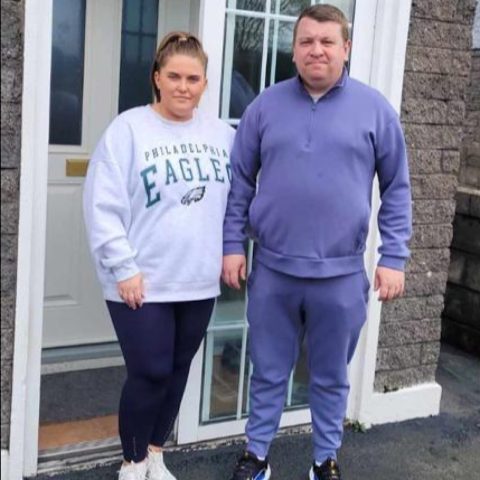
The couple have been left shattered, they say, by a shock eviction notice, issued to them by the council in recent weeks. This was then followed, they say, by bailiffs and members of An Garda Siochana showing up at their doorstep two weeks ago, poised to remove the couple and their possessions from their county Tipperary home.
‘WE ARE SHATTERED’
“We are shattered. It’s been a stressful couple of months, culminating in seeing bailiffs and guards outside our door. I was only in with the council on Monday (26th February) and I felt positive coming out of the meeting with Tipperary County Council. I was told to keep my phone on me, and there was the promise that the Council would engage with us on some sort of a resolution.
“That was Monday – by Friday morning, 1st March, I’m looking out the window to see three or four jeeps outside, with bailiffs approaching our door. It was absolutely crazy. It was threatening intimidation. There were seven bailiffs, who were waved on to come into my house. We are still not right after it.”
Stephen says his partner Aileen, who also lives in the home, had to resort to getting an emergency doctor’s appointment that same day, having been left shaken by the incident.
“She needed something for her nerves,” he said. “She is traumatised. She said it is the most fear she has ever felt, and has been left watching the house and constantly locking the doors. After what happened at the start of this month, all negotiations with the council are now back to square one. There was no need for what happened.”
“Aileen was terrified, and I believe the only thing that stopped the bailiffs from further action was seeing her inside the house pleading with them to please go away. The bailiffs were so intimidating. We were told months ago by the sheriff that hopefully it would not come to the stage where bailiffs were brought in by court order – but unfortunately it came to that.”
“To see bailiffs coming, with their big, heavy boots, and start kicking our door in, that was horrific. The whole ordeal lasted maybe 15-20 minutes, but to my partner in particular, it felt like forever.”
Stephen says he feels he “owes it” to his mother to keep fighting for the family home. He says they only have the home due to the hardship endured by his mother, who found herself in desperation and having to squat with her children in a flat in Clonmel – which led to them being housed in Elm Park.
“This has been our family home since 1993. I moved back to care for my mam in 2015. We had to squat as a young family and endured so much hardship – my mother had to take myself and my four brothers, and we were forced to squat in a Clonmel flat with no water or electricity after the local authority cut us off.”
The late Mrs Franey won an injunction which stopped the Corporation from interfering with the occupation at the flat in King Street, and a mandatory injunction which meant the water supply had to be reconnected.
The family had originally been housed by the Corporation, however due to difficult circumstances beyond their control, they fell behind on their rent, and were evicted over arrears of £420. Mrs Franey went on to discharge the arrears to the Corporation using her own money and the help of voluntary organisations, and the young family were subsequently re-homed at 22 Elm Park.
“My mam took the only action that was available to her. It was drastic, but she fought for us and got this house out of it. We have a huge emotional attachment to our home,” he said.
“It was through her action that we were rehoused here. I was 12 years old. Not only is this a home to myself and Aileen – but also to my teenage nephew who has been through foster care, who calls this a home as well.
“After mam passed away, this house kept our family together, which is why we didn’t want to part with it. For many of my nieces and my nephew who have been through foster care, this has been the only home that they’ve known. We have done everything to give them stability, and this house has been a huge part of that – and the council knows this,” Stephen said.
“There is such a backstory to it – and it is not just as straightforward as, ‘You’ve got a bigger house than you need.’ The Council has never once offered us an alternative to go and live somewhere else.
“We feel the Council has done everything not to recognise us as a couple, so that I am effectively a single man standing in front of the court. When I applied for succession, this failed – because I am an unmarried man. We put in multiple applications, which were bounced back for various reasons.”
Stephen says the couple, after losing their case in the district court, dropped their appeal against the ruling, because they were led to believe that an appeal would be too expensive. The Tipperary man has overcome a battle with addiction following the death of his brother. He has transformed his life in the last 10 years, gaining his Leaving Cert in 2020.
He has gone on to college, and is entering his last year of Applied Social Care. He is currently on placement at his local youth club.
‘IRISH PEOPLE HAVE BEEN TOTALLY NEGLECTED’
”We decided to go down the path of negotiations, and we were led to believe that if we dropped the appeal, a new application from us would be accepted. A four month stay was agreed in court, which has now expired,” Mr Franey said.
“I’ve taken every measure to turn my life around, and I am doing my absolute best. It’s hard not to feel that this country has failed us, and despite all efforts, Irish people have been totally neglected in the last few years. Even in Clonmel, the amount of homeless Irish people is heartbreaking.”
The couple say they never wanted to go public with their story, but they feel they have been left with no other option.
“Going public is a last resort to the action which was taken by the Council. After having bailiffs kick our door in, this is where we are at. I am willing to step aside and give up my family home – but it seems the Council wants us to go on the streets. We have made contact with local politicians, but it has been fleeting – we are hoping one of the local representatives will fight for us.”
Aileen told Gript that the couple are seeking some “compassion and fairness” from the County Council to allow them to remain in the home, or at least stay there until a two-bedroom house is provided.
“I hope going public might help other people not be bullied, as we feel we have been. It is scary to go public, but hopefully it will help others to talk about the situations they are in.
“The 1st of March was horrific. The local gardai, we have to say, were amazing. Without them there, there’s no doubt the bailiffs would have come through our front door.
“There was no need for it – you would have sworn we had a serious amount of guns or drugs behind our front door, but it was just the two of us. We kept saying ‘Thank God’ Stephen’s teenage nephew who is currently living with us wasn’t here. I haven’t stopped crying since the 1st of March – I’m burnt out from it.”
“We are willing to hand back our three bedroom house, to put us into a two bedroom house. But there has been no two bedroom house offered to us. None of this needed to happen, if the County Council stuck to what they agreed on – that we would not become homeless, and that suitable housing would be provided,” Aileen said.
“The way we have been treated has been heartless. I wouldn’t wish this ordeal on my worst enemy,” Aileen said. “Everyone is entitled to a roof over their head – but the government is failing people left, right and centre. Our government is mentally destroying the Irish people.”
Tipperary County Council, when contacted for comment on the case, said that while it didn’t usually comment on individual cases, they felt it was important that the public are “not misled in relation to how issues such as enforcement are dealt with.”
“This is particularly important in cases which may eventually lead to eviction,” a spokesperson said.
“The council’s key aim is to support all persons in need of housing and the council only undertakes court proceedings in the most serious cases. This is an option of last resort and is only utilised where there has been a very clear and ongoing breach of regulations and tenancy agreements.
“In such cases, the council will undertake an extensive and active engagement process with the parties concerned during which the all of the potential implications will be very clearly outlined. This includes the implications of that person’s actions on themselves and their families; including their rights and their entitlements.
The council said that in relation to the matter of tenancy succession, where a council tenant passes away, there is a facility for members of the deceased person’s family to be considered for “succession”.
“Where a person meets the “succession criteria”, they are facilitated to stay in that house or be relocated and allocated to another house suitable to their needs. Only one member of the family can be facilitated under the “succession” policy.
In all succession cases, members of the public can be assured that there is extensive and active engagement by housing staff and in all cases to date, that have gone before the courts, the council has been found to have correctly and appropriately applied the succession policy in relation to such cases, they said.
“The council provides very generous timeframes to allow individuals secure alternative accommodation where they do not meet the criteria for succession. We only go to court where there is no progressive engagement by the individuals concerned and/or, where individuals have refused to view or consider private housing options which have been sourced for them by our Hap Placefinder,” the spokesperson added.
“In the event that the council has to go to court and is successful in making the case for repossession of the house, a process will be put in place to engage with the individuals concerned in terms of providing them with appropriate housing supports. Likewise, the courts’ service has their own engagement process with the individuals concerned which occurs prior to the courts’ repossession order being carried out.
“In this particular case, both council staff and the county sheriff’s office have engaged with Mr Franey prior to any process for repossession commencing.
“Currently there are just over 3,300 persons on the housing waiting list. There is a duty of care on the council to ensure all individuals on the list are afforded the same treatment and access to housing in a fair, just and transparent manner. This is achieved through the just application of the appropriate policies and regulations around the allocation of housing units.”
Mr Franey has insisted that the couple have done everything possible to comply with the council, and insist that himself and his partner have been left with nowhere else to go, having not been offered alternative housing by the council.