The referendum on Article 41.2 placed the magnifying glass on the eternally fraught question “what [do] women [really] want”, which, according to Hollywood, can only truly be discerned by electrocuted philanderers who need mentally invasive life lessons. The recent events in Ireland call to mind the escapades of Mel Gibson dramatized in the film ‘What Women Want’ who after receiving an electric shock can hear the thoughts of women. Despite having some women amongst their ranks, it appears that the government were not indued with that particular gift, and so had to pursue the financially burdensome alternative of expending a couple of million to discover the thoughts of the female portion of the electorate.
The magnifying glass on Article 41.2 placed national (and indeed global) attention on a text condemned as “useless” by one commentator. The UN Committee on the Elimination of Discrimination Against Women benevolently enlightened the backward Irish that one of our founding documents perpetuates stereotypes. We need to remove “sexist” and “limiting” language the National Women’s Council told us.
It appears that frustrations rooted in historical injustices such as exclusion zones in society prohibiting participation in political processes or even prohibiting access to the work force upon acquisition of a marital state (both of which have been remedied in Irish society) have developed into a warped modern political ideology which, in purporting to champion women’s rights and protections, instead seeks to abolish them.
Whereas society historically told women what they could not do, women now tell women what they do not want. Apparently, it is contrary to women’s rights to preserve constitutional provisions which affirm the support to the state provided by a woman’s life within the home. Apparently, it is contrary to women’s rights to endeavour to ensure that mothers are not obliged by economic necessity to engage in labour to the neglect of their duties in the home. Certain feminists now tell us – we should really be championing men’s rights to stay at home.
The results of the referendum reveal that it may be time to expand the English dictionary to accommodate a feminist equivalent of mansplaining.
Why is there a focus on women in Article 41.2 to the exclusion of men? What is it about women and motherhood that deserves specific focus and protection? Could it be that there is in fact a special bond between a mother and child that is different from and thereby not replaceable by a father child relationship (which while being undoubtedly of uttermost importance, is not the focus of this text)? Could it have something to do with the fact that women, and not men, carry a child inside of their body for 9 months, and their bodies alone continue to contain the capability of feeding said child after it has exited into the first stage of “independence”? All this against the backdrop of inconvenient statistics, that a significant percentage of mothers actually want to stay at home with their kids.
Perhaps deep down inside we devalue this unpaid work. Deep down as women we have bought the lie that any failure to be represented in equal measure in the work place / public sphere is a sure sign of inequality (enter quotas and positive discrimination).
Perhaps it is time to admit that the full time, unremunerated, physically demanding, emotionally exhausting, sometimes thankless “duties” of mothering in fact brings such intangible and tangible rewards that despite all of the above, many women keep choosing it. Somehow, despite all the personal cost, there’s an urge inside of women to bring forth the next generation. Somehow, amidst the pain and sleep deprivation, there is a miraculous and indestructible love for a tiny growing human that rivals any oceanic current on earth.
We might not be any closer to solving the complex question the dramatized consideration of which generated substantial returns for actors like Mel Gibson. There may have been many reasons for the overwhelming defeat of the government’s proposed constitutional amendment to Article 41.2 on 8 March. I cannot pretend to discern them all.
But maybe this unsung miracle of the innate desire of a woman deserves constitutional recognition. Perhaps we need to start accepting, that this could be what many women want.
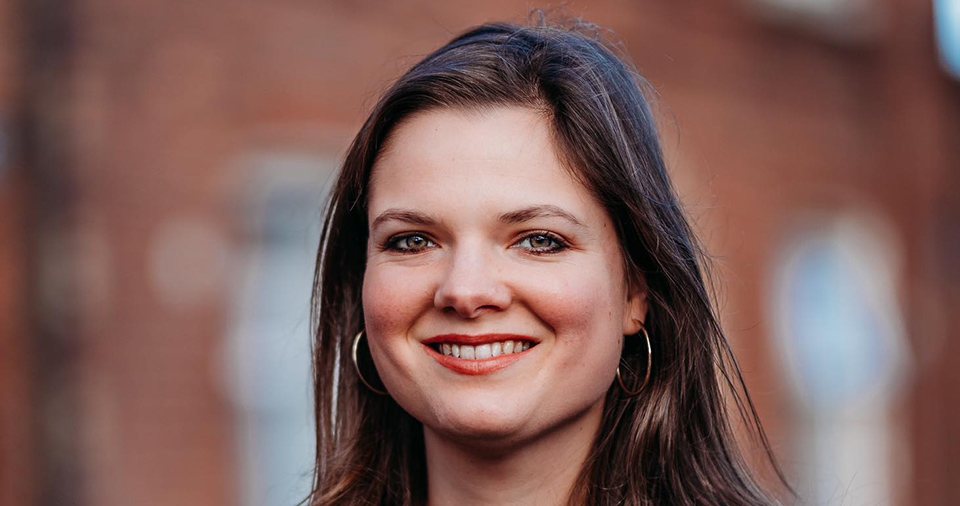
Grace Sullivan is a practising barrister. She has an LL.B. from Trinity College Dublin and a BCL from Oxford University. She worked for a defence team at the International Criminal Court in The Hague for a number of years before returning to Ireland to obtain her domestic qualification.
