With just days to go until Friday’s Family and Care referendums, Gript has been speaking to faith leaders across Ireland to find out where the various Churches stand.
The Catholic Church has called for a No vote in both referendums, with the Catholic Bishops highlighting concerns that the proposed Family amendment to the Constitution “diminishes the unique importance of the relationship between marriage and family in the eyes of Society and State and is likely to lead to a weakening of the incentive for young people to marry.”
While they argue that the Care amendment “would have the effect of abolishing all reference to motherhood in the Constitution and leave unacknowledged the particular and incalculable societal contribution that mothers in the home have made and continue to make in Ireland”.
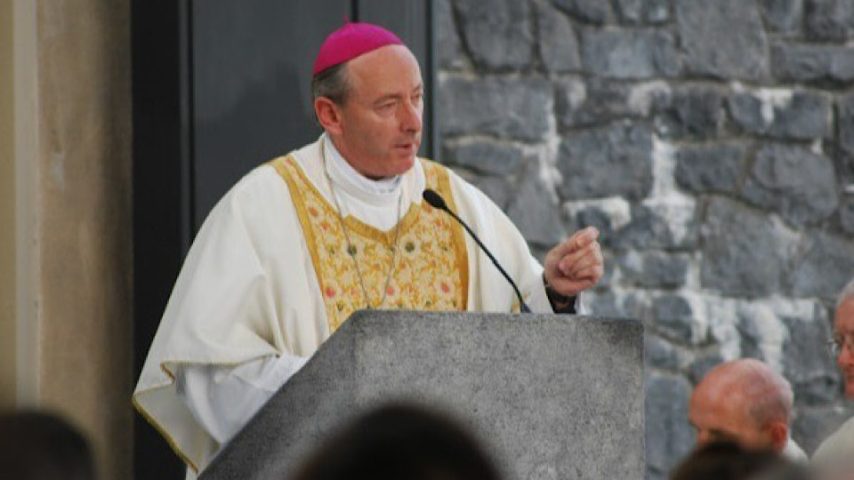
Speaking to Gript, the Bishop of Waterford and Lismore, Alphonsus Cullinane, reiterated calls for a no vote – saying that misinformation was “being peddled” by some, as he called for people to “cherish marriage, family, and home.”
Bishop Cullinane said that the “centrality of home and the vital importance of family is the key to the well-being of any society.”
“Currently our Constitution gives considerable protection to home, family and parents. On March 8th we are being asked to remove from our Constitution any reference to home and to mothers,” he said.
‘BEING ASKED TO REDEFINE FAMILY BASED ON MARRIAGE’
He went on to say that the consequences of amending the constitution are not clear, as he questioned the wisdom of voting for “uncertainty.”
“We are being asked to redefine the family based on marriage and are being introduced to a new definition of family as based on a ‘durable relationship’. Nobody knows exactly what ‘durable relationship’ means. The consequences of this new wording being passed are unknown since it will be the courts which will determine its meaning. Is it wise to vote for such an uncertainty and to insert into our Constitution?” he said.
“Contrary to the misinformation being peddled by some, the Constitution does not say that the woman’s place is in the home. Our Constitution as it offers some protection to those mothers (and fathers) who wish to look after their children at home and who do not wish to be forced out of the home for economic reasons.”
“As the bishops have collectively stated: “The State has to date failed to financially acknowledge the role of women in the home; once again there is no indication that there will be provision for the adequate financial remuneration of carers. The proposed term ‘strive to support’ appears to weaken the State’s constitutional responsibility to materially and legislatively support such care. Indeed, the proposed new Article 42B does not actually confer any enforceable rights for carers or for those being cared for.”
Bishop Cullinane said there were “umpteen strange issues” surrounding the referendums, stating:
“The chair of the Citizen’s Forum was chaired by a person who is now heading up a Yes campaign. The Oireachtas debate on the two referendums was rushed, while a Freedom of Information request for the minutes of the inter-departmental group who met to set out the wording for the two referendums was denied.”
The Bishop of Waterford also referred to the Lawyers for No campaign, which he said had shown that there are “serious implications” if Friday’s referendums are successful, in relation to “tax implications, immigration laws, and family reunification of migrant families.”
“The way this campaign is being rushed through should disturb every reasonable person who cares about this country, about family, about home and about the generations of the future. As a pastor who tries to care for God’s people, for families and for the common good I urge you to consider deeply what I have tried to point out here and to cherish marriage, family and home by leaving this portion of our Constitution as it is,” Bishop Cullinane said.
‘A MISSED OPPORTUNITY’
The Presbyterian Church of Ireland (PCI) meanwhile, has described the Family and Care referendums as “a missed opportunity.”
Outlining its position in relation to the referendums in a letter to ministers and congregations, the PCI said it recognised “that in a changing society, there are a great many other households that count as families, and while we acknowledge the merits of a number of the amendments being proposed.”
“We are concerned that this constitutional exercise has been a missed opportunity. The ambiguity and lack of clarity contained within some of the amendments will mean that it is unlikely to introduce meaningful change, which could have been of benefit to society as a whole.
“The proposed amendment, which seeks to remove the link between marriage and family, is also disappointing, but is an indication of Ireland’s changing culture,” they said.
The letter, which was sent in time for last Sunday services, addressed the proposed amendments to Bunreacht na hÉireann. Mr Kane, who is minister of West Presbyterian Church in Ballymena, County Antrim and Mr Hayes, who is minister of Tullamore Presbyterian Church in County Offaly, said to minister-colleagues that, “As Christians, we see the scriptures speaking consistently and clearly with regards to all aspects of life.
“As a Church, we have a clearly defined definition of marriage, as stated in our marriage service. But we also recognise that this is not everyone’s experience and reality. In looking at what is being proposed, with regards to Article 41.3.1, which states that ‘the family is founded upon the institution of marriage’, we are disappointed that the proposed amendment seeks to remove the link between marriage and family.
“Having said that, we recognise that within society there are a great many other households and families, which are not founded on our view of marriage. While we recognise each of these families, we would want to hold to the biblical definition of marriage, as God’s intended design for society,” they said.
In the letter, the Presbyterian ministers referred to the fact that the Government was suggesting amending the wording of Article 41.3.1 to include the term ‘other durable relationships’. “We recognise that there is significant debate around this term as a new way to define ‘family’, which considerably widens its definition. Given this, we are not alone in foreseeing major problems that will arise from the lack of clarity surrounding this new definition and interpretation of ‘durable relationships’ in the proposed new text,” they said.
With regards to Articles 41.2.1 and 41.2.2, which concern the position of women and mothers in the home, the ministers acknowledged that at the time of the Constitution’s drafting nearly 90 years ago, the language employed then was seen as deeply controversial.
“As a Church, we acknowledge that the Bible teaches that the role of women is much greater and more varied than that defined in Article 41:2:1 and extends beyond a woman’s role within the home. The picture of the wife of noble character that we find in Proverbs 31, for example, praises and encourages many different roles that women can fulfil both inside and outside the home.
‘MAY UNINTENTIONALLY DEVALUE PIVOTAL ROLE OF MOTHERS’
“While, we recognise and affirm the pivotal role that mothers have in nurturing and bringing up children, we are, however, concerned that the deletion of this Article may unintentionally devalue their pivotal role to the determent of society.”
The ministers continued, “In this regard, we are also concerned that the rewording of the second part of the Article 41.2.2, with the removal of the words ‘economic’ and ‘labour’ and their replacement with the general concept of ‘support’, moves us in a direction that fails to recognise the huge economic, as well as the social value of parents (mothers and fathers), who have the ability to stay at home with their children during their formative years.
“We do, however, broadly accept the acknowledgement in the proposed amendment for 41.2.2, which includes the role that family can have for the care of one another. However, we are concerned that the lack of inclusion of any reference to parents undermines the significant role that they have in a child’s life, as we would like to see the relationship between a child and their parent/s affirmed.”
In conclusion, Mr Kane and Mr Hayes said, “…as we have already stated, we recognise that in a changing society there are a great many other households that count as families, and while we acknowledge the merit of the removal of 41.2.1, we are concerned that this constitutional exercise has been a missed opportunity.
“The ambiguity and lack of clarity contained within some of the amendments will mean that it is unlikely to introduce meaningful change, which could have been of benefit to society as a whole. The proposed amendment, which seeks to remove the link between marriage and family, is also disappointing, but is an indication of Ireland’s changing culture.
“Having said that, we acknowledge the State’s commitment to ‘strive to support’ families caring for one another. We look forward to working with them, as a Church, to see how this provision can be enacted to the benefit of the common good, should The Constitution be amended.”
The two ministers concluded by saying, “As Church that embraces democracy as part of its Presbyterian ethos, these are matters for the people to decide. We therefore encourage Church members to vote and consider these matters prayerfully and with great care, reminding ourselves of the words of the Westminster Confession that “God alone is Lord of the conscience, and has left it free from the doctrines and commandments of men which are in anything contrary to His Word, or beside it, in matters of faith or worship.”
All Nations Church, an evangelical church located in the National Stadium, in Dublin 8, told Gript it was advocating a No No vote in Friday’s referendums.
Pastor John Ahern, who is Senior Pastor of the Church, at which over 50 nationalities are represented, told Gript that the proposed changes would “erase any explicit reference” to mothers in a world “that is becoming increasingly confused.”
“All Nations Church are advocating a no no vote on March the 8th because both family and motherhood matter. In fact, they are of fundamental importance to our future, for they have formed the building blocks of society for millennia,” Pastor Ahern said.
“Family is clearly founded upon marriage, and only mothers can bear children. In a world that is becoming increasingly confused about issues as basic as gender and the biological distinctions between male and female, these constitutional acknowledgments of both marriage and motherhood are even more important. The proposed changes will further undermine marriage and in effect erase any explicit reference to mothers from our founding documents.”
The Church of Ireland, meanwhile, told Gript that it had not issued a statement on either referendum, while the Methodist Church in Ireland has yet to respond.
The Islamic Cultural Centre said that they were not asking people of the Muslim faith to vote yes or no, but said that there is “no need” for the proposed change.
“It is our understanding that the hope of the family is marriage. It is our understanding that the current wording in the Constitution appreciates a woman’s contribution if she decides to stay at home; this is something great. Women should not be forced by economic necessity to work outside the home. We support the current wording as it is.
“We believe that at the moment, the Constitution is correct, so why would anyone think of changing it?” a spokesperson said.