The failure to follow through on the deportation order issued to the suspect in the stabbings at a Dublin school last Thursday, illustrates not only the high success rate of taxpayer-funded legal firms in having such orders overturned or eventually ignored; but also the anomalously high number of Algerians allowed residence in the Irish state in comparison to other EU countries.
In fact, international asylum statistics show that more applications for asylum were made here by Algerians in 2022 than in any other state in the world – and there is simply no valid reason for these numbers. .
According to reports in the Irish Daily Mail and the Sunday Times, the suspect in the violent attack – who was also arrested during the Summer for another stabbing incident – had arrived in the state around 20 years ago, and had successfully appealed a deportation order. He was then allowed leave to remain and subsequently applied for and was granted Irish citizenship. He does not appear to have been employed over the course of his stay here, according to a report in the Sunday Independent.
As of November 19, there were 3,038 Algerian nationals being accommodated by International Protections Accommodation Services (IPAS)
At the time that the suspect was allowed leave to remain, the number of Algerians claiming asylum was almost statistically insignificant. Available figures would suggest that it was below 150 or 2%. It now stands at 11.8%.
There have been no significant internal developments in Algeria that would point to a reason why the numbers of persons seeking asylum might have increased. A comparison of international statistics might point instead to Ireland being, as An Taoiseach suggested in relation to another asylum issue, an example of movements from “secondary countries” for reasons of welfare provision.
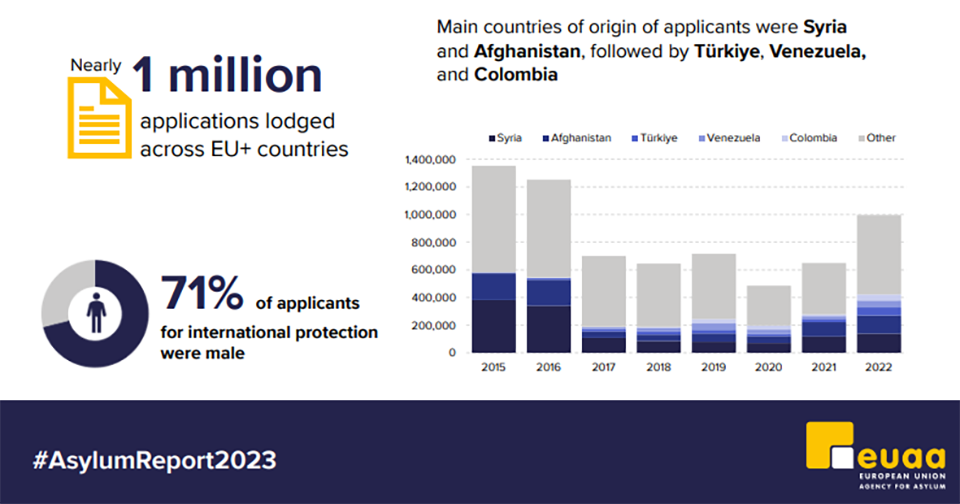
EU statistics overall support the perception that the majority of those seeking asylum are male, and predominantly males under the age of 34.
The 2023 report of the European Union Agency for Asylum (EUAA) however, indicates that the profile of those coming here differs considerably from that of the EU overall, with regard to country of origin.
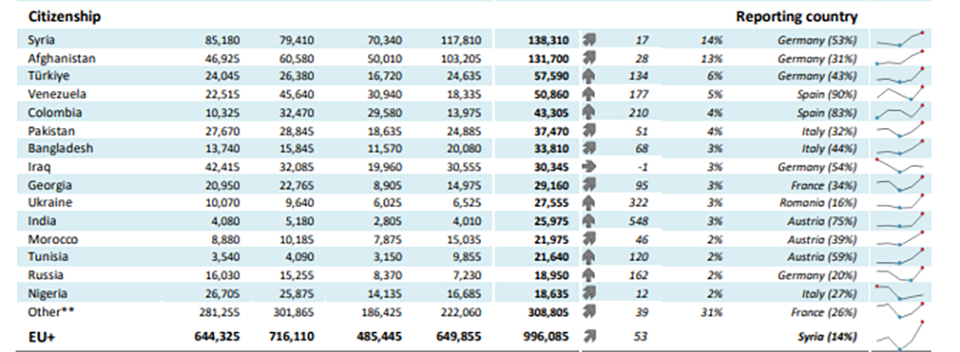
Algeria does not even feature among the top 15 countries of origin in the EU overall. That despite the much closer historical and linguistic connection of France and even Belgium to Algeria and the fact that France already has a large Algerian community.
The global figures on Algerian asylum seekers are even more striking. Of a total of 9,909 applications made by Algerians in the entire world in 2022, 1,766 – 18% – were submitted in Ireland, meaning we had the largest group of Algerian asylum seekers in the world entering the country.
We even had. 500 more than France which is a shortish boat trip across the Med to Marseilles and has a large daily air traffic with Algeria.
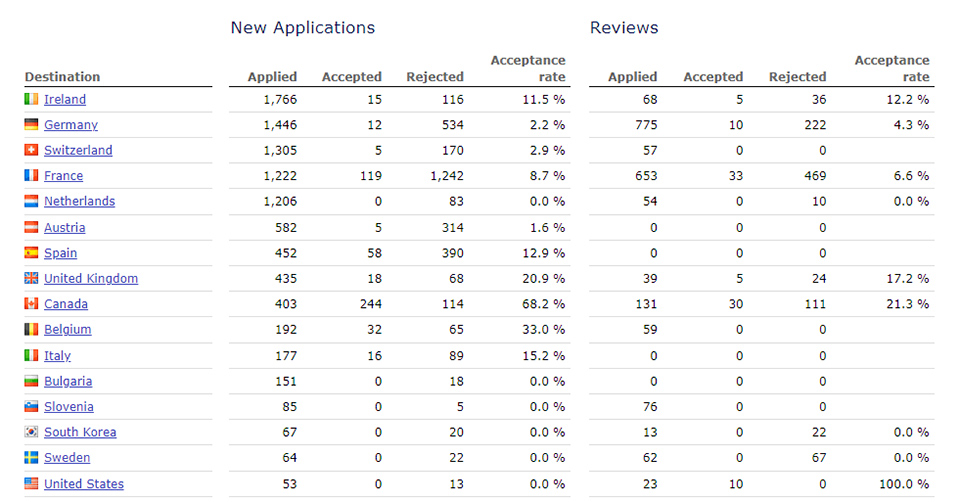

There is simply no valid reason why so many people should travel to Ireland from Algeria to claim asylum. None. Nor does the low rate of initial acceptance of such claims – which are close enough to the 8.5% international average – support any subjective belief that there are any grounds to justify this situation.
There is also a very low number of work permits issued to Algerians who can come here legitimately to work.
Just 15 of more than 25,000 work permits so far in 2023 were to Algerians. The corresponding figures were 35 of almost 40,000 permits issued in 2022. This seems to indicate that there is little if any economic or cultural ties between the two countries.
This fact is also illustrated by the 1,028 Algerian citizens who were here at the time of the 2022 Census. The vast majority of these were asylum seekers which grew exponentially during 2022, from just 238 who were in IPAS accommodation at the start of 2022.
The most significant pull factor in all of this, apart from the economic/welfare opportunism that drives it, is the fact that initial rejection does not mean that the applicant will be returned home. That is where the lengthy and ponderous appeals system comes into play. It was that which appears to have allowed the Dublin suspect to have not only remained in Ireland but to become an Irish citizen.
The number of cases pending decision here, according to the EUAA, more than doubled between 2018 and 2022 to close to 15,000. That was more than the total number of new applications for the year, and given that the number applying for International Protection this year will be similar, it is clearly not a sustainable system.
If large-scale overturning of refusals to remain is to be addressed, the state must do something to lessen the attractiveness of the appeals system for both appellants and the legal teams and advocacy NGOs which encourage all of this, and benefit from it. We shall be examining in more detail just how that process operates.
If one of the apparent moves being considered by the Government in the midst of a growing crisis might be to restrict the numbers of single young men seeking to claim asylum here, that would have a significant impact on the number of people arriving here from Algeria which would perhaps start to resemble close the EU average than the current anomaly.