A HSE document which forms part of a mandatory online training program for staff about workplace relations says that failure to use preferred pronouns is a form of discrimination.
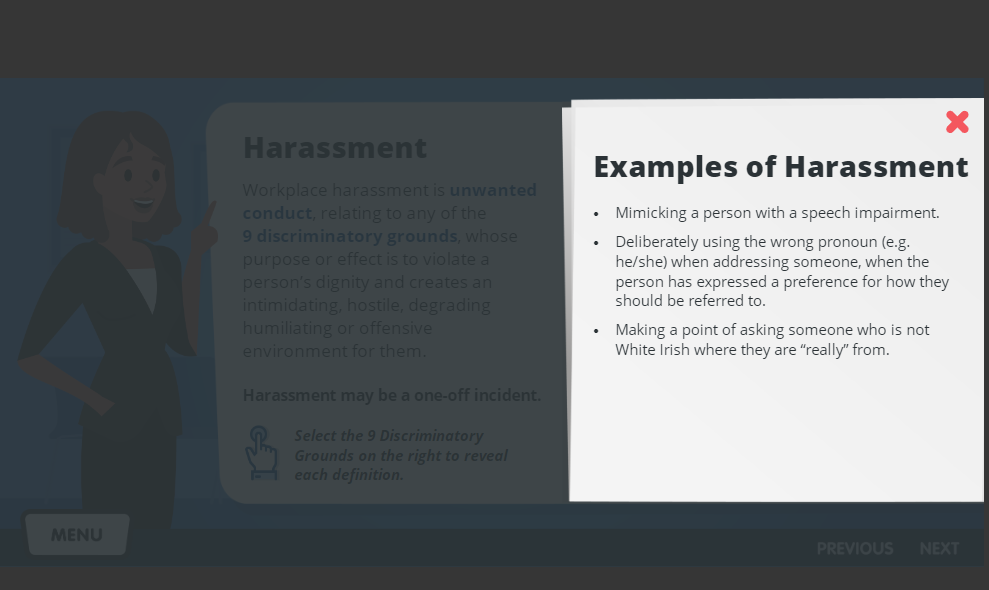
The document included in the HSELand Dignity at Work (Revised 2022) course says that “Deliberately using the wrong pronoun (e.g. he/she) when addressing someone, when the person has expressed a preference for how they should be referred to.” is an example of “inappropriate behaviour which may constitute harassment.”
The course description says it is “now mandatory for completion by all staff working in the HSE and in HSE funded services with refresher training required every three years.”
The document says that harassment may “consist of a single incident or repeated inappropriate behaviour.” where harassment “is defined in the Act [Employment Equality Acts 1998 to 2015] as any form of unwanted conduct related to any of these discriminatory grounds,”
“Harassment that is based on any of the nine grounds is a form of discrimination in relation to conditions of employment.” it says.
It is also stated that HSE employees ‘responsibilities’ include the attendance of ‘training’ and to undergo ‘assessments’ such as ‘may reasonably be required by their employer or as may be prescribed relating to safety, health and welfare at work or relating to the work carried out by the employee’.
Gript contacted the HSE asking what legal basis the document’s claims were based on given that Minister for Justice Helen McEntee recently confirmed that it is not a crime to refuse to use ‘preferred pronouns’ in Ireland.
The Minister further stated that failure to use preferred gender pronouns would not be an offence under the proposed Criminal Justice (Incitement to Violence or Hatred and Hate Offences) Bill 2022.
Gript also asked the HSE to clarify if the document was constructed under the guidance of advocacy groups such as BeLongTo or TENI. Despite being assured of a response we have not been provided with one at the time of publication.