The headline given by the Irish Examiner to this story is “Greens to bring plans to Cabinet to add 12,000 homes to housing market”.
Perhaps a better headline would be “Greens bring plans to cabinet to remove 12,000 beds from tourist and hospitality industry”:
“The Irish Examiner understands that any party offering accommodation for periods of up to and including 21 nights will need to be registered with Fáilte Ireland. Before advertising properties, booking platforms will have to check property details and only advertise properties with a valid Fáilte Ireland registration number.
The draft legislation will require the owners of short-term and holiday lets to register with Fáilte Ireland.
The major online booking platforms in operation in Ireland are Airbnb, Booking.com, HomeAway and TripAdvisor. There are about 90 smaller platforms operating here.
The legislation and the register will only apply to advertising online, it is understood.
Fáilte Ireland estimates that the measure could take 12,000 full unit properties — entire houses and apartments etc — out of short-term letting and potentially into long-term housing.”
The context here – omitted by the Examiner – is that Ireland is already desperately low on hotel beds heading into the next tourist season, primarily due to the fact that one in four beds in Irish hotels and guest houses are presently occupied by refugees.
The result of that, according to the basic law of supply and demand, is that hotel prices in Ireland are now vastly higher than they have been at any time in history. At the time of writing, for example, the cheapest 3-star hotel in Dublin, for next weekend, costs €478 for two nights for two people.
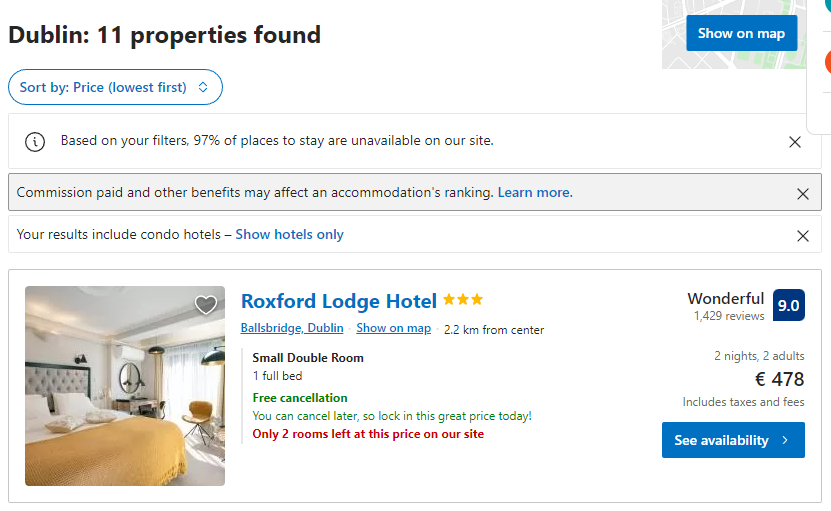
What happens, then, to hotel prices when you remove 12,000 short-term letting properties – which serve as competition to the hotels – from the marketplace? Especially during the peak tourist season, next year?
This proposal, by the way, is not only short-sighted in terms of its impact on tourism. It is also vanishingly likely to produce 12,000 usable homes for either Irish people or refugees. Because while those homes may be banned from being used by tourists on short-term lets, there simply is no way that all of them – or perhaps even a majority of them – are suitable for the kind of people in Ireland who desperately need homes. It’s one thing to rent a little isolated cottage on the coast for two weeks when you are an American with a rental car who doesn’t intend to spend much time in it.
It’s quite another proposition to expect that it will be a permanent rented home for a poor family with small children and no car, miles away from any amenities.
The likely outcome – not in all cases but in a great many – will simply be that restaurants and other amenities in tourist areas lose income and jobs, while the accommodation crisis remains unsolved.
By the way, there’s another problem too, outlined here by one of the most sensible accounts on twitter:
https://twitter.com/scary_biscuits/status/1596564419840192514
He’s right, too: There’s an inherent conflict awaiting the country between the imperatives of the tourism season – tourists pay more, remember – and the country’s reliance on hotels for refugee accommodation. With prices rising in the tourism sector, greedy slash smart hotel owners will be eager to transition out of refugee accommodation, where the price per room is set by the Government, and back into tourist accommodation, where the price per room is set by Americans bidding against each other.
When that happens, or if it happens, there will indeed be a “bloodbath”.
I say “if”, because it is readily apparent that the Government will move heaven and earth to stop this happening. Don’t be surprised if, come the spring, there is some legislative initiative – much like the “eviction ban” enacted for the winter – to prevent hoteliers from ending their state contracts for refugees. The usual justifications will be offered: Housing crisis, need to prevent homelessness, and so on.
All of it though, comes back to the same policy problem: The great and the good governing the state have decided in their wisdom that refugee policy trumps all economic and social concerns. Killarney, for example, is chock full of refugees. Business owners expecting the usual summer bonanza from tourism next summer might need to lower their expectations dramatically. The Government has made its choice.