One sign that an author has really made it to the big time is when they are able to command a large advance payment from publishers who are so confident of the demand for an unseen, indeed unwritten, opus major, that they will shell out rather large sums in the confidence that they will recoup that many times more in sales.
J.K Rowling famously received something like a modest £2,500 as an advance on her first Harry Potter book. Aravind Adiga was given an advance of $35,000 for The White Tiger, a payment that was described as “eye watering” for a previously unpublished novelist. Well established writers can expect multiples of that at times.
How many of them, however, are in the same league as our own cutting-edge social scientists at the Economic and Social Research Institute (ESRI)? According to a reply from Minister Roderic O’Gorman to a parliamentary question from Carol Nolan TD, the ESRI have in 2022 been given a advance of €2.405 million for the publication of the eagerly awaited sequel to their earlier bestselling volumes of their series Growing Up in Ireland.
I use the term bestselling loosely as actually I doubt anyone has bought even one copy of the earlier reports, other than we all have by contributing handsomely to their publication. How many people other than sad sacks like myself read them is another unknown.
So, if you can get your hands on a rare physical copy you should insist on a signed version as it may be worth even more millions at some point in the future when there is a demand for such seminal work.
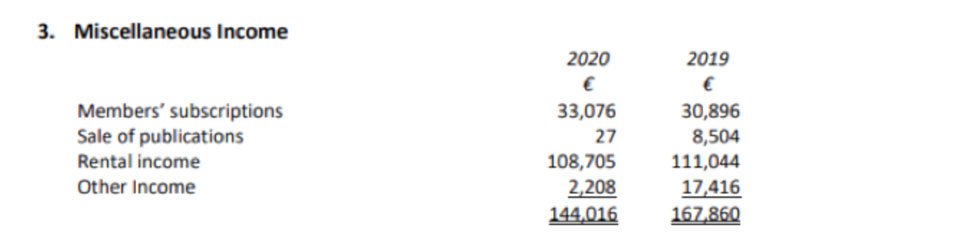
The word demand might also be deployed loosely as the last published financial statement for the ESRI tells us that of an income of just south of €10 million in 2020, just €27 came from the sale of publications, including presumably the much anticipated Growing Up in Ireland. This represented a fall from the €8,504 earned from selling their ‘bukes’ in 2019, so perhaps it is a case of the Difficult Second Album.
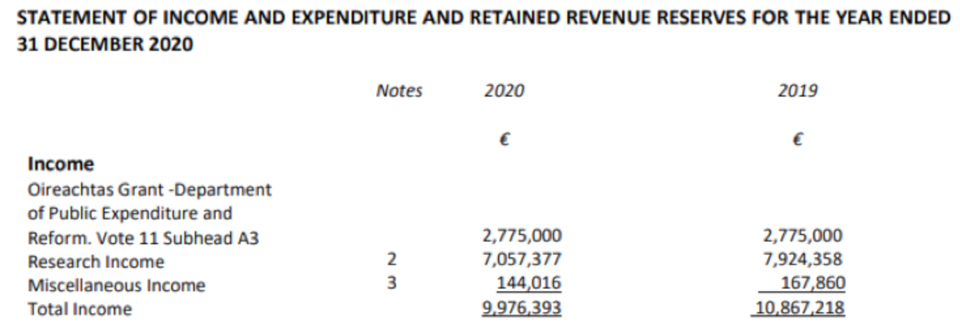
In total, since 2019 the ESRI ‘Growing Up in Ireland study team’ has been paid €10,491,242 and 37 cents for its herculean efforts. I have read the reports and reviewed a number of them here. It is an interesting idea to track a cohort of children over the course of their early years, and potentially that has benefits in terms of the education system and so on.
However, the reports themselves contain very little other than jaded sociological interpretations with the obviously heavy influence of currently fashionable theories. That’s without even, as we suggested in relation to the ESRI’s most recent report on Children of Migrants in Ireland, getting into the question of the likely ideological views and possible biases of the authors.
Apart from that, it is difficult to see how all of this might possibly have cost more than €10 million. It is doubtful that all of the “social science” books of a similar nature published in Ireland ever – since someone decided that it was a science – have sold €10 million worth of books.
So, unless the authors, all of whom have other jobs in academia, are being paid some ridiculous sums or the families of all the children in the study have Hollywood agents, it is difficult to justify that outlay for pretty pedestrian reports that very few people even read. Nice work if you can get it, as they say.