Elon Musk has announced that he will be welcoming suspended accounts back onto Twitter in the form of a ‘general amnesty’.
The world’s wealthiest man, who is now the proud owner of Twitter, promised that a general amnesty will begin this week – with those previously kicked off the platform for breaching guidelines set to have their accounts reinstated, provided they have ‘not broken the law or engaged in egregious spam’.
The decision came after ‘Chief Twit’ Musk conducted a poll – and after receiving over 3 million votes, a huge 72% of users backed the idea of an amnesty for banned accounts.
“The people have spoken,” the Tesla titan concluded. “Amnesty begins next week. Vox Populi, Vox Dei”.
The people have spoken.
Amnesty begins next week.
Vox Populi, Vox Dei.
— Elon Musk (@elonmusk) November 24, 2022
So, who could be released from Twitter jail under the ‘amnesty’? – and will those banished from the platform really have any interest in coming back?
After Twitter users voted 52-48 to allow Donald Trump back on the website, the former president almost immediately announced he had no desire to return to the site anyway. Are former users of the site poised to sit this one out also? – favouring the likes of Gettr, or Gab, or Trump’s own Truth Social, a small new platform he hopes to grow by staying off Twitter? Will exiled Irish users feel the same after being left out in the cold by the site?
Gript spoke to two people who had their own Twitter accounts suspended for breaching guidelines – and asked them if they would be making a return to the site.
David Thunder, a Permanent Research Fellow at the Institute for Culture and Society at the University of Navarra in Pamplona, Spain, is certainly keen to re-join the platform. He hopes Musk’s Twitter can be the Town Square the world needs.
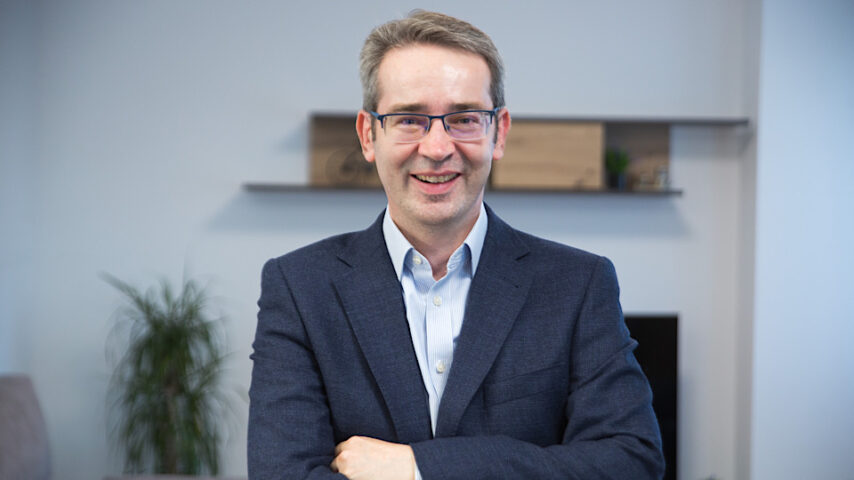
Thunder’s Twitter account was permanently suspended in October 2021 on the grounds that he was guilty of “repeated violations” of their rule against Covid misinformation.
As he explains on his Substack here, “Twitter had flagged several of my Tweets but never explained specifically which of my statements violated their rules, or how”.
While Thunder has appealed Twitter’s decisions at least five times, both pre-Musk and post-Musk, he has received only one response each time – that his account will not be restored, and the case will be closed.
“Until there is a real equivalent to Twitter out there, removal from this platform is a sort of media “death” for many of us. There should be a very, very serious reason for inflicting that sort of cost on someone. For example, a person who uses their Twitter account to engage in criminal activity or to hurt or abuse innocent people, might be a potential candidate for a permanent suspension,” Thunder reasons, adding:
“But a person who engages in unpopular or counter-cultural political or scientific commentary, or challenges the opinions of a public health authority, has done nothing unlawful, and has simply expressed an opinion in good faith. Assuming that such a person is a menace to the public is absurd and insidious, straight from the playbook of tyrants. Such a person should most certainly not be a candidate for a permanent suspension.
“According to Twitter, I was removed for sharing “misleading and potentially harmful information.” Yet, as far as I can tell, none of my tweets met these criteria for permanent suspension”.
Describing the announcement as “fantastic news”, the academic now hopes dissenting scientific and political voices will get a fair hearing, in the process helping to mould a healthier online public sphere.
“I think this is a really important step forward for freedom of speech, and while there will always be toxic conversations on Twitter, I hope this spells the end of the regime of Woke, Big Government, and Big Pharma censorship on Twitter,” he says.
“The mere fact that dissenting scientific and political voices will finally be heard on Twitter is a giant step forward and I am hopeful it will make for a healthier digital public sphere, given the enormous reach of this platform.
“It was brave of Elon Musk to do this, given that he was being watched closely by leftist activists and big advertisers threatening to put their Twitter advertising campaigns on hold”.
Paddy Manning had the largest personal Twitter account of any Conservative voice in Ireland – until he was blocked from the platform in March 2019.
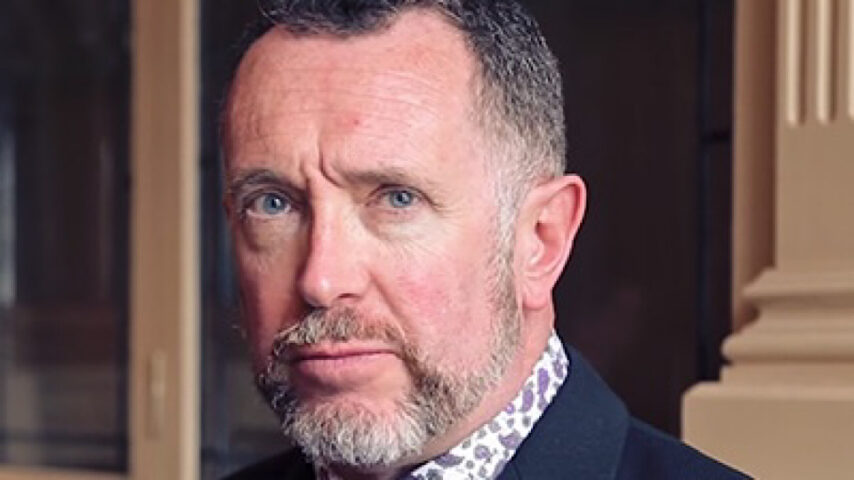
He was banned for alleged ‘antisemitism’, after he tweeted about Jeremy Corbyn being egged in March 2019. Manning, who has long been an outspoken critic of anti-semitism, vehemently denies the charge, and insists his ‘satirical’ tweet was deliberately misunderstood. He says the ban came after he publicly called out a number of public figures in Ireland using his Twitter account, leading to him being reported multiple times for causing offence.
He believes Musk is not only a believer in freedom of speech, but that he also now needs dissenting voices to inject new life into the “dying” platform – which he argues has become somewhat of an echo chamber in recent years.
“My view is that he has a need for the dissent, because it has simply become an echo chamber. Twitter was always more important to journalists than it was to the general public”.
The way views have been censored online has stopped people from speaking out against Government policy, citing Covid regulations as an example, Manning says – something which he describes as “appalling” and dangerous.
“The big problem with the censorship we’ve seen on big social media platforms like Twitter and Facebook has been the elimination of all dissent from Government policy.
“Bear in mind that right through the pandemic, those behind social media platforms worked to shut down dissent from Government policy. That’s an appalling idea”.
“Information is everything – and dissent is vital. No country knows better than we do how important dissent is,” Manning says.
He also believes social media has fostered a culture of self-censorship and “kowtowing to the government and the so-called experts”, creating a hostile environment for dissenting voices. Manning pointed to the social media repression of views presented by Nobel laureates.
In 2020, the late Luc Montagnier argued that SARS-CoV-2, the virus that causes COVID, was man-made in a laboratory and that it may have been the result of an attempt to create a vaccine for HIV, after the US launched a probe into whether the COVID virus came from a laboratory. His claims were rejected as hasty and ill-founded by some in the scientific community, but gained traction with others on social media.
In April, Twitter permanently suspended a COVID researcher who worked with Montagnier.
Twitter has permanently suspended @Parsifaler. He worked with Nobel laureate Luc Montagnier on unravelling the pathogenesis of Covid including the amyloid deposits that cause Covid fatalities, long Covid, vax injuries and more. You can find & follow him at https://t.co/MBv4kaDQQ9
— Rebecca Weisser (@RebeccaWeisser) April 15, 2022
“We have seen Nobel Laureates censored for their views on Covid. It doesn’t matter if they are wrong, or if you think they are wrong. The way to deal with things that are wrong is not to silence them; it’s to debate them,” Manning says.
He adds that if we are not willing to examine viewpoints, we risk driving them underground.
“The result is that we get an underground movement that we can neither debate with nor engage with. And social media has caused this. The wokeists think that if they can control what is said, that they can control reality; but they can’t”.
“We can no longer discuss the important things, because you’re simply not allowed to debate. You have to be able to defend your position – but we are not used to defending it.
He says he looks forward to seeing if he will have his account reinstated, adding: “Yes, I would like to get back on Twitter. It is, after all, the marketplace of discussion and ideas”.
As the collective meltdown among political and media elites over Musk’s takeover continues, dissenting Conservative voices like Manning and Thunder are among many on the other end of the spectrum hoping Musk can strike a blow to cancel culture – and give them a second chance on the platform in the process.