Romantic comedies have always been my favourite genre of film. Maybe it’s because I’m a hopeless romantic somewhere deep down, or because, as the female Gen-Zers love to say now, (and use it to justify everything) I’m just a girl. I also find reality television completely addictive, and effortlessly entertaining, which is why when Love Is Blind released a new series, I jumped onboard right away. On a sociological level alone, reality romance is fascinating because it provides a glimpse into society and culture. It’s why shows like Love Island outperform every other TV series yearly, and why people can’t seem to get enough of the whole reality romance franchise – from First Dates to Married at First Sight.
I’ve heard Love Is Blind described as a “boring version of Love Island,” but the reality show, now in its fifth year and eighth series, describes itself as an experiment in human behaviour. While some would see it as a cynical commercial cash-in – just another dating show for influencers in search of brand partnerships – I actually disagree. The programme is filled with ordinary American men and women in their 20s and 30s, who are gender-segregated in mansions complete with purpose-built pods through which they communicate.
They must date, fall in love, and propose without ever setting eyes on each other. Contestants are then urged to decide ‘If love really is blind.’
Once engaged, they get to meet in person – the awkwardness is palpable – after which time they move on to the ‘honeymoon’ phase in Mexico, and eventually into apartments in Minneapolis, Minnesota, where they experience day-to-day life and meet their pending in-laws. There’s a thrill to be found in watching unlikely relationships unfold over a six week period – after which point, time is up, and the couples reveal whether they have decided to go through with the marriage.
It’s quintessential reality television in this sense because many hearts are shattered, but sensationally, not until the couple are standing at the altar in front of their expectant friends and family. That may seem fantastically cruel and humiliating on both the participants and their poor parents – maybe Love is Blind is just as exploitative as Love Island after all – but I think the show is important on a broader level and there are lessons about how men and women are interacting.
Our fascination with people finding love is likely linked to the fact that romance is dying a slow death in the West – less people are marrying, and when they are, they are marrying later. More people than ever are choosing to stay single. Birth rates are collapsing everywhere.
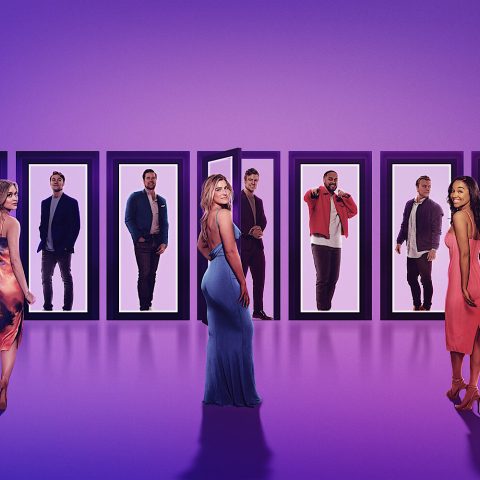
But what is palpable from watching the singletons in their bid to find love is that they all harbour a sense of enchantment about marriage – they all want to get married. Isn’t that a bit surprising in this day and age? Isn’t marriage out of fashion? Everyone – from the macho man with commitment issues to the former cheerleader with credit card debt – all want to find that one person who will know and love them unconditionally.
Maybe human nature hasn’t changed, even if our newspapers are filled, almost weekly, with columnists eschewing marriage and promoting divorce as something to celebrate. The vast majority of participants on the show have spent their twenties in the trenches of hookup culture, and you can tell (for the most part, from the women) that it has left them with lingering wounds and sometimes insurmountable insecurities.
Marriage is still a good thing that people want — judging by the series and the number of people tuning in. But despite this, we often hear about a crisis of loneliness because people are not finding a suitable potential partner.
On this note, some of the takeaways from the show could help explain a broader trend of many men feeling that women simply won’t give them the time of day. Headlines tell us that an increasing number of young women are celebrating being in their “single era” leading many men to feel unvalued and rejected. The data says that men, frustrated, are simply giving up on romance, too. After all, the most downloaded song last year was Miley Cyrus’s ‘Flowers,’ a pop ballad literally glorifying singleness, saying that young women can buy themselves flowers.
Men are on the sharp end of things – Love is Blind provides a bit of a glimpse into some of the possible reasons why. The vast majority of women on the programme are militantly liberal – which is representative of the way in which increased liberalism since the 1990s has occurred much more strongly among young women than men. Many women are choosing to go down the Ariana Grande route of ‘Thank you, next’ when it comes to men who do not meet their standards.
In Love is Blind, two of the couples who fall apart at the altar do so because both women insist that the men they were with were simply not aligned quite rigidly enough with their extreme liberalism. The show affirms studies which show that political persuasion is becoming more important to people in relationships. I actually think this is a good thing, because political persuasion is a good indicator of values. It’s striking that all couples, even those who are very, very attracted to each other emotionally and physically, couldn’t stay together because their values and beliefs simply didn’t align, even if everything else did.
One female participant found out that her fiancé’s family voted Republican, while another pulled the plug because her fiancé’s Church was ‘too traditional’ – even though, rather browbeaten and unconvincing, he insisted he would attend Pride with her. LGBT issues were ultimately the most important thing to this female contestant. Could it be that men who lean conservative are finding it harder to find women who are aligned? There does seem to be an ideological gap emerging between the sexes.
The plummeting in relationships could also be down to economics and the show hints at this. Some research claims that in the age of the corporate girl, men’s economic status is diminishing, while women’s is rising. In the US, women continue to outpace men in university enrolment and degree completion. This would mean fewer economically and financially convenient relationships. Many of the women in the programme are impressive – they own their own house, are earning loads, and so do not have the economic need for a man. Many women are now so self-made, and happy as things are, that they don’t bother looking for love.
What Love is Blind also confirms is that my generation have bought into the strange concept behind most romantic comedies that love actually means getting everything we want, wrapped up in an hour and a half. Rom Com culture has propagated a myth that as long as we feel “in love,” then the relationship is guaranteed to make us happy. It is clear that basically all of the contestants believe this. This is just not true, and they ultimately learn this the hard way. None of the chick-flicks we twenty and thirty-somethings have grown up with really taught us the reality – that love is actually about seeking the good of the other person, showing up even when you don’t want to, and being responsible.
Spoiler alert: there was one couple who made me believe the impossible – that it is possible to find love on reality TV. Taylor, a 31-year-old nurse, and Daniel, a 29-year-old sales manager, said ‘I do’ – and it was beautiful. A lesson from this couple would be not to judge a book by its cover in a dating scene that tends to put people into boxes. Daniel – who was kinder, nicer, and more gentlemanly than any other men in the cast – explained at the start that he felt that because of his height (5’8”) he was often overlooked by women.
“I’ve been single for 10 years…in that span, height has been one of the biggest factors,” he says on the hit show. The prevailing dating app culture has helped us to treat people like commodities who may or may not “tick our boxes.” There is rightful frustration around height on dating apps and women’s preferences – one study found that men who said they were 6’3” or 6’4” got about 60% more messages than men who were 5’7”. Daniel, who is from a wonderful family, with a great personality and strong values, may have stayed single on the outside world because of his height – which is a lesson in how superficial things have become.
Taylor and Daniel’s relationship also seemed to work because they were similar while a lot of the other couples were a case of opposites attracting. In a lot of cases, being so opposite became a head-on collision. They were also best friends, aligned politically and in terms of faith and values — all of these things are more important than we realise. Where other couples relied on physical intimacy, Taylor and Daniel, who did have more actual chemistry than most, chose to save sex for marriage, giving them more time to know each other on a deeper level.
There’s an idea out there that you should “test drive” your future spouse before committing – but people are not cars, or items to be utilised. What came across on the screen was that Daniel was a gentleman who loved and respected Taylor enough to wait. It will likely be a positive for them, as despite it being far from the norm, I do think it should be an ideal. Studies have shown that couples who save sex until they are married have higher levels of relationship satisfaction than those who did not wait, and can have happier and more stable relationships. A lot of people praised Taylor for looking for a man with a kind heart – she found that in Daniel even though he may not have been the conventional choice. Ultimately, I think that’s the most important thing of all to look for.
While Love is Blind is undoubtedly emotionally taxing for contestants, and humiliating for some at times, the show does provide a deep dive into what’s going wrong between today’s men and women — and in the very rare case, proves that you really can find true love on reality television.