Two Tipperary mums are at the forefront of a campaign to highlight the lack of basic services for children with autism, after organising a well-attended rally in Clonmel earlier this month calling for improved services.
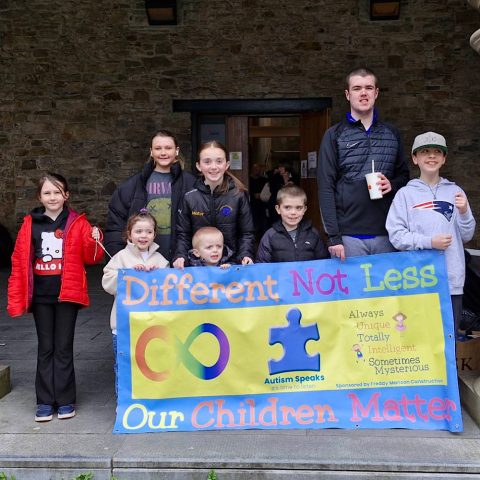
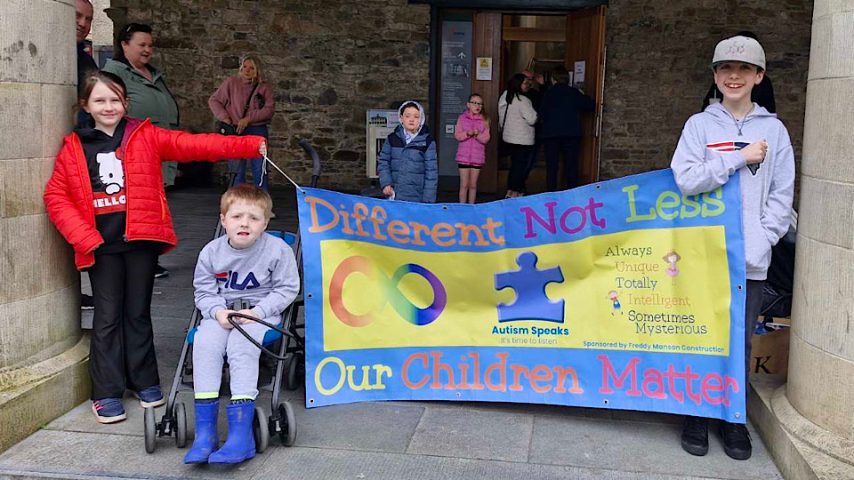
Sabrina Kelly and Stephanie McAndrew – who both have children with autism spectrum disorder (ASD) – are behind the Action for Autism group, which organised a march in Clonmel two weekends ago, attended by a number of local TDs.
The parents are calling for suitable school placements, adequate Special Needs Assistance (SNA) support, and the provision of better services in the HSE. Both Sabrina and Stephanie insist that services across Ireland have deteriorated over time, rather than improved.
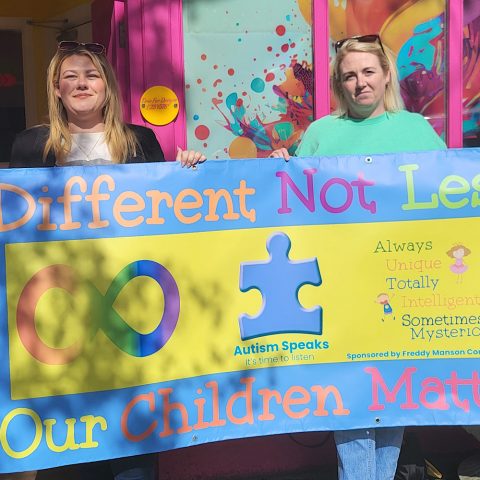
Sabrina’s youngest son, Josh (5) who suffers from ASD, currently attends a special needs pre-school. The youngster, who is due to start at a special needs school in September, has been told there is no place available.
Her older son Ryan, who is also on the autism spectrum, turned 16 in March. He is also facing an uphill battle after losing his Domicilary Care Allowance (DCA), while Sabrina has had to give up her carer’s benefit.
The mum of two, who gave up her job as a nurse to become a full-time carer for her two children, says that the CDNT (Children’s Disability Network Team), set up by the HSE to care for children with special needs, is struggling to provide services.
This includes in areas like speech and language therapy, physiotherapy and psychology, the Tipperary mum says, adding that the schools for children with special needs are also grappling with a lack of support from the government.
While the fight to secure a school place for five-year-old Josh is one of immense stress, Sabrina says the school is not at fault.
The mum of two says that special needs schools are facing a situation of powerlessness, and are not receiving the necessary supports from government. Because her son received an assessment which recorded moderate to severe autism, only a special school is fully able to cater for his needs. Despite this, Sabrina says the family have been advised to apply for an ASD unit in a mainstream school, due to the lack of space available in a special school.
“The assessment, when it came back, meant that the school which I had originally applied for was not suitable for him, meaning he needed a place in a different school in Cashel, which ended up having no places.
“I, in no way, blame the schools, because i understand where they are coming from. They are at maximum capacity. The schools are not getting the help they need, and they will eventually reach the point where they have to take a step back and say ‘We can’t keep going this way’ – because it’s the children who are suffering. Their hands are tied, there’s no comeback. The government, we feel, are closing their eyes and their ears to us as parents at the moment.”
“At the moment, it’s looking like my son won’t be going to school in September as there is no place for him,” Sabrina adds.
“Really, this government need to realise that it is neglecting our children and they are failing our children. They pass the buck to everyone else, and it’s very clear nobody is taking responsibility for the issues we face as families. It’s just crushing. It’s soul destroying at the moment having to go through all this,” Sabrina told Gript.
She also highlighted how school staffing levels are based on a government policy dating back to 1993, when the level of need in the era was significantly less.
INCREASED LEVEL OF DEMAND
The rise in the number of school pupils with special educational needs enrolled in mainstream schools has risen substantially, with Department of Education report, released in April, revealing a surge since 2018.
There were 7,722 children in special schools in 2018, with this figure increasing to 8,424 in 2022. Students in special classes in mainstream primary schools jumped from 6,229 in 2018 to 10,123 in 2022, seeing a steady increase.
The number of special needs assistants (SNAs) employed has also increased – up from 4,877 in 2018 to 19,219 in 2022, of which the vast majority (12,242) were in primary schools.
Sabrina also says that Special Education Needs Officers, who are tasked with supporting parents, are also overwhelmed and are impeded by a lack of government investment.
Both Sabrina and Stephanie say they feel their attempts to meet with government officials have gone ignored, pointing to their request for a meeting with Taoiseach Simon Harris. They say they are yet to receive a reply from the Taoiseach, and feel they are being ignored.
A ‘DESPERATE’ SITUATION
In a letter penned to Micheál Martin, Stephanie urged the Tánaiste and his goveenment to “understand how desperate” the current situation for families of children with ASD is – and how government decisions have impacted on families, and “not for the better.”
“Clonmel’s CDNT5 has 630 families on their waiting lists, and they have no staff. At their last meeting, they informed us that they had opened recruitment internationally,” the mother of three wrote in the letter seen by Gript.
“They did finally get an application from a woman from Germany, [but] she eventually had to turn down the position due to the housing situation, as she just could not secure accommodation.
“Then the government raised the cost of petrol and diesel this has huge cost implications for me personally, as all the therapies my two children attend are in different counties some hours away from us, so not only do I have the cost of the actual appointment, I also have the added cost of very expensive fuel.”
“Everything is a worry, everything costs so much, everything must be a fight, trust me our lives are hard enough, and I would honestly give up everything I have so my children would not have these struggles,” she continued.
‘WE NEED FUNDING TO SURVIVE’
“I do however truly believe you and your government want to make sure our most vulnerable in society are well looked after and that if you could relieve some pressure from our heavy shoulders, you would. My understanding is the government has a rainy-day fund.
“I would suggest to you that this is our rainy- day, and we need that funding to survive. I am sure everyone would be horrified if a neurotypical child was told, ‘I’m sorry but we have no school place for you’ anywhere. The system is broken, and it needs to be fixed and as a mother with additional needs children, I’m willing to help you whatever way I can,” the letter added.
Stephanie has extended an invitation for Mr Martin to visit Scoil Chormaic, a special needs school in Cashel attended by two of her children.
“Minister Martin, I would love nothing more but to invite you to Scoil Chormaic and show you the school, dedicated teachers, SNAs and principle. Their dedication has gotten my children to where I once thought they would never get.
“We cannot take that lightly and I promise you if you meet a fraction of the 219 students you will leave feeling amazed and emotional and will have a new found appreciation for the level of attention and support that Scoil Chormaic gives us as parents and their students.”
Stephanie also voiced criticism of the National Council for Education’s recent recommendation that all special needs students should be educated in mainstream schools. In January, the Council supported a move towards a “fully inclusive” school system in the years, however parents including Stephanie and Sabrina believe such a plan is unworkable.
“Although ASD units are a great idea, they only work for some, not all. In the grand scheme of things if properly thought out, there would be no way you would put a child with a moderate to severe diagnosis in with a child who presents as mild,” Stephanie wrote in her letter to Minister Martin, referencing the recent policy advice to the Department of Education.
“This is completely unfair on both children and their families; these children are never going to meet their full potential in scenarios like that,” she added.
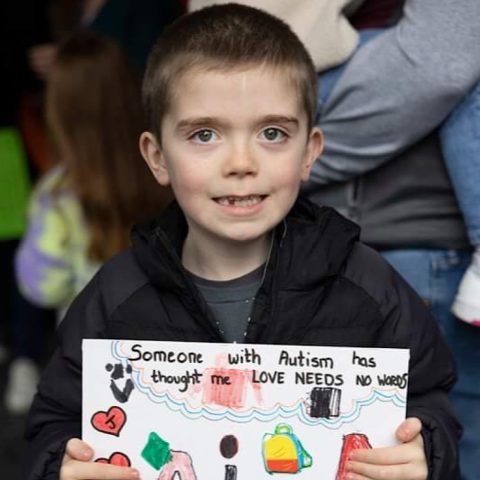
“I firmly believe the way things are going now with trying to make and ‘all inclusive’ schooling system is just never going to work. It’s not fair on the child with additional needs, nor is it fair on the neurotypical children in the classroom.”
Sabrina echoes those concerns, saying that mainstream school simply would not be suitable for her child. She worries if Josh was put into a mainstream class with an SNA, he would become overwhelmed and could end up hurting another child.
“There can’t be this perfect picture of all inclusive, because every child is different. I know Josh would regress in a mainstream school. He needs his own routine, and is very restricted on what he can and can’t do, but that is not looked at – even though his assessment from both the psychologist and the school will say this. My child would suffer if this system was brought in, and so would other children.”
Regarding the demand for special needs places in both special needs schools in Tipperary, Sabrina says schools are now “at their wits end,” and are struggling.
“It’s so tough for these schools to have to turn away parents, and for school management to explain that their hands are tied. Especially since we started up Action for Autism, we have had so many parents reach out to say they are in the same position.
“And with our march on the 4th May, we were shocked at the size of the crowd we had. Listening to the situation some parents are facing would simply break your heart. There are so many kids out there who have extreme behavioural issues, and can’t get psychiatry or the other supports they need.
“Parents are met with excuse after excuse. Some parents are at the point where they are actually afraid of what their child might do to themselves or someone else. When they get in touch with the State organisations who are supposed to help them, they are being told to present to their nearest A&E. It’s shocking.”
“From our persepecitve, and from the perspective of so many parents we have met through our campaign, our government ministers are oblivious to what is actually going on in people’s lives. It’s soul destroying. They have no idea how hard people’s lives are, and how difficult it is for families. I can’t count the number of times we’ve reached out to different government ministers, sending emails, sending invites to our protests. We just feel ignored at this stage,” Sabrina added.
Both mothers claim that their children are being discriminate against, describing the treatment as “soul destroying”.
According to Sabrina, there are 630 families in South Tipperary whose children with special needs are in need of the necessary services, adding that a recent protest was instrumental in raising awareness of the issues.
“Our children matter, so why are our government failing and neglecting them?” Sabrina says, adding that herself and Stephanie will continue to raise awareness and reach out to government ministers. “We will not give up,” she says.