First year CSPE students in Ireland are being taught to study “pansexual” and “genderqueer” sexual identities; to consider that they might hold racist prejudices, even if they don’t know it; and to consider the merits of extreme climate groups like Extinction Rebellion and Just Stop Oil, which frequently engage in illegal vandalism as a form of protest.
These lessons and more are contained in the 6th Edition Folens CSPE book “Make a Difference!”, which was released earlier this year in 2024. The book is aimed at Junior Cycle students as young as 12.
STUDENTS TAUGHT ABOUT “GENDERQUEER” AND “PANSEXUAL” IDENTITIES
Lesson 26 of the book seeks to inform students about “LGBTQI+ Rights”, saying that “By the end of this lesson you will…be more aware of Pride events”.
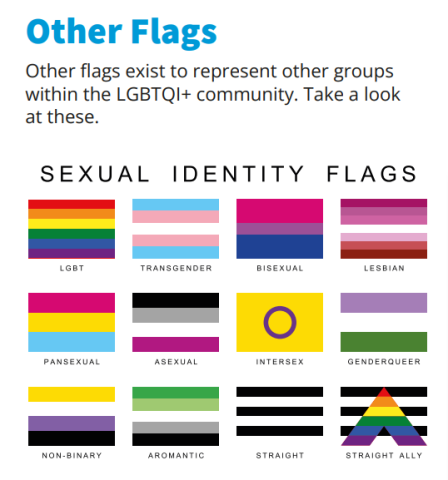
It goes on to teach children about a variety of sexual and gender identities, including “bisexual”, “queer questioning”, “non-binary” (the idea that you can be a gender other than male or female), “gender fluid” (the idea that your gender can switch back and forth between male and female and fluctuate over time), “pansexual”, “asexual”, and more.
In addition to the standard gay pride rainbow flag, students are also taught to study other “Sexual Identity” flags, including “genderqueer,” “aromantic”, and others.
The book further informs students about the work of transgender YouTuber Jazz Jennings regarding “transgender children”.
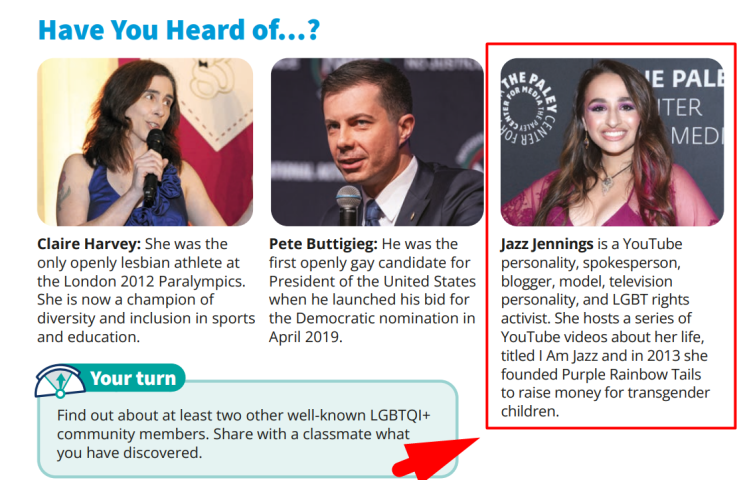
Jennings is biologically male and was born as a boy, but was allowed to transition to identifying as a female when he was a 3-year-old toddler with the support of his parents because he said he felt like a girl. He is now a transgender activist and influencer.
YOUR CHILD SHOULD CONSIDER THAT THEY MIGHT HAVE RACIST BIASES
Lesson 18 is all about racism, and its self-stated goal is to have students “know about the Black Lives Matter movement” and “reflect on racism in Ireland,” latter adding that “racism is not unique to the USA”.
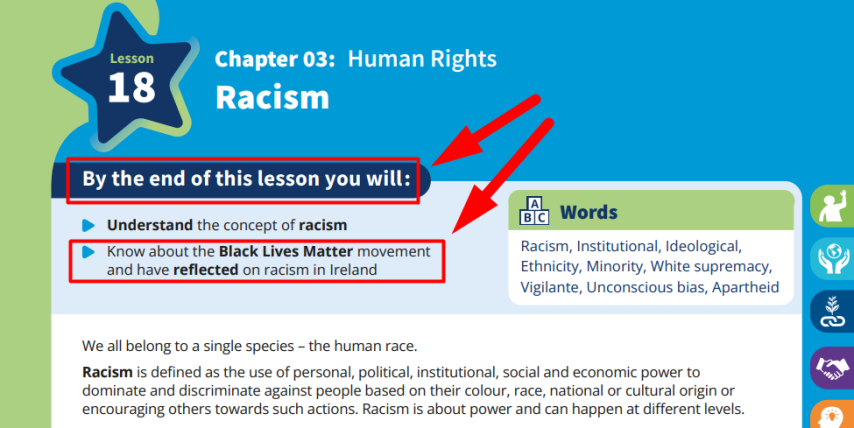
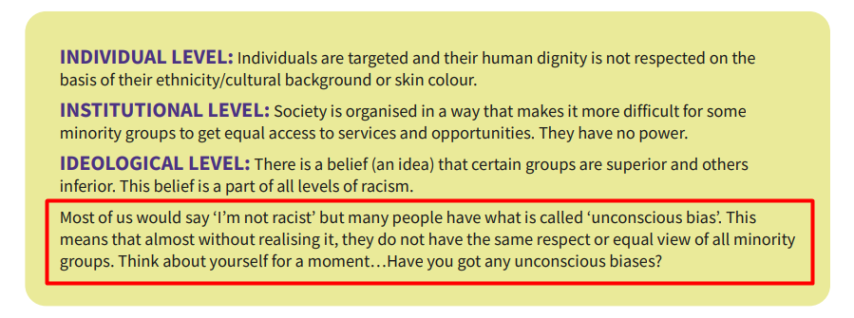
It says that racism is all about “power”, and that “many” people hold racist biases without knowing it – including, potentially, the students themselves, which is something it urges them to reflect on.
“Most of us would say ‘I’m not racist’ but many people have what is called ‘unconscious bias’,” the text reads.
“This means that almost without realising it, they do not have the same respect or equal view of all minority groups. Think about yourself for a moment…Have you got any unconscious biases?”
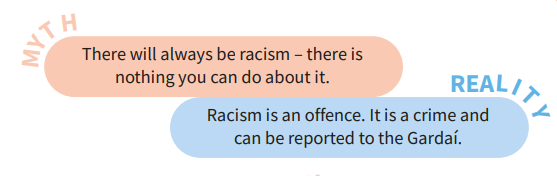
The text then goes on to make the claim that “racism” itself is an arrestable criminal offence.
“Racism is an offence – it’s a crime and it can be reported to the Gardaí,” it reads.
BLACK LIVES MATTER IS GREAT AND GEORGE FLOYD WAS KILLED BY RACISM
The book goes on to praise the Black Lives Matter (BLM) movement, claiming that it is a “global organisation whose aim is to end white supremacy” and “work for a world where black lives are no longer targeted.” It claims that “The BLM campaign is not over” in its struggle to fight against black “oppression”.
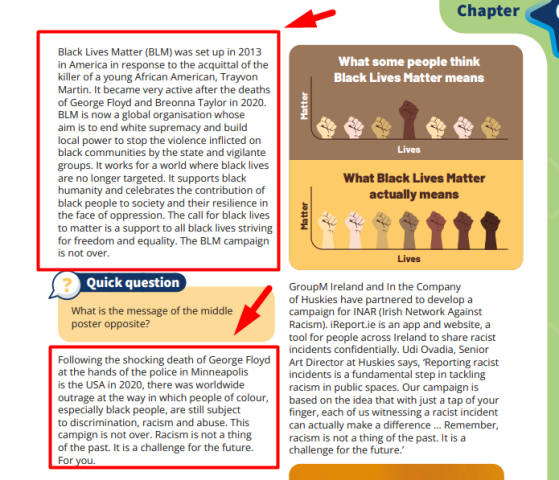
The chapter goes on to heavily imply that George Floyd was killed because of his skin colour:
“Following the shocking death of George Floyd at the hands of the police in Minneapolis in the USA in 2020, there was worldwide outrage at the way in which people of colour, especially black people, are still subject to discrimination, racism and abuse.”
It adds:
“This campaign is not over. Racism is not a thing of the past. It is a challenge for the future. For you.”
PROMOTING THE RADICAL “YELLOW FLAG” PROGRAM
The book further goes on to promote the “Yellow Flag” programme – a State-funded NGO award which is supposed to denote “anti-racism” at a school.
“Upon completion and assessment of its eight steps, a school is awarded a Yellow Flag in recognition of its work in becoming a diverse school,” the text reads, adding: “Might your school be interested?”
Notably, Gript previously highlighted how the NGO behind the Yellow Flag award circulated a document which encouraged teachers to oppose the entire concept of criminal justice and policing, and asked them to study militant “black power” organisations like the Black Panther Party. They also encouraged schools to teach children about “white privilege” – the idea that all white people have an unfair head-start in life because of their race, regardless of class, upbringing or income level.
IDEA THAT YOUNG MALE ASYLUM SEEKERS COMMIT CRIME IS “UNTRUE” AND “DISINFORMATION”
Lesson 19 of the book is about immigration, and the chapter offers favourable portrayals of asylum and immigration to students, describing very emotive stories from the perspective of children fleeing warzones.
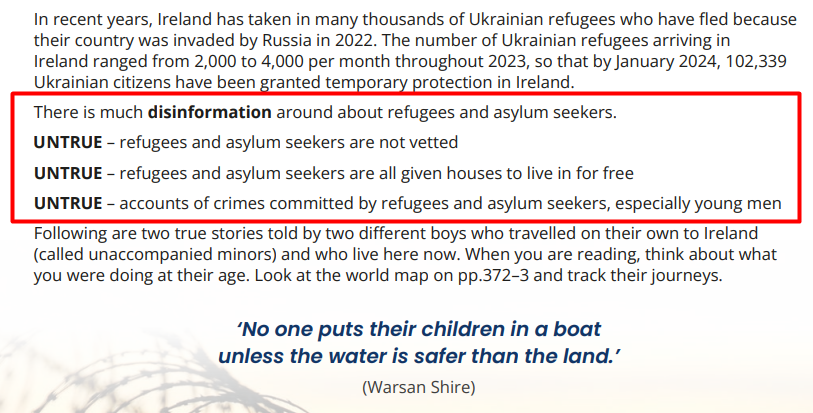
“There is much disinformation around about refugees and asylum seekers,” the text reads, listing a number of claims which it says are “untrue”, including:
UNTRUE – refugees and asylum seekers are not vetted.
UNTRUE – refugees and asylum seekers are all given houses to live in for free.
UNTRUE – accounts of crimes committed by refugees and asylum seekers, especially young men.
STUDENTS TO STUDY CLIMATE RADICALS LIKE EXTINCTION REBELLION AND JUST STOP OIL
On the topic of climate change, Lesson 49 of the textbook introduces students to radical and climate organisations such as Extinction Rebellion and and Just Stop Oil, which routinely engage in illegal acts as a form of protest, such as criminal vandalism.
“In 2019 the biggest protest ever about climate change was held, as huge demonstrations led mostly by young people took place all around the world,” the chapter reads.
“…Protests led by thousands of young people called on governments and businesses around the world to change. They said that the impact of climate change is going to affect the future of today’s young people and they were demanding action.”
They added: “Extinction Rebellion was another global movement, set up in 2018. It aims to avoid tipping points in the climate system and biodiversity loss, and the risk of social and environmental collapse.”
The book then includes infamous images of Just Stop Oil activists throwing soup over Vincent Van Gogh’s priceless famous ‘Sunflowers’, and releasing paint on the table at the World Snooker Championship in 2023.
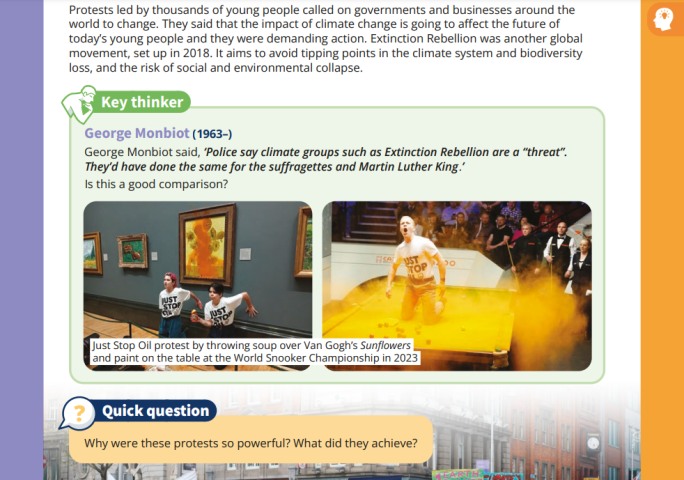
Directly below these images, a question box asks students to consider: “Why were these protests so powerful? What did they achieve?”
The page same page also features a quote from climate activist George Monbiot, who is described as a “key thinker”. Students are asked to consider the merits of Monbiot’s assertion that “Police say climate groups such as Extinction Rebellion are a ‘threat’. They’d have done the same for the suffragettes and Martin Luther King.’”
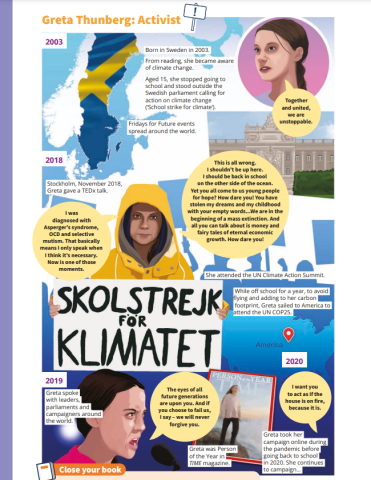
The book also praises climate activist Greta Thunberg, holding her up as a role model, and urging students to watch her speeches on YouTube.
“When we started to write our first CSPE book, young people did not have a voice in the way they do today,” the book reads.
“Now teenagers are regularly heard on the news. They are blogging, connecting, protesting, leading and making a difference all around the world. Just look at Greta Thunberg in Sweden and her Skolstrejk För Klimatet (‘School Strike for Climate’)”
One entire comicbook-style page is dedicated to celebrating Thunberg’s achievements and activism.
CHILDREN URGED TO LEARN ABOUT “THE IMPORTANCE OF GENDER QUOTAS”
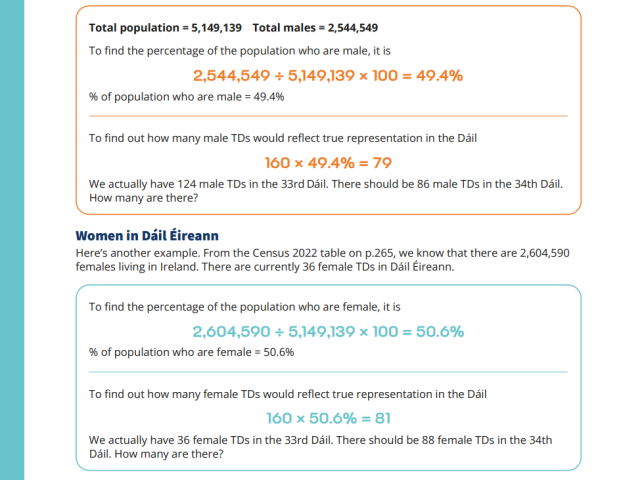
Lesson 73, which is about “Gender, Representation and Elections”, seeks to ensure that students have “discussed the importance gender quotas.” Students are encouraged to do maths to work out the exact proportion of the Dáil which should be female based on the number of women in society.
“We actually have 36 female TDs in the 33rd Dáil. There should be 88 female TDs in the 34th Dáil. How many are there?” the chapter reads.
It also says that there should be less male TDs in order for there to be “true representation”.
“We actually have 124 male TDs in the 33rd Dáil. There should be 86 male TDs in the 34th Dáil. How many are there?” it says.