New figures released by the Department of Housing today show that the number of homeless people in the State is at its highest level since records began a decade ago.
According to new government figures, there are 14,009 people who are in emergency accommodation – including some 4,206 children – an increase of 14 per cent in the last 12 months. It is the highest number of homeless children ever recorded in the State, with the number of children who are homeless rising by 17 per cent since last April.
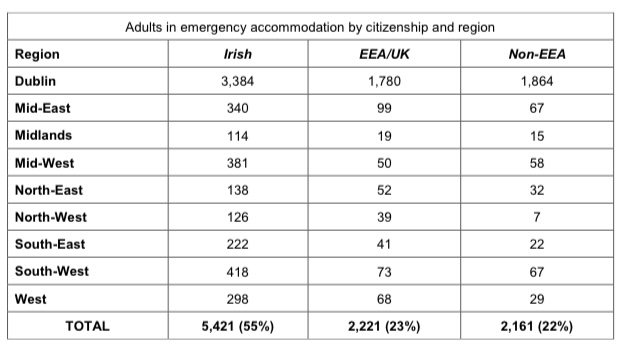
9,803 people in the figures were homeless adults, while 217 pensioners were also recorded as homeless. Of homeless adults accessing emergency accommodation, 55 per cent (5,421 adults) were Irish citizens. A further 2,221 (23 per cent) of homeless adults were EEA/UK citizens, while 2,161 (22 per cent) were non-EEA citizens.
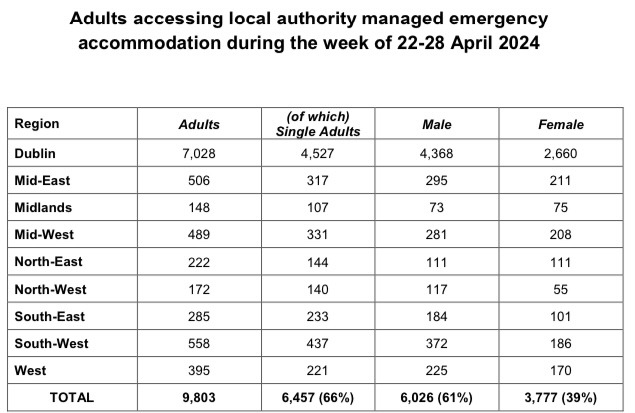
66 per cent of homeless adults were single people, with 61 per cent being male, and 39 per cent female.
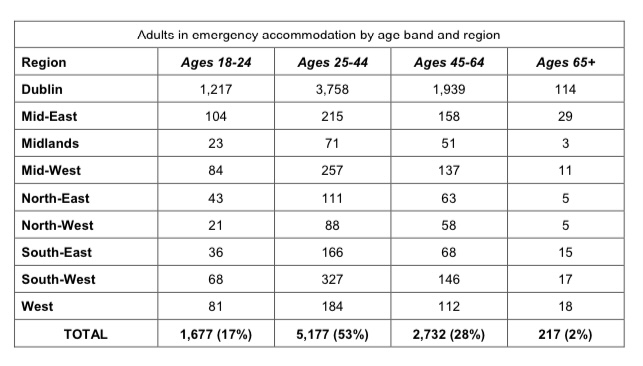
1,677 per cent were aged between 18 and 24 (17 per cent), while 5,177 were aged 25-44 (53 per cent). A further 2,732 were aged 45 to 64 (28 per cent) while over 65-year-olds accounted for 217 people (2 per cent).
1,996 families were recorded as accessing emergency accommodation, with 55 per cent of these being single parent families (1,095), the department said. 4,206 were child dependants, while 3,346 were adults.
It is the first time, since records began a decade ago, that the number of homeless in Ireland exceeded 14,000 — with the data covering the period 22nd April to 28 April 2024.
In the capital, there were 10,216 people in emergency accommodation, which included 3,188 children – a surge of more than 1,200 since April 2023, when there were 9,010 homeless individuals, including 2,722 children, in Dublin.
The number of homeless single adults jumped by 10 per cent nationwide to 6,457, while this figure is also up by 9.6 per cent in Dublin, climbing to 4,527 in the same timeframe.
According to the Department of Housing’s April report, 72 per cent of adults (7,028) accessing emergency accommodation did so in Dublin, while a further six per cent did so in the South-West (Cork and Kerry), five per cent did so in the Mid-East (Meath, Wicklow, Kildare), five per cent in the Mid-West (Clare and Limerick).
It was four per cent in the West (Galway, Mayo and Roscommon), two per cent in the North-East (Louth, Monaghan/Cavan), two per cent in the North-West (Donegal, Leitrim and Sligo), and one per cent in the Midlands (Laois, Longford, Offaly and Westmeath).
The rough sleeper count in Dublin for winter 2023, which was carried out in November and published in December, also reported an increase in rough sleeping in the capital since spring 2023 and winter 2022.
The total number of unique individuals engaged with by Outreach Teams during the count week was 118, signalling an increase of 27 persons (30%) on winter 2022, with 91 individuals found to be rough sleeping during the count week of 7-13 November 2022.This represented an increase of 35 persons (42%) on the Spring 2023 count carried out the week of 6-12 April 2023.
The Simon Communities of Ireland, meanwhile, said on Friday that the latest figures released by the government were “shameful” and demanded sustained action.
Wayne Stanley, Executive Director of the Simon Communities of Ireland, said:
“The strength and depth of the analysis of the problems in social housing delivery that the recently published Housing Commission report addresses is commendable as is the joined up thinking of the proposed solutions.
“What we need to see now is the implementation of these solutions. In a weeks time, every local authority in the country will have a council made up of elected representatives with a new mandate, and Government must work with each of them to progress more homes for those at risk of and experiencing homelessness.
“The Simon Communities across Ireland, are seeing firsthand the devastating effects of the housing crisis on the most vulnerable members of our society. Every day, we meet men, women and families who are struggling to find a secure, affordable home. The issues that need to be addressed are clear.
“The opportunities for valuable progress have to be positively grasped.”
Charity Focus Ireland said that “things are moving too slowly” when it came to the government’s approach.
Director of advocacy Mike Allen said: “Focus Ireland has always argued that homelessness is a solvable problem, and an expert group which the Government itself established has now provided a pathway to solving homelessness along with the wider housing problem experienced by so many families across the country.
“Focus Ireland and others across the sector have been clear in welcoming the commission’s report but the Government’s response has been far less clear.
“Focus Ireland recognises progress that has been made in delivering more social housing, but things are moving far too slowly for the over 4,000 children who are homeless in Ireland.
“Their lives should not be put on hold while the Government responds defensively when offered a pathway to a much more effective approach to providing homes in the social, affordable, and home-ownership sectors.”