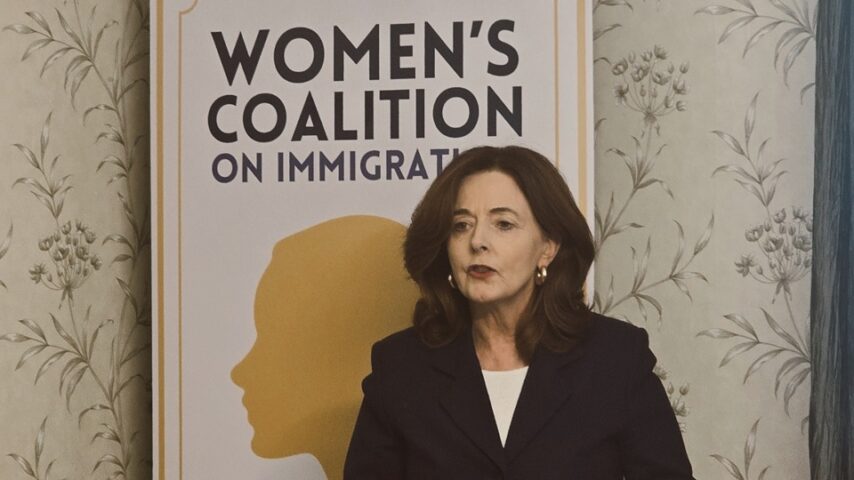
The Women’s Coalition on Immigration has launched a cross-party alliance in Dublin, with a TD among those who addressed an event in Buswells to highlight the need for what they say are urgent Safeguarding and Transparency Reforms.
A “blind eye” had been turned to immigration being a “contributing factor to violence against women and girls” in Ireland, the launch of the cross-party alliance heard, adding that some non-national men appear to view sexual aggression as a right.
The meeting was opened by Offaly Deputy Carol Nolan, who spoke out against “unsustainable and uncosted” levels of immigration into Ireland, adding that a “blind eye” had been turned to immigration being a “contributing factor to violence against women and girls.”
The TD was joined as a speaker by barrister Laoise de Brun, grassroots campaigner Tanja Alt, journalist Barbara McCarthy, well-known activist Susanne Delaney, Independent Ireland Cllr Linda de Courcy, and Senior Counsel Una McGurk.
Speaking at the event, the Offaly Independent TD said, “I have been speaking on this issue for a number of years now, and though it pains me to acknowledge it, everything I said has been vindicated.
“My concern is that while we have had successive governments making limited efforts to tackle sexual violence, they have at the same time effectively turned a blind eye to a major contributing factor to violence against women and girls; namely the presence here of non-national men who appear to view sexual violence or aggression as a right,” said Nolan.
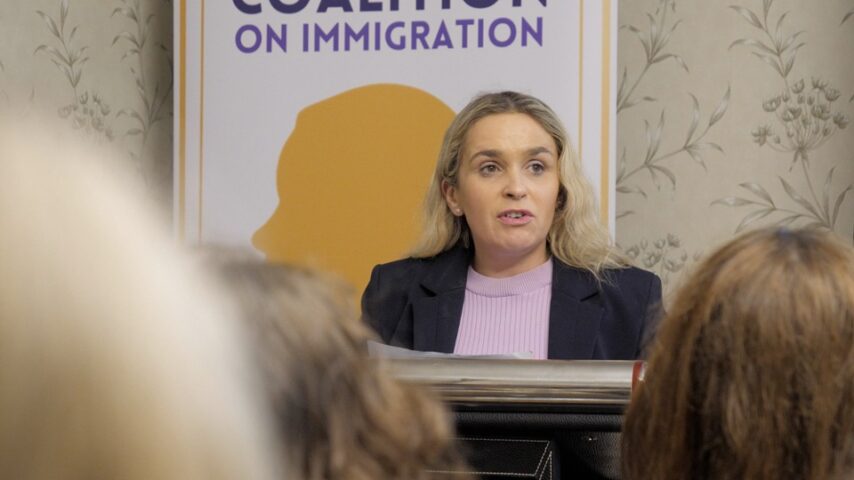
“When it comes to violence against women and girls, the multicultural model, which silences or at the very least only offers muted criticisms of unacceptable and aggressive forms of interaction, must be challenged. We cannot stand by and allow a predatory mindset to be protected or unacknowledged simply from fear of criticism from ‘polite society.’ To do so would be to offer a de facto blessing to attacks upon women and girls or to see it as an acceptable form of collateral damage that must be accepted as a by-product of mass immigration ”
‘THE PROTECTION OF WOMEN AND GIRLS IS NOT A LEFT OR RIGHT ISSUE’
Founder of the Coalition and founder of the advocacy group The Countess, barrister Laoise de Brún, told a reporter for the Irish Times that protecting women and girls was “not a partisan issue,” nor “a left or right issue” when asked if the Coalition would work with right-wing left-leaning, or centrist politicians.
Ms de Brún said she would “absolutely” work with people from across the political spectrum to highlight the issues raised.
The activist said she was proud to announce that the group, launched in November, was now a cross-party group, including female elected representatives and civic society campaigners.
Speaking ahead of the event, Ms de Brún said the group of civic society campaigners and elected officials reflect growing concerns across the country regarding the impact of immigration on communities, in particular the safety of women and children. She referred to a recent case in Dunshauglin in County Meath, which saw a 27-year-old man charged this week over the alleged incident.
The accused, who cannot be named for legal reasons, was charged with burglary and an arrestable offence, trespass with intent to rape.
“In the same week that we see crystal clear CCTV of a man knocking out a woman cold in an act of random ultraviolence on the streets of Cork which An Garda Suíochána sat on for three months before releasing, we learn of a home invasion and attempted rape in Dunshaughlin, County Meath. As a women’s rights campaigner I know well that Ireland has a problem with rape culture and Male Violence Against Women and Girls as well as domestic violence and femicide, the question is, why import another layer?” the barrister said.
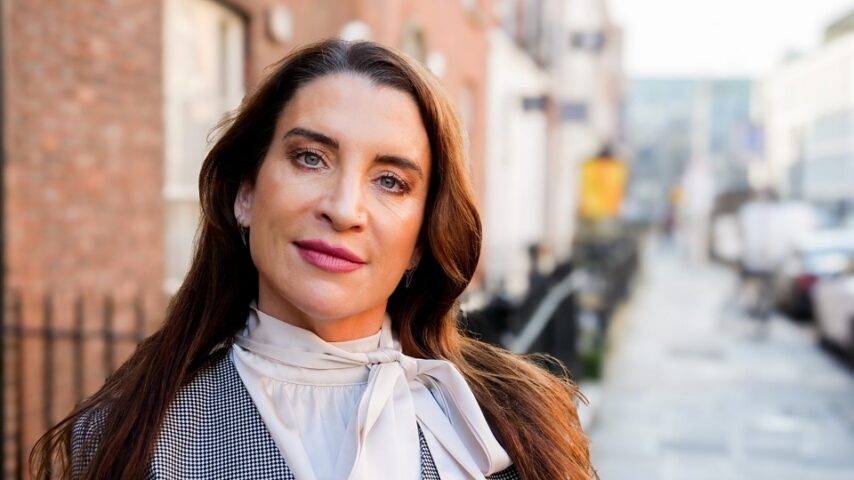
During the event, she said that a thematic report previously produced by the group showed an overrepresentation of non-national men in sexual offending crimes across six EU countries.
“We are calling on the government to release crime statistics disaggregated on ethnicity and country of origin so that we can ground policy in fact not fantasy,” she said.
‘WE DON’T FEEL OUR CHILDREN ARE SAFE’
Susanne Delaney of The Irish Inquiry told the meeting: “There is a phrase used in political groups in Ireland. It has been used as a powerful way to leverage votes. That phrase is “trust women.” But the people who most often use those words have shown again and again: they do not trust women at all, rather, they use women to their advantage when it suits,” said Delaney.
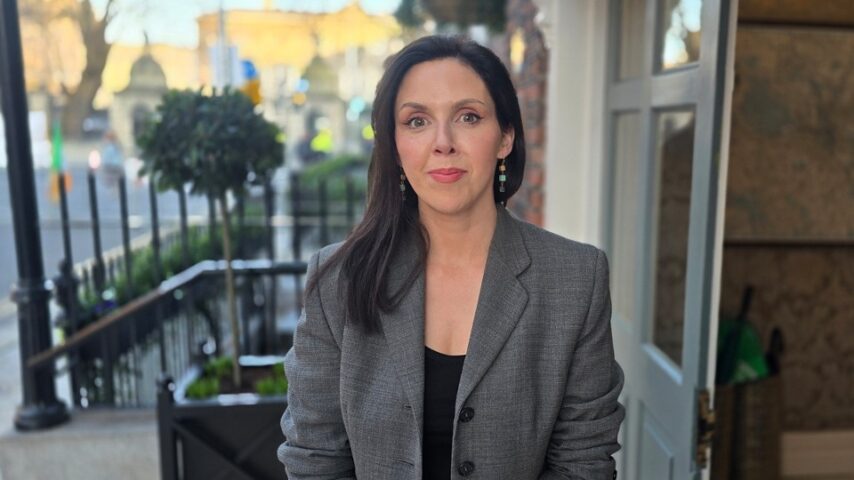
“They would likely refer to the well attuned, intelligent women speaking here today as “far right”. But surveys show our views and concerns are representative of the majority, and in regard to mass immigration, something really doesn’t feel right. We don’t feel safe, We don’t feel our children are safe.”
“Women’s intuition and the pattern recognition skills of the women here today may not be enough for some and that’s ok, but it is evident non national men, relative to their numbers, are overrepresented in the horror stories we hear lately.
“Yet the aforementioned cohort, who pay lip service to gender violence, insidiously gaslight us. We are smeared in the media. It is psychological abuse of women who recognise the danger they and their children are facing.”
She added: “Children from Ukraine and other countries are filling beds in profit making unregulated for profit SEAs because each child is worth a lot of money, and in that sense this model is similar to the IPAS model. Safeguarding is sacrificed when money is being made.”
‘IRISH PEOPLE ARE INCREASINGLY ALARMED’
Journalist Barbara McCarthy, who co-authored the report, told the gathering: “Irish people are increasingly alarmed by the multiple impacts of immigration in particular the housing of groups of men in residential areas.
“These are legitimate concerns and should not be ignored or minimised. We must have policy that protects the human rights of not just the immigrants but the people of Ireland who after all, did not vote for this. In fact, our government chose not to use our Opt-out when it came to the EU Migration Pact.”
Ms McCarthy pointed to the experience of Denmark in dealing with immigration.
“Denmark managed to curb uncontrolled migration, and neutralised the ‘far-Right’ while maintaining public trust in the welfare state,” she said, “Which proves calling people far right who don’t want to be replaced, doesn’t help.”
‘THERE’S NO IPAS IN THE MIDDLE OF DALKEY’
“This is a blueprint for us and the rest of Europe. In Denmark immigration is down from the country receiving over 20,000 asylum claims in 2025; by 2024, this number had fallen to about 2,200–2,300 applications — roughly a 90% drop.”
“Currently in Denmark immigration isn’t a far right issue. They realised, unlike in Ireland, that immigration affects working class people the most.
“So Denmark recognises that Working-class and poorer communities carry the heaviest burden (housing pressure, strained schools, welfare dependency, crime) when it comes to Immigration and affluent areas benefit from cheap labour (cleaning, care, services) while avoiding most social costs,” she added.
“We can see that in Ireland there’s no IPAS in the middle of Roundstone or Dalkey, but there’s one in City West..and the people who want mass immigration the most, are effectively privileged people who aren’t affected by it. And they vote for pro-mass immigration like the Greens, thinking they’re doing the right thing.”
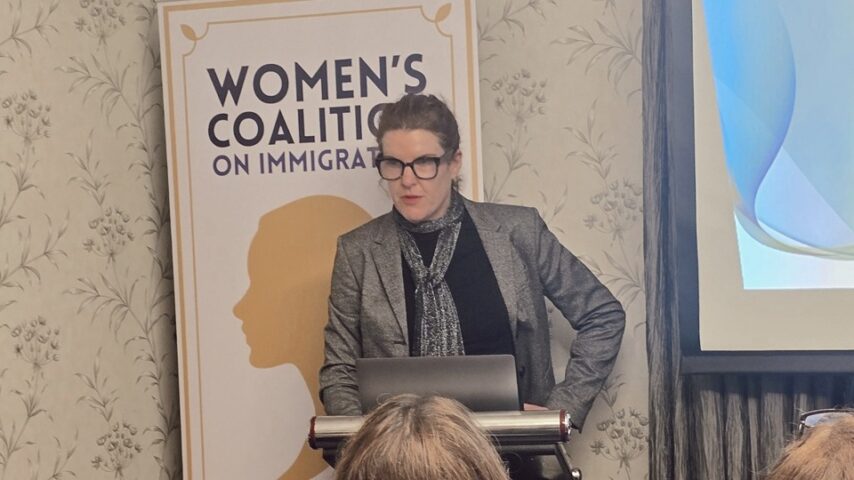
Senior Counsel Una McGurk used her slot to call for the Garda Commissioner and the Minister for Justice to record nationality and ethnicity using Pulse, the official Recording of Crime system used by AGS. This is not currently the case, with Ms McGurk stating that the current system means CSO is not currently in a position to record data to compile statistics on migrant crime.
“This is a very basic requirement for any criminal justice system to accurately record the details of suspected offenders,” said Ms McGurk.
“If we do not have this information, how can crime prevention measures and procedures be put in place to protect and safeguard the Irish people. How can we have accurate data and statistics on the commission of crimes in Ireland?”
“A country that has no control of its borders is no longer sovereign,” said the Irish Barrister, adding that “a few deportations for optics, as has happened in recent months, is too little too late – and will make no appreciable difference.”
Ms McGurk questioned what procedures are in place to address the mental health needs of asylum seekers who may have experienced conflict or post-traumatic stress disorder that could make them violent or aggressive.
She also asked what processes were being used to verify the age of individuals who claim to be minors, recalling the killing of 17-year-old Ukrainian Vadym Davydenko last year. Defence for the accused told a court in December that doubts persist over his age, after the accused, initially reported to be a teenager, said his documents were false.
Independent Ireland councillor Linda de Courcy, an outspoken opponent of the Government purchase of the City West Hotel – which now permanently houses the largest IPAS or Asylum Seeker Accommodation in Ireland – told the gathering that she favours a deterrent approach.
“The vast majority coming here are economic migrants and they should not be here and would not be here were it not for the tweet sent out by Roderic O’Gorman in the first instance encouraging them and promising them their own front door.
“This is a manmade crisis. We have an over-generous package of benefits and the research by this group shows clearly that men from the MENAPT (Middle East, North Africa, Pakistan and Turkey) region especially, pose a threat to the safety of women and children in this country,” said Cllr de Courcy.
‘THE PEOPLE OF SAGGART ARE NOT ASKING FOR SPECIAL TREATMENT’
Activist with Saggart Guardians, Tanja Alt, spoke about what she said was the impact the IPAS centre in Citywest has had on the women, families and community of Saggart. She criticised how the population of the village in South Dublin had grown rapidly, leaving residents concerned about safety, infrastructure and community wellbeing.
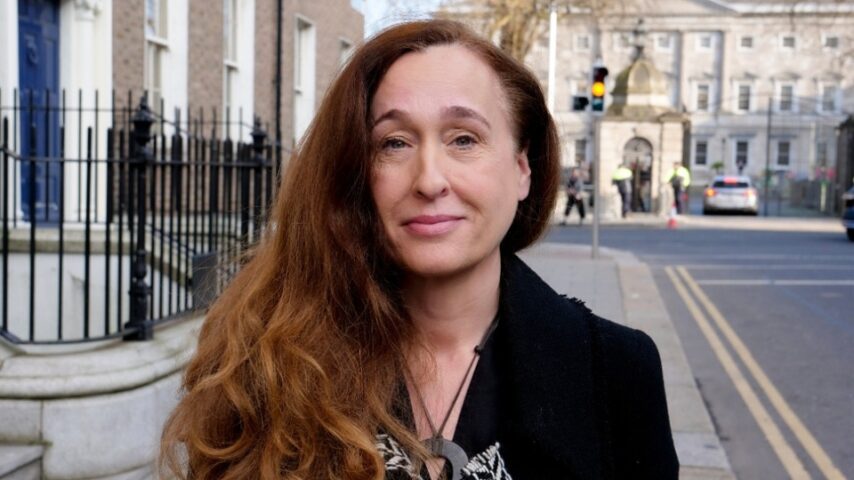
Parents in the village no longer feel comfortable allowing their younger children to walk to and from school independently the way they once did. Families feel they must now accompany their children,” said Alt, who moved to the village in 2008.
“Our teenagers are also being failed. Saggart has no youth club, no leisure centre, no library and no safe place for young people to spend time after school. Instead, many of the spaces where children used to play are now places families avoid. Parents no longer feel comfortable bringing their children to playgrounds where groups of adult men gather drinking or taking drugs,” she added.
“Our elderly residents have also disappeared from the streets of the village. The same people who once walked daily to the shop or church are now rarely seen. Many feel afraid to walk through the village the way they once did,” she added.
“Saggart itself is a very small village. For those who have never been there, we have one small Centra with a post office, a small pub, a chipper, a Chinese takeaway, a bookmaker, a small Dunnes Stores and a pharmacy where queues can last 30 minutes.
“That is the entire centre of our village. Yet the population in the area has grown dramatically in recent years, and still Saggart has no public park, no Garda station, no youth clubs, no library and very limited services.
“Residents feel that decisions affecting our community have been made without our voices being heard. Recently, when Fianna Fáil and Fine Gael TDs voted against allowing communities a formal voice regarding IPAS centres in their areas, many residents felt completely ignored.
“People are asking a simple question: if communities are not allowed to have a say, then what was the purpose of consultation meetings in the first place?”
Alt said that residents had voted for government to represent them and to protect their communities, but that instead, many now feel their concerns about safety, infrastructure and community wellbeing are being dismissed.
“The people of Saggart are not asking for special treatment. We are asking for something very basic: For our children to feel safe walking to school again. For our teenagers to have somewhere to go after school. For our elderly to feel safe walking through their own village again. And above all, for our voices to matter when decisions are made about our communities. Because villages like Saggart are not just locations on a map. They are our homes.”